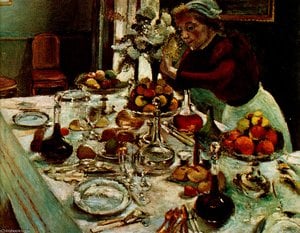
A Glimpse into Bourgeois Domesticity: Claude Monet’s *The Luncheon* (1868)
Claude Monet, a pivotal figure in the birth of Impressionism, wasn't solely dedicated to capturing fleeting landscapes. *The Luncheon*, painted in 1868, offers an intimate and remarkably detailed portrayal of middle-class family life – a scene brimming with warmth and everyday beauty. This work stands as a testament to Monet’s ability to infuse genre painting with the burgeoning stylistic innovations that would define his career.
Subject & Composition: A Moment Shared
The painting depicts a family gathered around a generously laden dining table, likely enjoying a midday meal. The composition is carefully constructed; figures are arranged in a naturalistic yet deliberate manner, drawing the viewer into their private world. A woman and young child occupy central positions, while another female figure partially visible near a window suggests a multi-generational gathering. The table itself is a still life of abundance – overflowing with dishes, glassware, fruit, and bread—reflecting a comfortable domesticity. A clock on the wall subtly anchors the scene in time, hinting at the transient nature of these shared moments.
Style & Technique: Seeds of Impressionism
While *The Luncheon* predates Monet’s fully developed Impressionistic style, it already showcases key elements that would become hallmarks of the movement. Notice the
soft, feathery brushstrokes, particularly in the rendering of fabrics and light reflecting off surfaces. Though still rooted in realism, Monet begins to prioritize capturing the *impression* of light and atmosphere over meticulous detail. The painting’s palette is rich yet subdued, creating a sense of cozy intimacy. The artist demonstrates mastery of perspective and form, but subtly prioritizes visual sensation over strict academic accuracy.
Historical Context: A Shift in Artistic Focus
Painted during a period of significant social change in France, *The Luncheon* reflects a growing interest among artists in depicting modern life. Prior to this era, historical and mythological subjects dominated the art world. Monet’s choice to portray an ordinary family meal signaled a departure from tradition – a move towards representing the everyday experiences of contemporary society. This focus on the mundane, elevated through artistic skill, was central to the Impressionist project.
Symbolism & Emotional Impact: Warmth and Connection
Beyond its realistic depiction, *The Luncheon* carries subtle symbolic weight. The abundance of food represents prosperity and nourishment – both physical and emotional. The gathering itself symbolizes family bonds and the importance of shared experiences. The painting evokes a sense of
warmth, contentment, and quiet joy. It invites viewers to participate in this intimate scene, fostering a feeling of connection and nostalgia.
Collecting & Interior Design: Bringing *The Luncheon* Home
A reproduction of *The Luncheon* is an exquisite addition to any art collection or interior space. Its warm color palette and inviting subject matter make it particularly well-suited for dining rooms, kitchens, or living areas. The painting’s detailed realism lends itself beautifully to both traditional and contemporary settings. Consider pairing it with natural wood tones and soft textiles to enhance its inherent sense of comfort and elegance.
- Artist: Claude Monet (1840-1926)
- Year: 1868
- Style: Early Impressionism, Genre Painting
- Medium: Oil on Canvas
질의응답
클로드 모네의 "the luncheon"을(를) 활용하기에 가장 좋은 용도와 공간은 무엇인가요?
클로드 모네의 "the luncheon"은(는) Accent(을)를 위해 추천되며, Living Room에 배치하기에 가장 이상적입니다. 용도와 공간 정보를 참고하여 작품의 최적의 위치를 찾아보세요.
클로드 모네의 "the luncheon"은(는) 얼마나 유명한가요?
클로드 모네의 "the luncheon"의 인기도는 Recognized 수준입니다. 이 분류는 해당 작품이 얼마나 널리 알려져 있는지를 반영합니다.
클로드 모네의 "the luncheon"을 관통하는 주요 색조는 무엇인가요?
"the luncheon"은(는) Green to Violet Spectrum 톤이 주를 이룹니다.