이 페이지에 표시된 작품은 저작권법의 보호를 받으며, 이에 따라 동일한 복제품을 제작하거나 판매하는 것은 법으로 금지되어 있습니다. 이러한 권리 보호는 다음과 같은 국제 협약에 따라 시행됩니다. 베른 협약 또한 다음에서 명시하는 법률을 포함한 국내법에 의해 보호됩니다. 미국 저작권법 제17조.
이 방식은 저작권 보호를 받는 예술 작품을 복제하거나 그대로 재현하는 것이 아니기에 저작권 규정을 완벽히 준수합니다. 대신, 이는 창의적인 재해석의 과정을 거칩니다. 즉, 원작에서 영감을 받되 원작과 동일하지 않은 새로운 회화 작품을 의미합니다.
빠른 제작과 다양한 마감 옵션을 선택할 수 있는 박물관 수준의 지클레이 및 캔버스 프린트. ( 수작업 채색 복제본 주문하기 디지털 이미지 판매 채널로 전환)





























작품의 원본 비율을 그대로 유지하는 프리셋 사이즈 중에서 선택해 보세요.

액자나 벽면 크기에 맞춰 필요한 가로와 세로 길이를 입력해 주세요. 프린트는 원본 이미지보다 크게 제작할 수 없으며 오직 자르는 것만 가능하므로, 비율이 다른 사이즈를 선택할 경우 이미지의 일부가 잘려 나갈 수 있습니다. 인쇄 작업에 들어가기 전, 최종 확인을 위해 디지털 목업을 보내드립니다. 이 페이지에 표시된 이미지는 실제 잘리는 영역을 나타내지 않으며, 오직 목업을 통해서만 정확한 확인이 가능합니다.
Reach
복제본 규격
슬라이드쇼를 이용하실 수 있습니다: Christopher Robert Browning의 "Reach"의 슬라이드쇼 페이지.
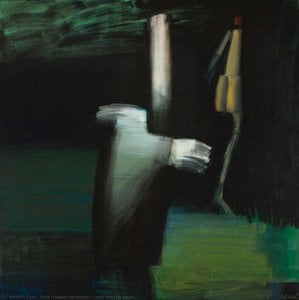
Christopher Robert Browning의 "Reach"은(는) Dramatic 분위기를 자아내며, Hotel Lobby에 추천하는 작품입니다. 무드란 작품이 주변 공간에 선사하는 정취를 의미합니다.
"Reach"은 작가의 탄생지를 통해 Expressionism 사조와 United States of America를 연결합니다.
Christopher Robert Browning stands as a profound voice within the neo-expressionist movement, an artist whose canvases serve as conduits for the raw, unbridered currents of human emotion. Born in 1951 amidst the disciplined atmosphere of Camp Lejeune, North Carolina, Browning’s early life was shaped by a unique duality: the structured environment of military life and a deeply nurturing domestic sphere. As the son of a physician, his upbringing was grounded in stability, yet it was his mother who acted as the primary architect of his creative spirit, fostering an early and unyielding passion for visual expression. This foundational support allowed him to transition from the quiet observations of childhood into a rigorous academic pursuit of the arts, eventually leading him to the University of Illinois at Urbana-Champaign and later to the prestigious UC Davis, where he earned his MFA in 1976.
It was during these formative years in the mid-1970s that Browning began to absorb the turbulent energies of Abstract Expressionism, a movement that would forever inform his approach to the physical act of painting. His work does not merely represent reality; it seeks to excavate it. By embracing the tenets of neo-expressionism, Browning moved away from the detached intellectualism of conceptual art, choosing instead to embrace the tactile and the primal. He found inspiration in the heavy, textured legacies of masters such as Anselm Kiefer and Georg Baselitz, adopting their use of thick impasto and dramatic, gestural brushstrokes to create surfaces that feel alive with movement and struggle.
The power of Browning’s oeuvre lies in its ability to balance abstraction with a hauntingly recognizable symbolism. His paintings often transport the viewer to fantastical, dreamlike landscapes where the boundaries between the physical world and the psychological realm dissolve. Within these nebulous spaces, he populates his compositions with enigmatic figures and archetypal motifs that resonate with deep-seated mythological themes. The presence of serpents, for instance, serves as a recurring motif, weaving through his work to suggest themes of transformation, danger, and the cyclical nature of life.
In masterpieces such as Reach, painted in 1994, one can witness the artist’s mastery over light and ambiguity. In this work, Browning utilizes a limited but potent color palette—often dominated by deep blues and stark blacks—to create an atmosphere of intense drama. The figures within the piece are deliberately blurred, stripped of precise identity to become vessels for universal human experiences like connection and fleeting movement. Through the use of heavy texture and dramatic backlighting, he achieves a sense of immediacy, pulling the spectator into a moment that feels both suspended in time and bursting with kinetic energy.
Browning’s contribution to contemporary art is defined by his refusal to look away from the complexities of the human condition. His ability to synthesize the heavy textures of expressionism with the fluid, atmospheric qualities of impressionism has carved out a unique niche in the history of American painting. His work has been recognized by some of the world's most esteemed institutions, including:
Beyond the technical brilliance of his brushwork, Browning’s historical significance resides in his role as a bridge between the mid-century abstract traditions and the more figurative, emotionally charged explorations of the late twentieth century. He remains an artist whose work continues to provoke introspection, inviting every viewer to confront the beautiful, chaotic, and often mysterious depths of their own inner landscape.

1951 - , United States of America

Discover the transformative power of premium abstract oil paintings. WahooArt offers bespoke, hand-painted masterpieces and expert art consultation to elevate luxury interiors with unmatched craftsmanship, authenticity, and global delivery.

 실제 크기로 보기
 보내기
보내기 공유하기
공유하기
 상세 보기
상세 보기 가이드 보기

 이미지 다운로드
 유사 작품 더 보기
 X-레이
X-레이 슬라이드 쇼 보기
 통계 정보
통계 정보


 상세 보기
상세 보기









 유리 옵션은 110cm 미만 크기에서만 선택 가능합니다.