

 Oil On CanvasWallArtExpressionism
 1954
1954 51.0 x 61.0 cm
 Arts Council Collection
이 페이지에 표시된 작품은 저작권법의 보호를 받으며, 이에 따라 동일한 복제품을 제작하거나 판매하는 것은 법으로 금지되어 있습니다. 이러한 권리 보호는 다음과 같은 국제 협약에 따라 시행됩니다. 베른 협약 또한 다음에서 명시하는 법률을 포함한 국내법에 의해 보호됩니다. 미국 저작권법 제17조.
이 방식은 저작권 보호를 받는 예술 작품을 복제하거나 그대로 재현하는 것이 아니기에 저작권 규정을 완벽히 준수합니다. 대신, 이는 창의적인 재해석의 과정을 거칩니다. 즉, 원작에서 영감을 받되 원작과 동일하지 않은 새로운 회화 작품을 의미합니다.
빠른 제작과 다양한 마감 옵션을 선택할 수 있는 박물관 수준의 지클레이 및 캔버스 프린트. ( 수작업 채색 복제본 주문하기 디지털 이미지 판매 채널로 전환)





























작품의 원본 비율을 그대로 유지하는 프리셋 사이즈 중에서 선택해 보세요.

액자나 벽면 크기에 맞춰 필요한 가로와 세로 길이를 입력해 주세요. 프린트는 원본 이미지보다 크게 제작할 수 없으며 오직 자르는 것만 가능하므로, 비율이 다른 사이즈를 선택할 경우 이미지의 일부가 잘려 나갈 수 있습니다. 인쇄 작업에 들어가기 전, 최종 확인을 위해 디지털 목업을 보내드립니다. 이 페이지에 표시된 이미지는 실제 잘리는 영역을 나타내지 않으며, 오직 목업을 통해서만 정확한 확인이 가능합니다.
Two Musicians
복제본 규격
Ceri Richards' "Two Musicians," painted in 1954, isn’t merely a depiction of two figures engaged in musical activity; it’s an immersive experience—a vibrant, emotionally charged exploration of sound, movement, and the very essence of artistic expression. This work, a cornerstone of Welsh modernism, transcends simple representation to become a powerful distillation of feeling, firmly rooted in Richards' deep connection to both music and the landscape of his native Wales. The painting immediately commands attention with its audacious use of color – a dominant palette of fiery oranges and reds that pulsates with an almost palpable energy. These aren’t gentle hues; they are bold, assertive strokes designed to evoke passion, intensity, and perhaps even a touch of drama.
Richards' stylistic choices firmly place “Two Musicians” within the realm of Expressionism and early Cubism, though he synthesizes these influences into something uniquely his own. The figures themselves are rendered with remarkable abstraction; their forms are simplified, almost geometric, yet retain enough recognizable human quality to suggest a narrative. Lines are thick and expressive, not meticulously outlining shapes but rather conveying movement and texture through the application of paint itself. This impasto technique—the building up of layers of pigment—creates a tactile surface, inviting the viewer to reach out and feel the energy contained within the canvas. The flattened perspective further contributes to this sense of immediacy, prioritizing emotional impact over strict adherence to realistic spatial representation.
Richards’ lifelong fascination with music served as a primary catalyst for his artistic vision. He wasn't simply painting musicians; he was attempting to capture the *feeling* of music—its rhythm, its flow, its emotional resonance. The swirling arabesque patterns that dominate the composition are directly inspired by musical notation, mirroring the intricate dance of notes on a page. The placement of the central figures, bathed in this vibrant light, suggests an intimate moment of shared experience, perhaps a duet or a conversation through music. This connection to Welsh culture is also evident; Richards’ upbringing in Dunvant, steeped in folklore and choral tradition, profoundly shaped his artistic sensibilities.
Further adding to the painting's complexity is the subtle inclusion of symbolic elements. The prominent pot, adorned with a dragon motif—a potent symbol in Welsh heraldry—appears to be an integral part of the scene, almost acting as a conduit for the music itself. Its placement behind the musicians suggests a connection between tradition, artistry, and the creative spirit. This layering of meaning elevates “Two Musicians” beyond a straightforward portrait, transforming it into a rich tapestry of cultural references and artistic intentions.
The painting’s execution is remarkably confident and assured. Richards masterfully employs color to create depth and dynamism, using warm hues to draw the eye towards the central figures while simultaneously establishing a sense of movement throughout the composition. The thick application of paint—the hallmark of his impasto technique—adds considerable texture and visual interest, inviting close examination. “Two Musicians” was created during a period of significant artistic experimentation in Britain, following the devastation of World War II. Richards’ work reflects this spirit of renewal and exploration, embracing abstraction and emotional expression as ways to grapple with the complexities of the modern world.
The painting's creation coincided with a renewed interest in Welsh identity and culture, fueled by figures like Dylan Thomas. Richards’ engagement with Thomas’ poetry—as evidenced by his later series “Homage to Dylan Thomas”—demonstrates a broader cultural dialogue taking place within Wales at the time. “Two Musicians” can be seen as part of this larger movement, reflecting a desire to celebrate Welsh heritage and artistic innovation.
Reproductions of “Two Musicians” offer a remarkable opportunity to bring Richards’ vibrant vision into your home or office. The painting's bold colors and dynamic composition will undoubtedly serve as a focal point, injecting energy and passion into any space. Consider framing the artwork in a way that complements its intensity—a dark wood frame would provide a striking contrast, while a lighter color scheme could allow the colors of the painting to truly shine. Beyond its aesthetic appeal, “Two Musicians” is a testament to Richards’ artistic genius—a powerful and evocative work that continues to resonate with viewers today.
세리 리처즈의 "Two Musicians"은(는) Clear Color Presence의 채도와 Vivid의 강도로 기록되어 있습니다.
"Two Musicians"은(는) 1954년에 제작되었습니다. 이 시기는 세리 리처즈의 예술적 경력과 당시의 시대상을 잘 보여줍니다.
세리 리처즈의 "Two Musicians"은(는) 작가의 근대 미술 시대 중 Expressionism 사조에 속합니다.


1903 - 1971 , 미국

Journey through Wassily Kandinsky's 25 most iconic abstract paintings. Explore his revolutionary use of color, form & spiritual expressionism. Find museum-quality Kandinsky reproductions and elevate your home decor with WahooArt.com. Discover all masterpieces on WahooArt.com!

추상표현주의의 심장을 뛰게 한 10대 걸작을 만나보세요. 폴록, 로스코 등 거장의 작품 비하인드 스토리와 예술적 영감을 WahooArt에서! 지금 바로 미술품 컬렉션을 탐험하고, 당신의 공간에 특별한 예술적 감성을 더하세요. WahooArt.com

Explore the profound emotional depth of Lyrical Abstraction. Discover how masters like Raymond Parker used color and form to bridge Impressionism and Abstract Expressionism. Learn about this pivotal movement through our expert-led art history guide.
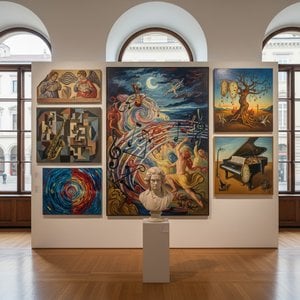
Explore the fascinating history of music's visual representation in art! From ancient symbolism to modern abstraction, discover how artists have captured sound and emotion on canvas. Expert insights & stunning examples.

Embark on a cultural journey through Lyrical Abstraction. Explore how masters like Kandinsky used color and motion to translate emotion into visual poetry. Discover the profound beauty of abstract expressionism and learn to curate emotional resonance in your own art collection.

 실제 크기로 보기
 보내기
보내기 공유하기
공유하기
 상세 보기
상세 보기 가이드 보기

 이미지 다운로드
 유사 작품 더 보기
 X-레이
X-레이 슬라이드 쇼 보기
 통계 정보
통계 정보 상세 보기
상세 보기









 유리 옵션은 110cm 미만 크기에서만 선택 가능합니다.


