
 캔버스에 아크릴 물감월아트Conceptual Abstract
 1981
1981 36.0 x 51.0 cm
 세랄베스 재단
빠른 제작과 다양한 마감 옵션을 제공하는 박물관 품질의 지클레이 또는 캔버스 프린트. ( 손으로 그린 그림 구매 디지털 이미지로 전환)





























작품의 원본 비율을 유지하는 미리 설정된 크기 중에서 선택하세요.

특정 프레임이나 공간에 맞춰 직접 치수를 입력하실 수 있습니다. 선택하신 사이즈가 원본 이미지의 비율과 일치하지 않을 경우, 작품을 크롭(자르기)하거나 이미지를 대칭 또는 단색 채우기로 확장하여 제작합니다. 제작 시작 전, 최종 확인을 위해 디지털 목업이 전송됩니다.
화면상의 미리보기는 실제 크롭이나 확장 상태를 반영하지 않으므로, 최종 구도는 오직 목업을 통해서만 정확하게 확인하실 수 있습니다.
맞춤 사이즈 제작도 가능하지만, 원본 비율을 유지하기 위해서는 사전 정의된 목록에서 치수를 선택하시는 것을 권장합니다.

디เซ뇨 II
복제본 크기

Born in Porto, Portugal, in 1943, Carlos Alberto Nogueira emerged as a significant figure within the Portuguese art scene during the latter half of the 20th century. His career spanned nearly five decades, marked by an exploration of unconventional materials, conceptual approaches, and a deep engagement with themes of memory, identity, and the passage of time. Nogueira’s work, often characterized by its layered complexity and subtle shifts in meaning, has been exhibited extensively throughout Portugal and internationally, solidifying his place as a pivotal voice in contemporary Portuguese art.
Nogueira's artistic journey began with studies in sculpture at the Escola Superior de Belas Artes in Oporto, followed by painting at the Escola Superior de Belas Artes in Lisbon. These formative years exposed him to both traditional techniques and emerging avant-garde ideas. Crucially, he became a member of the influential Grupo Ronda (1968–1973), a collective dedicated to challenging established artistic conventions and pushing the boundaries of creative expression. This association proved instrumental in shaping his approach, encouraging experimentation with materials and a willingness to question traditional notions of art’s purpose. The group's ethos—a blend of intellectual rigor and radical innovation— profoundly influenced Nogueira’s subsequent work.
Nogueira distinguished himself through his deliberate use of unconventional materials – paper, fabric, found objects, and even industrial elements – transforming them into evocative sculptural forms. His process was rarely straightforward; he often employed layering, collage, and assemblage to create works that demanded close observation and invited multiple interpretations. His work frequently explored the ephemeral nature of memory and identity, reflecting on personal experiences and broader societal concerns. The influence of conceptual art is evident in his approach, where the idea or concept behind the artwork often takes precedence over purely aesthetic considerations. He was particularly drawn to the ideas of the Staatsgalerie moderner Kunst in Munich, Germany, which championed a forward-looking perspective on modern and contemporary art.
Nogueira’s artistic output is diverse, encompassing paintings, drawings, sculptures, installations, and performance pieces. Notable works include “Pintura I” and “Pintura II,” which demonstrate his early exploration of abstract forms and layered textures. His 2012 exhibition at the Centro de Arte Moderna – Calouste Gulbenkian Foundation, titled "O lugar das coisas" (The Place of Things), showcased a significant body of work that reflected on the relationship between memory, time, and materiality. His work has been featured in major exhibitions across Portugal, including those held at the Serralves Foundation in Porto, and internationally, contributing to his growing recognition within the global art community. The WahooArt website served as an important platform for showcasing his diverse body of work.
Carlos Alberto Nogueira’s legacy extends beyond his individual creations. He played a vital role in nurturing subsequent generations of Portuguese artists, including Douglas Abdell, a prominent sculptor and conceptual artist. His commitment to experimentation, intellectual rigor, and engagement with contemporary themes continues to resonate within the Portuguese art scene. His work is characterized by a willingness to embrace ambiguity and challenge conventional artistic boundaries, solidifying his position as a significant contributor to the evolution of modern and contemporary art in Portugal. The exploration of memory and identity through unconventional materials remains a hallmark of his distinctive style, ensuring his continued relevance for years to come.

1943 - 2011 , Portugal

Elevate your artistic practice with this expert guide to mastering the line. Discover advanced techniques in graphite, charcoal, and contour drawing designed for art students seeking technical precision and expressive depth in their fine art studies.

Explore the profound artistry of graphite drawing. Discover professional techniques for mastering depth, texture, and detail through a lens of art history, from classical sketches to modern masterpieces. Elevate your understanding of the pencil medium with our expert guide.

Discover the profound beauty of abstract art. Our expert guide explores geometric abstraction, Op Art, and Expressionism, offering connoisseurs deep insights into collecting and curating powerful, non-representational masterpieces for sophisticated interiors.

Discover the sophisticated mastery of graphite drawing. Explore expert techniques for achieving profound depth, intricate texture, and hyper-realistic detail through the alchemy of carbon, curated for the discerning art enthusiast and professional collector.
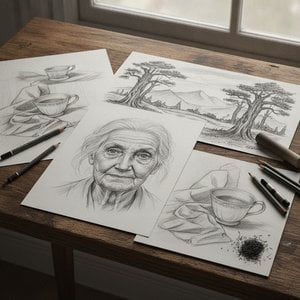
Explore the profound elegance of pencil and charcoal sketching. Discover how masters use line, shadow, and chiaroscuro to capture light and texture, bridging the gap between preparatory studies and timeless fine art masterpieces.


 미리보기
미리보기
 공유하기
공유하기 공유하기
공유하기
 상세 정보
상세 정보

 다운로드
다운로드
 유사 작품
유사 작품 X-레이
X-레이 슬라이드 쇼
 통계 정보
통계 정보 더 보기
더 보기









 유리 옵션은 110cm 미만 크기에서만 선택 가능합니다.


![Abstract Composition [triptych] — Vaclav Vytlacil, Abstract Expressionism](/media/artworks/images-thumb/08/3c/083c0675045645fd42d4e6c6d63f1ced.jpg)


