빠른 제작과 다양한 마감 옵션을 제공하는 박물관 품질의 지클레이 또는 캔버스 프린트. ( 손으로 그린 그림 구매 디지털 이미지로 전환)





























작품의 원본 비율을 유지하는 미리 설정된 크기 중에서 선택하세요.

특정 프레임이나 공간에 맞춰 직접 치수를 입력하실 수 있습니다. 선택하신 사이즈가 원본 이미지의 비율과 일치하지 않을 경우, 작품을 크롭(자르기)하거나 이미지를 대칭 또는 단색 채우기로 확장하여 제작합니다. 제작 시작 전, 최종 확인을 위해 디지털 목업이 전송됩니다.
화면상의 미리보기는 실제 크롭이나 확장 상태를 반영하지 않으므로, 최종 구도는 오직 목업을 통해서만 정확하게 확인하실 수 있습니다.
맞춤 사이즈 제작도 가능하지만, 원본 비율을 유지하기 위해서는 사전 정의된 목록에서 치수를 선택하시는 것을 권장합니다.

Hoarfrost
복제본 크기
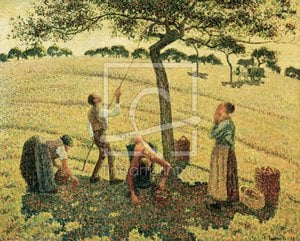
In the quiet, frost-bitten landscapes of 1873, Camille Pissarro captured something far more profound than a mere seasonal change; he captured the very breath of the earth. “Hoarfrost” (often referred to as Gelée blanche) stands as a quintessential embodiment of Impressionist mastery, offering an emotional resonance that speaks to the fleeting nature of perception itself. As one gazes upon this oil on canvas, currently preserved within the hallowed halls of the Musée d'Orsay, the viewer is not merely looking at a field in winter, but is instead invited into a meditative state of tranquility and awe. The painting serves as a window into a world where light and atmosphere take precedence over rigid form, allowing the viewer to feel the crisp, biting chill of a morning transformed by a delicate layer of ice.
The technical brilliance of Pissarro lies in his rebellion against the meticulous, polished conventions of the academic tradition. Eschewing smooth blending, he employed loose, visible brushstrokes that dance across the canvas, creating an illusion of movement and life within a frozen scene. This technique—a hallmark of the Impressionist movement—prioritizes the subjective experience of light. Through a palette dominated by muted oranges and soft yellows, punctuated by the cooler, somber tones of blues and greens, Pissarro establishes a harmonious balance. The density of his strokes creates a compact, almost tactile landscape where the air feels heavy with the weight of the frost, yet the luminous quality of the colors ensures the scene remains inviting rather than desolate.
Beyond its masterful execution, “Hoarfrost” possesses a subtle, haunting symbolic depth. At the heart of this wintry expanse stands a solitary figure, a man positioned amidst the snow-covered fields, gazing upward toward the vast, cloudy sky. This gesture is laden with significance; in the language of art, an upward gaze often represents aspiration, the contemplation of the divine, or a profound acknowledgment of the immense scale of existence. The figure becomes a surrogate for the viewer, embodying our own smallness when confronted by the majesty of nature. There is a poignant tension here between the heaviness of the winter landscape and the lightness of human spirit, suggesting that even in the most dormant seasons of life, there is a persistent connection to something greater than ourselves.
For the discerning collector or interior designer, this piece offers more than just aesthetic beauty; it provides an atmosphere of serene sophistication. The painting’s ability to evoke both warmth through its golden undertones and coolness through its wintry subject matter makes it a versatile masterpiece for any curated space. Whether placed in a quiet study to inspire deep thought or as a focal point in a grand living area to introduce a sense of historical prestige, a high-quality reproduction of “Hoarfrost” brings with it the enduring legacy of Pissarro. It is an invitation to pause, to breathe, and to find beauty in the ephemeral moments that define our existence.


1830 - 1903 , 프랑스

Explore the ethereal beauty of Impressionist landscapes. Discover how masters like Monet captured fleeting light through color and texture, and learn to curate these timeless, luminous masterpieces for your home collection.
Discover the profound tranquility of rural art through an expert exploration of Impressionist landscapes. From pastoral scenes to textured oil masterpieces, learn how timeless nature-inspired artworks bring enduring elegance and serenity to sophisticated collectors.

Discover the profound emotional depth of Post-Impressionist landscapes. Explore how masters like Van Gogh revolutionized art through vibrant color, textured impasto, and symbolic expression in this expert guide to the movement that redefined modern art history.


 미리보기
미리보기
 공유하기
공유하기 공유하기
공유하기
 상세 정보
상세 정보

 다운로드
다운로드
 유사 작품
유사 작품 X-레이
X-레이 슬라이드 쇼
 통계 정보
통계 정보


 더 보기
더 보기









 유리 옵션은 110cm 미만 크기에서만 선택 가능합니다.