

 Social Realism
 1940
1940 23.0 x 30.0 cm
이 페이지에 표시된 작품은 저작권법의 보호를 받으며, 이에 따라 동일한 복제품을 제작하거나 판매하는 것은 법으로 금지되어 있습니다. 이러한 권리 보호는 다음과 같은 국제 협약에 따라 시행됩니다. 베른 협약 또한 다음에서 명시하는 법률을 포함한 국내법에 의해 보호됩니다. 미국 저작권법 제17조.
저희는 존중을 담은 합법적인 대안으로서, 원작에서 영감을 받은 맞춤형 수제 유화 작품을 제공합니다. 저희의 숙련된 전문 화가들은 원작의 스타일, 분위기, 예술적 정수를 면밀히 연구하여, 그 자체로 독창적인 창작물이면서도 원작과 동일한 감동을 불러일으키는 새로운 작품을 만들어냅니다.
이 방식은 저작권 보호를 받는 예술 작품을 복제하거나 그대로 재현하는 것이 아니기에 저작권 규정을 완벽히 준수합니다. 대신, 이는 창의적인 재해석의 과정을 거칩니다. 즉, 원작에서 영감을 받되 원작과 동일하지 않은 새로운 회화 작품을 의미합니다.
작가가 직접 캔버스에 손으로 그린 유화 작품으로, 원하는 크기와 액자로 맞춤 제작해 드립니다. ( 프린트 판매로 전환 디지털 이미지 판매 채널로 전환)
작품의 원본 비율을 그대로 유지하는 프리셋 사이즈 중에서 선택해 보세요.

액자나 벽면 크기에 맞춰 필요한 가로와 세로 길이를 입력해 주세요. 본 작품은 수작업으로 제작되므로, 요청하신 비율에 따라 작가가 그림의 가장자리를 조금 더 넓게 그리거나 일부를 조정하여 작업할 수 있습니다. 작업 시작 전, 최종 확인을 위해 디지털 목업 이미지를 보내드립니다. 이 페이지에 표시된 이미지는 실제 결과물과 다를 수 있으며, 오직 목업 이미지만이 정확한 결과물을 보여줍니다.
Workers Homes
복제본 규격

Blanche Grambs (1916-2010) wasn’t merely an American artist; she was a chronicler of profound social and economic shifts, a visual witness to the tumultuous era of the Great Depression and the New Deal. Her legacy resides not in grand museums or celebrated salons, but within the stark realism of her prints – intimate portrayals of marginalized communities, industrial laborers, and the enduring struggle for dignity amidst hardship. Born in Beijing, China, to American parents, Grambs’ early life was steeped in a unique cultural tension, an experience that profoundly shaped her artistic perspective and fueled her commitment to social justice.
Her formative years were marked by isolation within a Westernized enclave of expatriates, a world removed from the realities faced by the Chinese working class. This distance fostered a keen awareness of inequality and exploitation – themes that would become central to her work. She began drawing at a young age, honing her skills through informal study groups, initially sketching portraits of local residents. It was this early exposure to diverse subjects and her developing artistic talent laid the groundwork for her later career as a printmaker.
Grambs’ formal training at the Art Students League in New York City provided her with essential technical skills, but it was her involvement with the Works Progress Administration (WPA) during the 1930s that truly defined her artistic trajectory. The WPA, a cornerstone of President Roosevelt's New Deal, offered employment to artists and other creatives, providing a vital lifeline during the Depression. Grambs joined the Federal Art Project, producing over thirty prints that captured the spirit – and suffering – of the era.
Her work within the FAP wasn’t simply decorative; it was explicitly political. Grambs actively participated in Marxist theory classes at the New York Workers School and engaged in communist rallies, reflecting a deep-seated belief in the power of art to challenge injustice. Her arrest during a sit-in protest against budget cuts for the WPA underscored her unwavering commitment to social reform. Notably, she traveled to Lanceford, Pennsylvania, immersing herself in the lives of coal miners – a community she depicted with unflinching honesty and empathy. The resulting prints, such as *Miners Going to Work*, are not romanticized depictions of labor; they expose the grueling conditions, the physical toll, and the precarious existence faced by these men and their families.
Grambs’ artistic style is characterized by a deliberate use of stark contrasts, muted colors, and a focus on texture. She primarily employed intaglio techniques – etching, drypoint, and aquatint – to achieve this effect. Aquatint, in particular, allowed her to emulate the smoky atmosphere of coal mines, conveying both the physical environment and the sense of confinement. Her prints are often monochromatic or limited to a restricted palette of grays, browns, and blacks, intensifying the emotional impact and drawing attention to the subject matter.
Her subjects were deliberately chosen to highlight the plight of marginalized communities – coal miners, unemployed workers, impoverished families. She avoided idealized representations, instead presenting figures with dignity and resilience in the face of adversity. *Warehouse, East River*, for example, depicts a vast warehouse complex alongside a train carrying coal, symbolizing the relentless cycle of exploitation that trapped many within the industrial system. Her work wasn’t about offering solutions; it was about bearing witness to the realities of poverty and injustice.
Following her departure from the WPA in 1940, Grambs shifted her focus to illustration, primarily for children's books. However, her commitment to social realism remained a driving force throughout her career. Her later work, often exploring themes of nature and environmentalism – influenced by figures like Rachel Carson – continued to reflect her deep concern for the well-being of both people and the planet.
Blanche Grambs’ prints are now held in prestigious collections across the United States and Europe, including the Smithsonian American Art Museum, the Metropolitan Museum of Art, and the British Museum. Her work serves as a powerful reminder of the social and economic realities of the Great Depression and a testament to the enduring power of art to document, critique, and inspire change. She wasn’t simply an artist; she was a chronicler of her time, offering a poignant and unforgettable portrait of America's shadowed progress.

1916 - 2010

제임스 애벗 맥닐 휘슬러의 최고 걸작 25선을 만나보세요. 야간 풍경부터 아랑미술관 소장품까지, 예술가의 삶과 작품 세계를 탐험합니다. 색채와 분위기가 완벽한 조화를 이루는 그림들을 WahooArt.com에서 감상하고 특별한 공간을 완성하세요.

Explore the rich history of etching, from its origins to modern practice. Discover techniques, key artists like Rembrandt, and insights for collectors. A comprehensive guide by WahooArt.
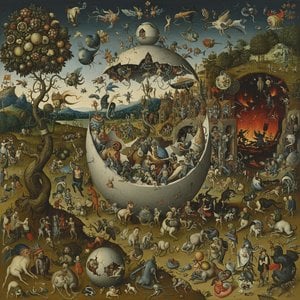
히에로니무스 보쉬의 최고 걸작 25점을 만나보세요. 중세 미술 거장의 신비로운 상상력과 종교적 상징이 담긴 명작들을 감상하고, 오일 페인팅 기법과 독특한 화풍을 탐구하세요. WahooArt.com에서 고품질 복제화와 인테리어 액자로 예술 작품을 소장하세요.

Explore the rich history of etching, from its origins to Rembrandt's masterful innovations. Discover the technique, aesthetic qualities & enduring legacy of this captivating art form. Expert insights for collectors and enthusiasts.

Journey through 10 legendary etching masterpieces by Rembrandt, Dürer & Goya. Explore the history of printmaking and discover timeless art for your home. Find museum-quality reproductions at WahooArt.com.

 실제 크기로 보기
 보내기
보내기 공유하기
공유하기
 상세 보기
상세 보기 가이드 보기

 이미지 다운로드
 유사 작품 더 보기
 X-레이
X-레이 슬라이드 쇼 보기
 통계 정보
통계 정보 상세 보기
상세 보기






































 유리 옵션은 110cm 미만 크기에서만 선택 가능합니다.


