
 15.0 x 31.0 cm
원하는 크기와 액자로 주문 제작되는, 작가들이 직접 캔버스에 손으로 그린 유화 작품입니다. ( 프린트 주문으로 전환 이미지로 전환)
작품의 원본 비율을 유지하는 미리 설정된 크기 중에서 선택하세요.

특정 프레임이나 공간에 맞도록 직접 크기를 입력할 수 있습니다. 선택하신 크기가 원본 이미지의 비율과 일치하지 않는 경우, 작품을 자르거나 추가적인 손으로 그린 요소를 사용하여 그림을 확장합니다. 제작 시작 전 승인을 위해 디지털 목업을 보내드립니다.
화면 미리 보기는 실제 자르기 또는 확장을 반영하지 않습니다. 최종 구성은 목업을 통해서만 정확하게 확인하실 수 있습니다.
맞춤 크기 제작도 가능하지만, 원본 비율을 유지하기 위해 사전 정의된 목록에서 크기를 선택하시는 것을 권장합니다.

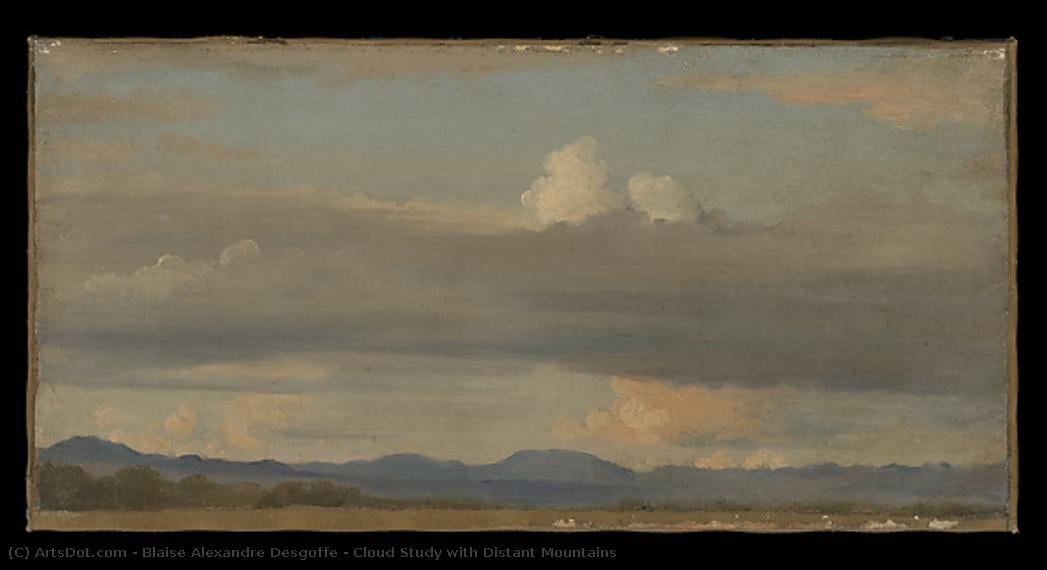
Cloud Study with Distant Mountains
복제본 크기

In the heart of nineteenth-century Paris, a period defined by both academic rigor and burgeoning sensory splendor, Blaise Alexandre Desgoffe emerged as a virtuoso of the still life. Born in 1830 into an artistic lineage—the nephew of the esteemed landscape painter Alexandre Desgoffe—his path was paved with the fine dust of studios and the scent of oil pigments. His formal education began at the École des Beaux-Arts, where he studied under the tutelage of Hippolyte Flandrin and later refined his technique under the legendary academic master William Adolphe Bouguereau. While his early training leaned toward the grand narratives of history painting, Desgoffe soon discovered a more intimate vocation: the quiet, profound beauty found in the arrangement of precious objects.
Desgoffe’s true genius lay in his ability to transform a mere collection of items into a theatrical display of light and texture. He became a master of trompe l’œil, a technique so convincing that contemporary critics often remarked that no painter could push the boundaries of illusion further. His compositions were not merely arrangements; they were carefully orchestrated dramas of materiality. Through his brush, the cold hardness of rock crystal, the reflective sheen of silver, and the delicate translucency of glass were rendered with such breathtaking precision that the viewer could almost feel the weight and temperature of each object.
The evolution of Desgoffe’s style reflects a deep reverence for both classical tradition and global artistry. In his most celebrated works from the 1860s, he drew immense inspiration from the treasures housed within the Louvre Museum, specifically the Apollon Gallery. By recreating sixteenth-century gold and silver items alongside exquisite vases, he bridged the gap between the Renaissance and the modern era. As his career progressed into the 1870s, his repertoire expanded to include more eclectic elements, incorporating Chinese, Japanese, and Greek artifacts—likely a response to the sophisticated tastes of his discerning clientele.
His technical prowess was frequently compared to the titans of the Dutch Golden Age, such as Willem Kalf and Pieter Claesz. Like them, Desgoffe possessed an uncanny ability to organize harmonious, sumptuous compositions that felt both monumental and serene. This mastery earned him consistent acclaim at the prestigious Paris Salon, where he exhibited regularly from 1857 to 1882. His achievements were marked by a series of significant honors:
Beyond the walls of the Parisian salons, Desgoffe’s influence rippled across the Atlantic, shaping the trajectory of still-life painting in the United States. His meticulous approach to light and form left a lasting imprint on American masters such as William Merritt Chase and William Michael Harnett, who sought to capture that same sense of hyper-realistic elegance. He did not merely paint objects; he elevated them to the status of icons, imbuing the inanimate with a soul through the sheer force of his technical skill.
When Blaise Alexandre Desgoffe passed away in Paris in 1901, he left behind a body of work that remains a cornerstone of nineteenth-century French art. His paintings serve as windows into a lost era of refinement, reminding us of a time when the pursuit of perfection was found in the quietest corners of a tabletop arrangement. Today, his works continue to captivate collectors and historians alike, standing as enduring testaments to the power of observation and the timeless allure of beauty.

1830 - 1901 , France


최신 미술 뉴스, 특별 혜택 및 인테리어 아이디어를 가장 먼저 만나보세요.
프로젝트에 대해 알려주시면 저희 미술 전문가들이 맞춤형 아트 제안 3가지를 전달해 드립니다.
당신만을 위한 맞춤형 옵션 3가지를 무료로 추천해 드립니다!


 미리보기
미리보기
 공유하기
공유하기 공유하기
공유하기
 상세 정보
상세 정보

 다운로드
다운로드
 유사 작품
유사 작품 X-레이
X-레이 슬라이드 쇼
 더 보기
더 보기






































 유리 옵션은 110cm 미만 크기에서만 선택 가능합니다.


