
작가 약력
Bartolomeo Pinelli: A Roman Visionary
Bartolomeo Pinelli (November 20, 1781 – April 1, 1835) stands as a pivotal figure in Italian illustration and engraving during the Romantic era. Born in Trastevere, Rome—a district renowned for its artistic heritage—Pinelli’s life was inextricably linked to the burgeoning cultural landscape of his time, shaping him into an artist deeply attuned to both classical ideals and the vibrant realities of everyday Roman life. His father, a sculptor specializing in religious statues, instilled in Pinelli a foundational appreciation for craftsmanship and artistic representation, setting the stage for his own prolific creative endeavors.
Pinelli’s formal education commenced in Bologna before culminating at the Accademia di San Luca in Rome, where he honed his skills in drawing and painting under influential instructors. Returning to Trastevere, he established his studio amidst a community of artists and craftsmen—a crucible of artistic exchange that profoundly impacted his stylistic evolution. Notably, Pinelli’s son, Achille Pinelli, became himself a celebrated watercolorist, furthering the family's legacy within the Roman art world.
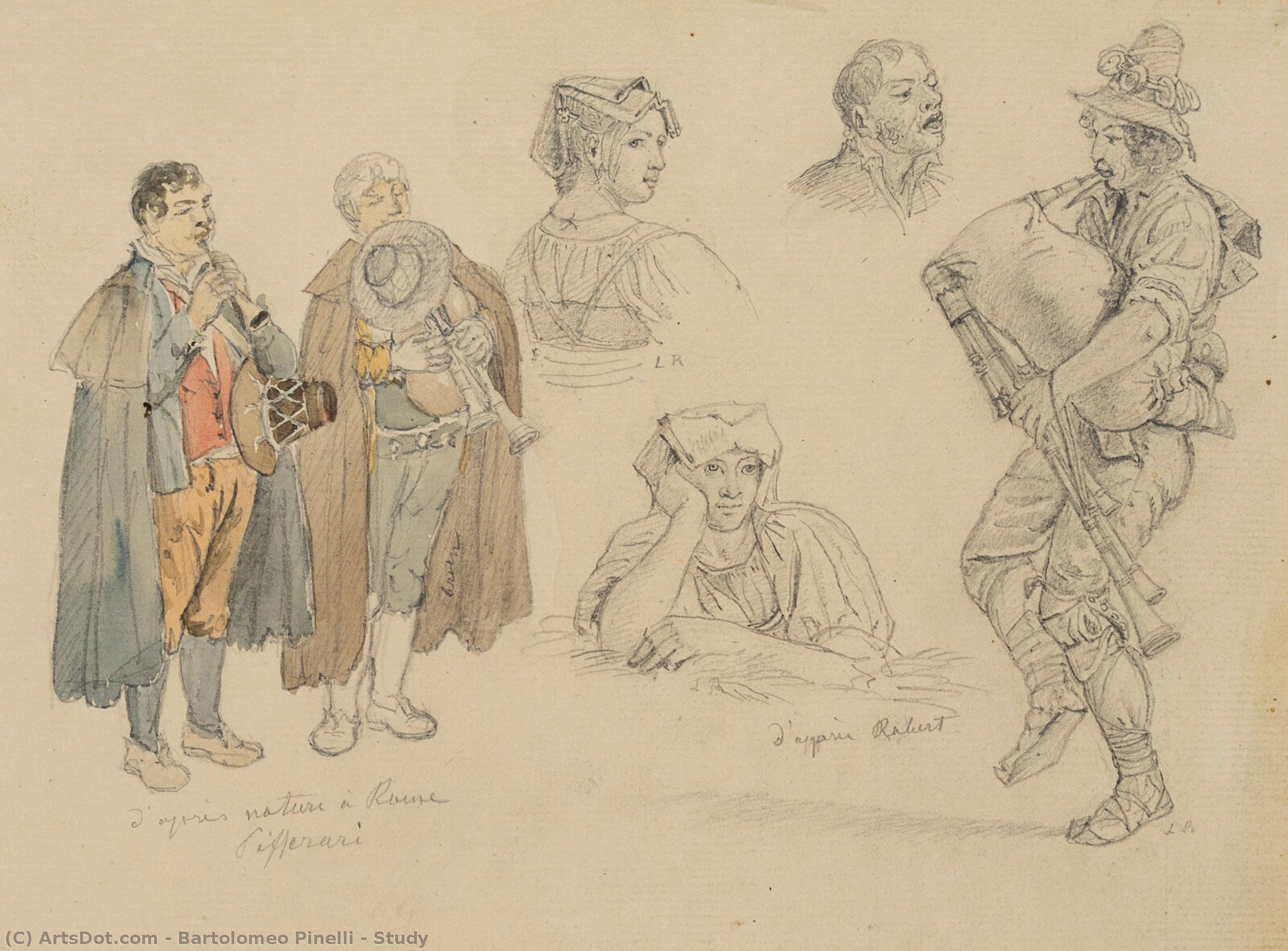
Pinelli’s artistic journey began with an early fascination for Franz Kaiserman’s style, evident in his initial watercolors depicting figures in a manner characteristic of German Romanticism. However, he swiftly transitioned to a more independent approach, embracing meticulous detail and capturing the essence of Roman culture—both ancient and modern—with remarkable sensitivity. His oeuvre is overwhelmingly focused on Rome: its inhabitants, its monuments, and its traditions. This dedication reflects not merely an aesthetic preference but also a deep conviction in portraying the human experience within the grandeur of history.
His artistic output was extraordinarily prolific, encompassing albums of watercolors like “Scene e Costumi di Roma e del Lazio” (1807), which meticulously documented the costumes and customs of Roman society. Simultaneously, he embarked on ambitious engraving projects—starting with “Raccolta di Cinquanta Costumi Pittoreschi Incisi all’Acquaforte” (1809)—that showcased his technical prowess and artistic vision. These engravings tackled monumental subjects such as “La Storia Romana” (1816) and “La Storia Greca” (1821), demonstrating Pinelli's commitment to conveying complex narratives with precision and artistry. He particularly revered the traditions of ancient Greece and Rome, producing a series of prints celebrating the Pantheon’s gods—a testament to his intellectual curiosity and artistic integrity.
Pinelli’s distinctive technique involved hatching and cross-hatching—methods that allowed him to achieve remarkable tonal range and convey atmosphere with exceptional subtlety. His engravings are characterized by their meticulous attention to detail, capturing textures and nuances of form with breathtaking accuracy. Furthermore, Pinelli's exploration of popular tales—as exemplified in “La Storia del Brigante Decapitato”—revealed his empathy for the human condition and his willingness to engage with themes of morality and justice.
Bartolomeo Pinelli’s legacy extends beyond his individual artworks; he represents a cornerstone of Roman artistic culture during the Romantic period, embodying the spirit of observation, craftsmanship, and intellectual engagement that defined the era. His enduring influence can be discerned in subsequent generations of artists who sought to emulate his stylistic innovations and capture the beauty and complexity of the Roman world.





































