

작가가 직접 캔버스에 손으로 그린 유화 작품으로, 원하는 크기와 액자로 맞춤 제작해 드립니다. ( 프린트 판매로 전환 디지털 이미지 판매 채널로 전환)





























작품의 원본 비율을 그대로 유지하는 프리셋 사이즈 중에서 선택해 보세요.

특정 프레임이나 공간에 맞춰 원하는 크기를 직접 입력하실 수 있습니다. 선택하신 크기가 원본 이미지의 비율과 일치하지 않을 경우, 작품을 자르거나 추가적인 수작업 요소를 더해 그림을 확장하여 제작합니다. 제작 시작 전, 최종 확인을 위해 디지털 목업을 보내드립니다.
화면상의 미리 보기는 실제 크롭(자르기)이나 확장된 상태를 완벽히 반영하지 않을 수 있습니다. 최종 구도는 오직 목업을 통해서만 정확하게 확인하실 수 있습니다.
맞춤 크기 제작도 가능하지만, 원본의 비율을 그대로 유지하기 위해서는 미리 정의된 목록에서 크기를 선택하시는 것을 권장합니다.

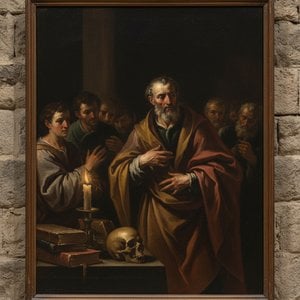
Frère Junipero et le pauvre
복제본 규격
In the quiet, evocative depths of Bartolomé Esteban Murillo's "Frère Junipero et le pauvre," painted around 1670, we encounter more than a mere historical tableau; we witness a profound dialogue between human vulnerability and divine grace. This masterpiece of the Spanish Baroque period captures an intimate moment of selfless generosity, depicting a friar—likely Saint Junipero Serra—kneeling in humble service before a destitute man. The scene is not merely an observation of charity but an emotional immersion into the socio-religious heart of 17th-century Spain. Through his masterful command of light and shadow, Murillo invites the viewer to step into a realm where the boundaries between the earthly struggle of poverty and the spiritual radiance of faith become beautifully blurred.
The composition is a triumph of Baroque harmony, utilizing a classical arrangement that centers the two figures in a symmetrical, yet deeply organic, embrace. While the friar occupies the central axis with a posture of quiet devotion, the beggar’s contorted and vulnerable form provides a poignant counterpoint, grounding the spiritual theme in the harsh reality of human need. Murillo eschews sharp, jarring lines in favor of soft, blended brushstrokes that lend the figures an ethereal, almost dreamlike quality. This deliberate softness allows the forms to emerge naturally from a muted, earthy palette of ochres, deep browns, and subtle greens, creating a sense of timelessness that resonates with anyone seeking art that speaks to the enduring strength of the human spirit.
To behold this work is to experience Murillo’s legendary mastery of glazing techniques. By applying successive layers of translucent oil pigment, the artist achieved a remarkable luminosity that seems to emanate from within the canvas itself. This technique is particularly striking in the depiction of light; a gentle, naturalistic glow illuminates the faces and hands of the subjects, suggesting a divine presence touching the mundane. The play of light does more than define shape—it breathes life into the textures of the scene. One can almost feel the weathered, rugged skin of the beggar and the coarse, heavy fabric of his garments, which stand in stark, tactile contrast to the smoother, flowing robes of the friar.
Beyond its technical brilliance, the painting serves as a powerful symbolic vessel. The outstretched hands of the beggar are a universal emblem of dependence and longing, while the friar’s gentle touch acts as a conduit for empathy and spiritual guidance. Even the background, with its softly blurred architectural elements and rolling hills, contributes to the narrative; the distant monastery anchors the scene in a specific monastic tradition, yet the atmospheric perspective creates an expansive sense of hope and redemption. For the discerning collector or interior designer, this reproduction offers more than just aesthetic beauty; it provides a focal point of profound emotional depth, making it an exquisite addition to any space dedicated to contemplation, warmth, and the celebration of humanist compassion.


1618 - 1682 , 스페인
Explore the profound drama of Spanish Baroque art. Delve into the mastery of light, shadow, and realism through the legendary works of Diego Velázquez and the Spanish Golden Age.

 실제 크기로 보기
 보내기
보내기 공유하기
공유하기
 상세 보기
상세 보기 가이드 보기

 이미지 다운로드
 유사 작품 더 보기
 X-레이
X-레이 슬라이드 쇼 보기
 통계 정보
통계 정보


 상세 보기
상세 보기









 유리 옵션은 110cm 미만 크기에서만 선택 가능합니다.


