온라인 미리보기보다 훨씬 뛰어난 품질의 고해상도 디지털 이미지를 구매해 보세요.
각 파일은 사내 전문가가 고급 도구와 숙련된 수동 리터칭 기술을 사용하여 세심하게 준비합니다. 우리는 모든 이미지가 탁월한 선명도, 정확한 색상 재현력, 그리고 미세한 디테일까지 완벽하게 갖추도록 보장합니다.
최종 파일은 전문적인 편집 및 인쇄 환경에서 즉시 사용할 수 있도록 최적화되어 72시간 이내에 이메일로 발송됩니다. 이는 세계적인 디자인 스튜디오, 출판사 및 갤러리가 신뢰하는 것과 동일한 품질입니다.
개인 소장 및 전시, 인쇄, 창작 프로젝트를 위한 고해상도 파일을 다운로드하세요. ( 프린트 판매로 전환 수작업 채색 복제본 주문하기)
WahooArt.com를 선택하시면 단순히 이미지를 받는 것을 넘어, 정밀한 보정 과정을 거쳐 완성된 전문적인 디지털 예술 작품을 만나보실 수 있습니다. 모든 작품에는 만족 보장 서비스가 함께 제공되며, 주문 시 다음과 같은 사항들이 자동으로 포함됩니다:

주문 후 72시간 이내에 고해상도 디지털 이미지 파일이 이메일로 발송되며, 즉시 사용하실 수 있습니다.

귀하의 작품은 고급 AI 기술과 정교한 수동 편집 과정을 거쳐 전문적으로 최적화되며, 이를 통해 디테일과 선명도, 색상의 정확도를 극대화합니다.

파일을 실수로 삭제하거나 분실하셨나요? 걱정 마세요. 언제든 무료로 다시 보내드립니다.

관세나 부가세, 배송비 부담 없이 작품을 즉시 소장하세요 - 디지털 다운로드는 언제나 면세 혜택이 적용됩니다.

전문적인 도구와 색상 관리 시스템을 통해 디지털 이미지가 원본의 색상을 최대한 정확하게 구현하도록 보장합니다.

구매하신 디지털 이미지에 만족하지 못하실 경우, 100일 이내에 별도의 조건 없이 수정 또는 100% 환불을 진행해 드립니다.

만족스럽지 않으신가요? 디지털 파일을 받으신 후 100일 이내에 조건 없이 전액 환불해 드립니다.

이미지 3매 구매 시 10% 할인 - 5매 구매 시 15% 할인 - 10매 이상 구매 시 20% 할인. 크리에이티브 프로젝트, 갤러리, 에이전시에 매우 유용합니다.
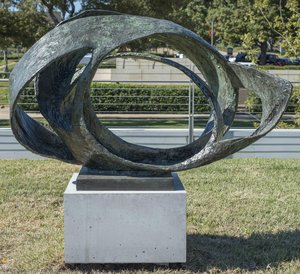
Barbara Hepworth’s “Prototype for Maquette, Three Forms in Echelon,” a deceptively simple yet profoundly resonant sculpture, stands as a testament to the artist's pioneering approach to modern abstraction. Created in 1961 during a period of intense experimentation and exploration within her studio at St Ives, Cornwall, this piece isn’t merely a collection of shapes; it’s an invitation to contemplate the relationship between form, space, and the inherent qualities of materials – specifically, the cool, tactile embrace of stone or wood.
The sculpture presents three distinct, organically curved forms arranged vertically on a stark white background. These aren't representational figures; instead, they embody an elemental language, suggesting echoes of natural forms—waves, rocks, or perhaps even the contours of the human body—without ever explicitly depicting them. The arrangement follows an echelon pattern, each form subtly offset from the one below, creating a dynamic sense of upward movement and spatial depth. This deliberate asymmetry is key to Hepworth’s aesthetic; she sought to disrupt traditional notions of balance and harmony, favoring instead a more intuitive and expressive approach.
Hepworth's process was deeply rooted in the materiality of her chosen medium. She rarely used preparatory sketches, preferring to work directly from intuition and feeling, allowing the stone or wood to guide the form. The “Prototype” itself is a crucial stage in this process – a preliminary model intended to refine the composition and explore the interplay of light and shadow before committing to a larger-scale version. The matte texture of the sculpture, achieved through careful carving and polishing, invites tactile engagement; one can almost feel the cool smoothness of the stone beneath their fingertips.
Her technique involved a subtractive approach – carefully removing material to reveal the underlying form—combined with an understanding of how light interacts with different surfaces. The subtle tonal shifts within the sculpture’s surface, achieved through meticulous polishing and manipulation of the grain, create a sense of depth and volume, drawing the eye upwards and inviting contemplation. The stark white background serves not as a distraction but as a crucial element in highlighting the forms' inherent qualities, emphasizing their purity and simplicity.
Hepworth’s work consistently explores themes of human connection to nature and the inner self. These three abstract forms can be interpreted as representing interconnectedness—a visual metaphor for the flow of life forces or perhaps a meditation on the fundamental building blocks of existence. The vertical arrangement evokes a sense of aspiration, reaching towards something beyond the immediate, while the subtle curves suggest fluidity and movement.
Considering Hepworth’s broader body of work, this “Prototype” shares affinities with her earlier explorations of ‘Form and Function,’ where she sought to create sculptures that were both aesthetically pleasing and responsive to their environment. It's a piece that speaks to the enduring power of abstraction—its ability to evoke profound emotions and ideas through purely visual means. The sculpture’s quiet intensity invites viewers to engage in a personal dialogue with its forms, prompting reflection on the nature of beauty, space, and our relationship to the world around us.


1903 - 1975 , 영국


 보내기
보내기 공유하기
공유하기
 상세 보기
상세 보기 가이드 보기

 이미지 다운로드
 유사 작품 더 보기
 슬라이드 쇼 보기
 통계 정보
통계 정보


 상세 보기
상세 보기