
x


 Oil On PanelNorthern Renaissance
 1574Renaissance
 130.0 x 155.0 cm
 그로닝헤 미술관




























작품의 원본 비율을 유지하는 미리 설정된 크기 중에서 선택하세요.

특정 프레임이나 공간에 맞도록 직접 크기를 입력할 수 있습니다. 선택하신 크기가 원본 이미지의 비율과 일치하지 않는 경우, 작품을 자르거나 추가적인 손으로 그린 요소를 사용하여 그림을 확장합니다. 제작 시작 전 승인을 위해 디지털 목업을 보내드립니다.
화면 미리 보기는 실제 자르기 또는 확장을 반영하지 않습니다. 최종 구성은 목업을 통해서만 정확하게 확인하실 수 있습니다.
맞춤 크기 제작도 가능하지만, 원본 비율을 유지하기 위해 사전 정의된 목록에서 크기를 선택하시는 것을 권장합니다.

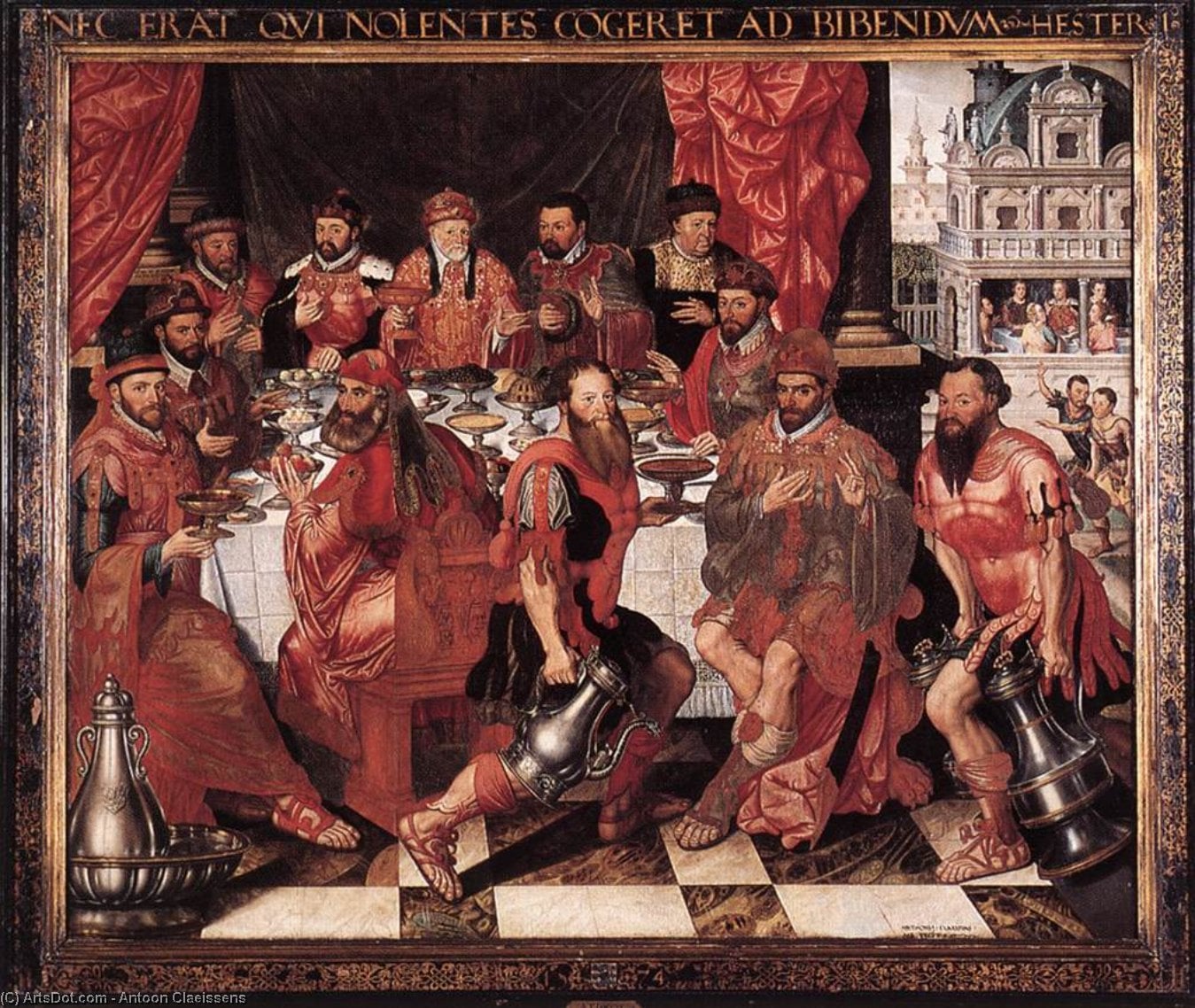
Banquet
복제본 크기

Antoon Claeissens, a name perhaps less familiar than some of his Flemish contemporaries, stands as a pivotal figure in the artistic landscape of 16th-century Bruges. Born around 1536 and passing away in 1613, he was a painter deeply intertwined with the city’s cultural and political life, serving as its official artist for a significant period. Claeissens wasn't merely a recorder of events; he was an interpreter of ideas, crafting dramatic religious scenes and intricate allegories that reflected the intellectual currents and social dynamics of his time. His legacy lies not just in the finished artworks but also in the complex family network of artists – his brothers Gillis and Pieter – who collectively shaped the artistic identity of Bruges during a remarkably fertile era.
Claeissens’ early life was steeped in art, as he apprenticed under the renowned Adrian Becaert, a master known for his detailed historical paintings. This foundation provided him with a strong grounding in technique and perspective – skills that would later be employed to great effect. However, it was within the Claeissens workshop itself that Antoon truly flourished, benefiting from the collective experience and established reputation of his father, Pieter Claeissens the Elder, and his brothers. This familial collaboration is a fascinating aspect of his career; while each artist possessed individual styles, they frequently worked together on large-scale projects, making precise attribution of specific works challenging even today.
Antoon Claeissens' role as the city painter of Bruges was far more than a simple commission. He was responsible for a vast array of artistic endeavors that served both religious and civic purposes. Following the tumultuous events of the Beeldenstorm (the Iconoclastic Fury) in 1566, which saw the destruction of countless religious images, the city council commissioned artists to restore and replace these lost artworks. Claeissens played a crucial part in this monumental undertaking, contributing significantly to the decoration of several parish churches – including Saint Gillis Church and the Church of Our Lady – with altarpieces, frescoes, and panel paintings.
Beyond restoring existing works, he was also tasked with creating new pieces that conveyed religious messages and reinforced civic values. This involved a deep understanding of theological concepts, historical narratives, and allegorical symbolism—elements that are abundantly present in his most celebrated works. His involvement extended to the administration of the Bruges Guild of St. Luke, where he served as dean multiple times, demonstrating his considerable influence within the artistic community.
Claeissens’ oeuvre is characterized by a dramatic intensity and a masterful command of composition. His paintings are often large-scale, employing rich colors and meticulous detail to create visually arresting scenes. Several works stand out as particularly significant examples of his artistic skill and thematic concerns. “Mars Vanquishing the Seven Capital Sins” (circa 1605), now housed in the Groeningemuseum, is perhaps his most famous painting. This allegorical composition depicts Mars, the god of war, triumphing over the seven deadly sins – a potent symbol of virtue prevailing over vice. The intricate details and carefully rendered figures convey both the grandeur of the subject matter and Claeissens’ technical prowess.
Another notable work is “The Judgement of Solomon” (circa 1580), which showcases his ability to depict complex narratives with clarity and emotional impact. The painting illustrates the biblical story of King Solomon, known for his wisdom and justice, weighing the testimonies of two women claiming a baby. The scene is rendered with dramatic lighting and dynamic movement, capturing the tension and uncertainty of the moment. These works, along with pieces like “Banquet,” demonstrate Claeissens’ skill in blending religious themes with humanist concerns.
Antoon Claeissens' contribution to the artistic heritage of Bruges is undeniable. He was a key figure within the Claeissens family, a dynasty that dominated the city’s art scene for generations. His work reflects the intellectual and religious ferment of the 16th century, embodying the complex interplay between faith, reason, and civic identity. While his individual style may not be immediately recognizable in the same way as those of some of his contemporaries, his influence is evident in the collective output of the Claeissens workshop – a testament to their shared vision and artistic collaboration.
Furthermore, Claeissens’ role as the city painter highlights the crucial connection between art and governance in 16th-century Bruges. His paintings served not only as devotional objects but also as powerful symbols of civic pride and religious authority. Studying his work offers a valuable window into the social, political, and cultural dynamics of this vibrant and influential city.

1536 - 1613 , Belgium

Explore the exquisite precision of Flemish painting. From Jan van Eyck to Robert Campin, discover the revolutionary oil techniques and rich symbolism that defined the Northern Renaissance and continue to inspire fine art collectors today.

Discover the profound allure of oil on canvas. Explore the mastery of impasto textures, the science of pigment longevity, and expert guides to selecting museum-quality reproductions that elevate your collection with timeless elegance and tactile depth.

Embark on a journey through the exquisite precision of Flemish Art. Discover the pioneering oil techniques, profound symbolism, and luminous realism that define the Northern Renaissance masters in this expert guide for art enthusiasts.

Discover the enduring legacy of oil on board painting. Explore how historical techniques, rich impasto textures, and structural durability create timeless masterpieces that bridge Renaissance grandeur with modern art collecting excellence.

Discover the enduring allure of oil on canvas. Explore how master techniques like impasto and glazing create the depth, texture, and emotional resonance found in the world's greatest masterpieces. An essential guide for fine art enthusiasts and discerning collectors.


최신 미술 뉴스, 특별 혜택 및 인테리어 아이디어를 가장 먼저 만나보세요.
프로젝트에 대해 알려주시면 저희 미술 전문가들이 맞춤형 아트 제안 3가지를 전달해 드립니다.
당신만을 위한 맞춤형 옵션 3가지를 무료로 추천해 드립니다!

 미리보기
미리보기
 프린트 구매
 공유하기
공유하기 공유하기
공유하기
 상세 정보
상세 정보

 다운로드
다운로드
 유사 작품
유사 작품 X-레이
X-레이 슬라이드 쇼
 더 보기
더 보기









 유리 옵션은 110cm 미만 크기에서만 선택 가능합니다.


