원하는 크기와 액자로 주문 제작되는, 작가들이 직접 캔버스에 손으로 그린 유화 작품입니다. ( 프린트 판매로 전환 디지털 이미지로 전환)
작품의 원본 비율을 유지하는 미리 설정된 크기 중에서 선택하세요.

특정 프레임이나 공간에 맞도록 직접 크기를 입력할 수 있습니다. 선택하신 크기가 원본 이미지의 비율과 일치하지 않는 경우, 작품을 자르거나 추가적인 손으로 그린 요소를 사용하여 그림을 확장합니다. 제작 시작 전 승인을 위해 디지털 목업을 보내드립니다.
화면 미리 보기는 실제 자르기 또는 확장을 반영하지 않습니다. 최종 구성은 목업을 통해서만 정확하게 확인하실 수 있습니다.
맞춤 크기 제작도 가능하지만, 원본 비율을 유지하기 위해 사전 정의된 목록에서 크기를 선택하시는 것을 권장합니다.

Clothing fabric
복제본 크기
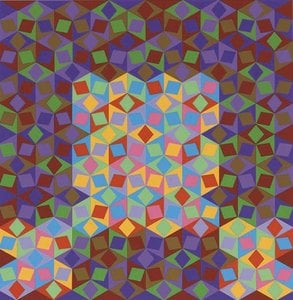
In the vibrant tapestry of mid-century textile design, few works capture the exuberant spirit of the era quite like Anna Borkowska’s Clothing Fabric. Created in 1973, this mesmerizing piece serves as a masterclass in color theory and geometric rhythm. At first glance, the eye is swept into a rhythmic dance of chromatic squares, arranged in a meticulous grid that evokes the precision of a mosaic. Each cell within this textile holds a fragment of the visible spectrum, transitioning seamlessly from fiery reds and sun-drenched yellows to deep indigos and soft violets. This deliberate arrangement does more than merely decorate; it creates a sense of perpetual motion, where the eye is never permitted to rest, but rather invited to wander through a luminous landscape of hue and light.
Interspersed among these bold color blocks are delicate floral motifs that soften the geometric rigor of the design. These botanical whispers add a layer of organic complexity, breaking the mathematical precision of the grid with the grace of nature. The interplay between the structured squares and the fluid, blossoming shapes creates a tension that is both visually stimulating and deeply harmonious. To touch this work—even through the medium of a high-quality reproduction—is to sense the phantom presence of the individual threads and yarns that compose its soul. The visible texture of the weave lends an artisanal depth to the piece, reminding the viewer of the meticulous craftsmanship required to marry such bold saturation with intricate detail.
To truly appreciate this textile, one must look through the lens of Anna Borkowska’s extraordinary life. A survivor of the profound displacements of the mid-20th century, Borkowska possessed a unique ability to weave resilience into her art. Having endured the hardships of Siberian resettlement, her work often transcends simple decoration to become a vessel for memory and continuity. In Clothing Fabric, we see this manifested as a celebration of vitality. The saturated colors and rhythmic patterns act as an emotional counterpoint to the turbulence of history, offering a sanctuary of brightness and order. It is as if the artist sought to reconstruct a sense of wholeness through the very threads she manipulated.
For the discerning collector or interior designer, this piece offers unparalleled versatility. Its bold, kaleidoscopic nature makes it a commanding focal point in a contemporary setting, yet its mid-century roots allow it to integrate seamlessly into more traditional or eclectic environments. Whether rendered as a large-scale wall hanging that breathes life into a minimalist room or used as an accent piece to introduce warmth to a sophisticated study, the artwork provides a profound emotional impact. It is not merely a pattern on fabric; it is an invitation to experience the enduring power of color and the beautiful, structured chaos of the natural world.

안나 보르코프스카(1916–2008)의 삶은 이주와 생존, 그리고 굴하지 않는 창조적 정신이라는 실로 짜인 깊이 있는 태피스트리와도 같았습니다. 미콜라이우에서 태어난 그녀의 유년 시절은 제2차 세계 대전의 그림자와 뒤이은 소련의 폴란드 점령이라는 20세기의 거대한 격변 속에 놓여 있었으며, 이는 그녀의 운명을 완전히 바꾸어 놓았습니다. 시베리아 재정착이라는 참혹한 현실에 직면하며 보르코프스카는 고향의 취약함과 망명의 무게를 몸소 경험해야 했습니다. 이러한 고난의 용광로 속에서 그녀의 예술적 정체성은 단순한 미적 표현 수단을 넘어, 역사의 파도가 지워버리려 했던 기억들을 보존하기 위한 필수적인 그릇으로서 응집되기 시작했습니다.
동시대의 많은 예술가가 재현적인 회화라는 전통적인 영역에서 안식을 찾으려 했던 것과 달리, 보르코와스카는 촉각적이고 친밀한 매체인 섬유 예술로 눈을 돌렸습니다. 그녀에게 직물은 단순한 표면 그 이상이었습니다. 그것은 상실과 향수라는 무형의 감정을 담아내는 저장소였습니다. 그녀의 작업은 구상적인 이미지를 넘어 세련된 추상을 지향했으며, 발트해의 우울한 아름다움을 불러일으키는 색채 팔레트를 사용했습니다. 이러한 차가운 푸른 빛과 변화하는 색조들은 기억의 평온함과 그녀가 지나온 삶의 격랑을 동시에 상징하는 시각적 은유였습니다. 그녀는 세심한 장인 정신을 통해 천을 무의식의 풍경으로 탈바꿈시켰으며, 그 안의 모든 바느질과 염색은 취약함 속에서도 발견할 수 있는 인내 강인함을 대변했습니다.
깊은 인간적 유대감을 전달하는 보르코프스카의 능력은 베틀과 수채화 붓을 넘어 훨씬 더 넓은 영역으로 확장되었습니다. 그녀는 시각 예술과 극적 연기 사이의 간극을 메울 수 있는 보기 드문 공감 능력을 지니고 있었습니다. 이러한 독특한 감수성은 자파르 파나히 감독의 영화적 걸작 화이트 발룬(199듬)에 출연했을 때 국제적인 찬사를 이끌어냈습니다. 인자한 노부인을 연기하며 그녀는 자신이 직접 겪은 회복력의 경험을 투영하여 전 세계 관객의 마음을 울리는 캐릭터에 생명력을 불어넣었습니다. 이 역할은 그녀의 두 예술 세계가 만나는 가슴 아픈 교차점이 되었으며, 섬유 디자인에서 보여준 정서적 깊이는 스크린 위에서 인간 관계의 본질을 포착하는 능력으로 그대로 이어졌습니다.
그녀의 작품 세계가 지닌 진정한 의미는 개인적인 트라우마를 회복과 치유라는 보편적인 주제로 승화시킨 데 있습니다. 의류 직물(1972)과 같은 그녀의 주목할 만한 작품들은 움직임과 유동성을 포착하는 수채화 디자인의 숙련도를 보여줍니다. 보르코프스카의 예술을 탐구한다는 것은 다음과 같은 그녀의 유산 속 요소들과 마주하는 일입니다.
결국 안나 보르코프스카는 이주민의 개인적인 투쟁과 추상의 보편적 언어를 잇는 가교로서, 20세기 미술사에서 중요한 인물로 남아 있습니다. 그녀의 작품은 설령 고향을 잃더라도 정체성의 본질은 한 줄기 실처럼 다시 짜여 영원하고 아름다운 무언가로 거듭날 수 있다는 믿음의 증거입니다.

1916 - 2008 , 러시아

Embark on a visual journey through the ethereal beauty of rainbows in fine art. Explore how masters captured light, color, and atmosphere through Impressionism and beyond. Discover timeless masterpieces for your collection with expert insights into the spectrum of splendor.

Explore the profound impact of geometric form in art history. From Cubism to Op Art, discover how shape creates movement and emotion in masterpieces, and learn how to curate these powerful compositions for your private collection.

Explore the profound spiritual depth of geometric abstraction. From Malevich's Suprematism to modern masters, our expert guide reveals how pure form and color command presence in fine art collections.


 공유하기
공유하기 공유하기
공유하기
 상세 정보
상세 정보

 다운로드
다운로드
 유사 작품
유사 작품 슬라이드 쇼
 통계 정보
통계 정보


 더 보기
더 보기






































 유리 옵션은 110cm 미만 크기에서만 선택 가능합니다.