
원하는 크기와 액자로 주문 제작되는, 작가들이 직접 캔버스에 손으로 그린 유화 작품입니다. ( 프린트 판매로 전환 디지털 이미지로 전환)





























작품의 원본 비율을 유지하는 미리 설정된 크기 중에서 선택하세요.

특정 프레임이나 공간에 맞도록 직접 크기를 입력할 수 있습니다. 선택하신 크기가 원본 이미지의 비율과 일치하지 않는 경우, 작품을 자르거나 추가적인 손으로 그린 요소를 사용하여 그림을 확장합니다. 제작 시작 전 승인을 위해 디지털 목업을 보내드립니다.
화면 미리 보기는 실제 자르기 또는 확장을 반영하지 않습니다. 최종 구성은 목업을 통해서만 정확하게 확인하실 수 있습니다.
맞춤 크기 제작도 가능하지만, 원본 비율을 유지하기 위해 사전 정의된 목록에서 크기를 선택하시는 것을 권장합니다.

Virgin and Child
복제본 크기
In the quiet intimacy of Andrea Mantegna’s 'Virgin and Child', painted around 1470, we encounter more than a mere religious icon; we step into a profound dialogue between the earthly and the divine. This masterpiece serves as a breathtaking embodiment of the humanist spirit that began to pulse through Renaissance Italy. Rather than presenting a flattened, symbolic arrangement common in earlier medieval art, Mantegna utilizes an unprecedented mastery of linear perspective to create a window of immense depth. The viewer is not merely observing a scene but is drawn into a sacred space where the architectural grandeur of Roman antiquity meets the tender vulnerability of maternal love. It is a work that commands attention through its structural brilliance and its ability to make the spiritual feel tangibly present.
The composition is a triumph of spatial illusion, reflecting Mantegna’s deep fascination with classical Roman principles. By meticulously calculating the recession of space, he mirrors the monumental feeling of ancient temples and theaters, elevating the figures of Mary and Jesus above the mundane. The Virgin Mary sits upon a throne that evokes the dignity of imperial iconography, her pose radiating an authority that is both regal and deeply compassionate. As she gazes down at the infant Christ, her expression carries a weight of contemplative melancholy, a subtle foreshadowing of the sacrifice to come. This emotional complexity is balanced by the peaceful slumber of the Child, whose innocence provides a serene counterpoint to the heavy historical significance surrounding him.
Mantegna’s technical prowess is most evident in his restrained yet luminous palette. Dominated by earthy, resonant hues such as ochre, umber, and terracotta, the painting possesses a somber beauty that feels grounded in the very soil of Italy. Through the meticulous layering of thin glazes over precise underdrawings, Mantegna achieved a surface of remarkable smoothness and light-catching luminosity. This technique allows for subtle gradations of color that breathe life into the fabric of Mary’s blue cloak—a hue traditionally used to symbolize purity and divinity—and the fine white cloth swaddling the Christ child. This white shroud, while representing innocence, also serves as a poignant symbolic link to the shroud of the crucifixion, adding a layer of theological depth to the visual narrative.
For the discerning collector or interior designer, this artwork offers an unparalleled sense of timelessness and gravitas. The soft, diffused lighting creates an atmosphere of quiet sanctuary, making it an ideal centerpiece for spaces designed for reflection, study, or sophisticated repose. The interplay between the dark, indistinct background and the highly detailed, realistic facial features ensures that the emotional core of the piece remains the focal point. To possess a reproduction of this work is to bring into one's environment a fragment of the Renaissance—a piece that celebrates the intersection of archaeological accuracy, technical innovation, and the enduring power of human emotion.

1431 - 1506 , 이탈리아
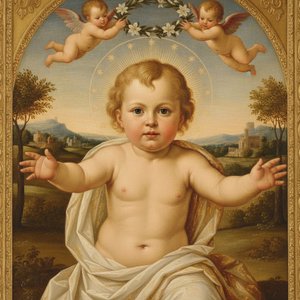
Explore the profound beauty of Baby Jesus in fine art history. From Raphael's Renaissance masterpieces to symbolic light, discover how classical painters captured divine innocence through masterful technique and sacred iconography.

Explore the profound beauty of Marian iconography through an art historian's lens. Discover iconic masterpieces by Raphael and Renaissance masters, celebrating the divine grace and timeless elegance of the Virgin Mary in classical fine art.

Embark on a profound journey through art history with our exploration of the most iconic depictions of the Virgin Mary. Discover the divine grace, symbolism, and masterful techniques found in Renaissance masterpieces and sacred iconography.


 미리보기
미리보기
 공유하기
공유하기 공유하기
공유하기
 상세 정보
상세 정보

 다운로드
다운로드
 유사 작품
유사 작품 X-레이
X-레이 슬라이드 쇼
 통계 정보
통계 정보

 더 보기
더 보기









 유리 옵션은 110cm 미만 크기에서만 선택 가능합니다.


