

빠른 제작과 다양한 마감 옵션을 선택할 수 있는 박물관 수준의 지클레이 및 캔버스 프린트. ( 수작업 채색 복제본 주문하기 디지털 이미지 판매 채널로 전환)





























작품의 원본 비율을 그대로 유지하는 프리셋 사이즈 중에서 선택해 보세요.

액자나 벽면 크기에 맞춰 필요한 가로와 세로 길이를 입력해 주세요. 프린트는 원본 이미지보다 크게 제작할 수 없으며 오직 자르는 것만 가능하므로, 비율이 다른 사이즈를 선택할 경우 이미지의 일부가 잘려 나갈 수 있습니다. 인쇄 작업에 들어가기 전, 최종 확인을 위해 디지털 목업을 보내드립니다. 이 페이지에 표시된 이미지는 실제 잘리는 영역을 나타내지 않으며, 오직 목업을 통해서만 정확한 확인이 가능합니다.
Nu couche de dos
복제본 규격
Amedeo Modigliani's "Nu couché de dos" (Reclining Nude from the Back), painted in 1917, isn’t merely a depiction of a female nude; it’s a carefully constructed tableau of introspection and subtle sensuality. Captured during a period of intense creative ferment for the artist – a time marked by both profound artistic breakthroughs and personal hardship – this work embodies Modigliani's signature style: elongated forms, simplified features, and an almost unsettling stillness. The painting immediately draws the viewer in with its quiet intensity, inviting contemplation rather than overt display. It’s a portrait not of physical beauty as traditionally defined, but of a soul at rest, yet subtly aware.
The genesis of this piece lies within Modigliani's unique artistic environment. He was working under the patronage of Leopold Zborowski, a Polish poet and art dealer who provided him with a studio, models, and a vital lifeline during a period of considerable instability. This arrangement fostered an atmosphere of experimentation and collaboration, allowing Modigliani to push the boundaries of his style and explore new avenues for representing the human form. The painting’s creation coincided with a pivotal moment in Modigliani's career – a time when he was actively seeking to move beyond the influence of earlier masters and forge his own distinct visual language.
Modigliani’s technique is immediately recognizable. He employs long, fluid lines to define the figure's contours, exaggerating the neck and limbs in a manner that creates an almost ethereal quality. The forms are deliberately simplified – reduced to their essential shapes while retaining a remarkable sense of volume. The elongated proportions, characteristic of his work, contribute significantly to the painting’s dreamlike atmosphere. Notice how the curves of the body flow seamlessly into one another; there are no sharp edges or abrupt transitions, creating a feeling of harmonious balance.
The color palette is deliberately muted and earthy – ochre, beige, brown, and subtle hints of red—reflecting Modigliani’s preference for understated tones. This restrained use of color allows the forms themselves to take center stage, while the dark background and cushions provide a dramatic contrast, emphasizing the figure's delicate flesh tones. The application of paint is remarkably smooth, suggesting an oil-on-canvas technique executed with meticulous care. Brushstrokes are visible but subtle, contributing to a sense of tactile richness.
Beyond its formal qualities, “Nu couché de dos” resonates with layers of symbolic meaning. The reclining pose itself suggests vulnerability and introspection—a moment of quiet contemplation away from the demands of the world. The woman’s gaze, directed directly at the viewer, is particularly arresting. It's not a seductive or overtly provocative look; rather, it conveys a sense of detached awareness, as if she is observing us with a gentle curiosity. The slightly downturned mouth adds to this impression of quiet melancholy.
The elongated neck and limbs—a hallmark of Modigliani’s style—contribute to the painting's ethereal quality, evoking a sense of timelessness and spiritual depth. Some art historians interpret these features as reflecting Modigliani’s own preoccupation with mortality and his fascination with ancient cultures, particularly those of Africa and Greece, which he saw as sources of profound artistic inspiration. The overall effect is one of poignant beauty—a reminder of the fragility and transience of human existence.
“Nu couché de dos” stands as a crucial work within Modigliani’s oeuvre, representing a pivotal moment in his artistic development. It exemplifies his departure from traditional academic approaches to the nude figure, embracing instead a more stylized and emotionally resonant representation of the human form. The painting's creation coincided with a period of intense experimentation in European art, marked by the rise of Cubism, Futurism, and Expressionism—movements that challenged conventional notions of perspective, space, and representation.
Modigliani’s influence extends far beyond his own lifetime. His distinctive style—characterized by elongated forms, simplified features, and a hauntingly beautiful aesthetic—has inspired generations of artists. Reproductions of “Nu couché de dos” continue to be highly sought after by collectors and interior designers alike, serving as elegant reminders of Modigliani’s enduring legacy.
모딜리아니의 "Nu couche de dos"의 주된 색조는 Golden Yellow Range입니다. 이 색조는 팔레트의 바탕이 되는 톤을 형성합니다.
모딜리아니의 "Nu couche de dos"의 기록된 수치는 다음과 같습니다: 밝기 balanced, 휘도 Soft Shadow.
호환 가능한 기기에서 증강 현실(AR) 기능을 사용하면, 작품의 AR 미리보기 페이지를 통해 모딜리아니의 "Nu couche de dos"을(를) 고객님의 벽에 미리 배치해 볼 수 있습니다.
아메데오 모디글리아니(Amedeo Modigliani, 1884-1920)는 20세기 초 파리 화단에서 독특한 개성을 드러낸 이탈리아 출신의 화가이자 조각가입니다. 그의 작품은 길게 늘어진 인물과 섬세하게 표현된 눈, 그리고 어딘가 모르게 슬픔이 깃든 분위기로 유명하며, 오늘날까지도 많은 사랑을 받고 있습니다. 모디글리아니의 삶은 예술적 천재성과 비극적인 고독이 뒤섞인 채 전개되었고, 그의 작품들은 이러한 삶의 흔적을 고스란히 담아내고 있습니다.
1884년 이탈리아 리보르노에서 유대인 가정에서 태어난 모디글리아니는 어린 시절부터 병약했습니다. 폐렴과 결핵으로 수차례 생사를 헤매면서, 그는 세상의 아름다움과 덧없음을 더욱 깊이 느끼게 되었을 것입니다. 가족의 경제적 어려움 속에서도 어머니와 할아버지로부터 니체, 보들레르, 랭보 등 당대 지성인들의 사상을 접하며 예술적 감수성을 키워나갔습니다. 리보르노에서 미술 교육을 받은 후, 그는 1906년 파리로 건너가 본격적인 예술 활동을 시작했습니다.
파리는 당시 유럽 예술의 중심지였고, 모디글리아니는 이곳에서 피카소, 브랑쿠시 등 당대 최고의 화가들과 교류하며 영감을 얻었습니다. 초기에는 입체주의에 심취하기도 했지만, 곧 자신만의 독자적인 스타일을 구축하기 위해 노력했습니다. 그는 아프리카 조각과 고대 로마네스크 양식의 영향을 받아 인물의 형태를 길게 늘리고 단순화하는 기법을 발전시켰습니다. 특히 그의 초상화는 길고 가느다란 목, 둥글고 커다란 눈, 그리고 어딘가 모르게 슬픔이 느껴지는 표정으로 특징지어집니다. 이러한 표현은 인물의 내면 심리를 섬세하게 포착하며 보는 이의 마음을 사로잡습니다.
모디글리아니는 또한 조각에도 몰두하여 인간 형태를 추상적으로 단순화한 작품들을 제작했습니다. 그의 조각들은 브랑쿠시의 영향을 받았지만, 더욱 유기적이고 부드러운 곡선으로 표현되어 독자적인 매력을 지닙니다. 그러나 당시 파리 미술계에서는 그의 작품이 난해하고 기괴하다는 평가를 받으며 큰 호응을 얻지 못했습니다.
예술적 성공과는 달리 모디글리아니의 삶은 경제적인 어려움과 건강 악화로 가득했습니다. 그는 종종 굶주림에 시달렸고, 결핵으로 인해 고통받았습니다. 1917년, 젊은 화가 잔 에뷔트른(Jeanne Hébuterne)과 사랑에 빠졌지만, 그들의 관계는 비극적인 운명을 맞이합니다. 잔은 모디글리아니의 모델이자 뮤즈였으며, 그의 작품에서 가장 아름다운 초상화들을 탄생시켰습니다. 그러나 1920년, 잔은 임신한 채 스스로 목숨을 끊었고, 모디글리아니는 슬픔에 잠긴 채 얼마 뒤 결핵으로 세상을 떠났습니다.
모디글리아니가 생전에 큰 성공을 거두지 못했지만, 그의 죽음 이후 그의 작품은 점차 재평가를 받기 시작했습니다. 20세기 미술사에서 중요한 위치를 차지하게 되었고, 오늘날에는 세계적인 명성을 얻고 있습니다. 그의 초상화는 인간의 내면 심리를 섬세하게 포착하고 있으며, 슬픔과 아름다움이 공존하는 독특한 분위기를 자아냅니다. 모디글리아니의 작품은 단순함 속에 담긴 깊은 사유와 예술적 진실을 보여주는 대표적인 사례로 평가받고 있습니다.

1884 - 1920 , 이탈리아
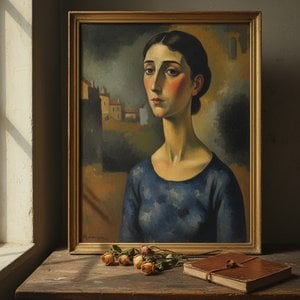
Delve into the haunting beauty of Amedeo Modigliani's portraits. Explore the intersection of Expressionism and Modernism through an expert analysis of his iconic elongated forms, melancholic gazes, and profound influence on art history.

Discover the profound beauty of Modigliani-style art. Explore the elegance of elongated forms and soulful portraits through our expert curation of hand-painted oil reproductions and museum-quality prints designed for the sophisticated collector.

 실제 크기로 보기
 보내기
보내기 공유하기
공유하기
 상세 보기
상세 보기 가이드 보기

 이미지 다운로드
 유사 작품 더 보기
 X-레이
X-레이 슬라이드 쇼 보기
 통계 정보
통계 정보
 상세 보기
상세 보기









 유리 옵션은 110cm 미만 크기에서만 선택 가능합니다.


