
x


 36.0 x 54.0 cm
작품의 원본 비율을 유지하는 미리 설정된 크기 중에서 선택하세요.

특정 프레임이나 공간에 맞도록 직접 크기를 입력할 수 있습니다. 선택하신 크기가 원본 이미지의 비율과 일치하지 않는 경우, 작품을 자르거나 추가적인 손으로 그린 요소를 사용하여 그림을 확장합니다. 제작 시작 전 승인을 위해 디지털 목업을 보내드립니다.
화면 미리 보기는 실제 자르기 또는 확장을 반영하지 않습니다. 최종 구성은 목업을 통해서만 정확하게 확인하실 수 있습니다.
맞춤 크기 제작도 가능하지만, 원본 비율을 유지하기 위해 사전 정의된 목록에서 크기를 선택하시는 것을 권장합니다.

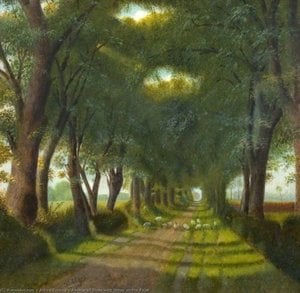
Bulbfields at Newton, Norfolk
복제본 크기

Alfred Balding (1858-1915) remains a quietly significant figure in British art, an artist whose evocative depictions of the rural landscape and sporting scenes have earned him a devoted following. Often overshadowed by his more flamboyant contemporaries, Balding’s work possesses a subtle power—a mastery of light, atmosphere, and a deep understanding of the rhythms of the English countryside that speaks volumes about his profound connection to the land.
Born in Walsoken, Norfolk, into a family with a strong artistic tradition – his father was a landscape painter – Balding’s early life was steeped in the visual world. He initially pursued a career as a solicitor, but the pull of art proved too strong. He began exhibiting his work seriously in the 1880s, quickly establishing himself as a skilled painter of sporting scenes and landscapes. His style evolved considerably over time, moving from a more academic approach to one characterized by loose brushwork, vibrant color palettes, and an emphasis on capturing fleeting moments of light and mood. Balding’s early influences included the Dutch Masters, particularly their use of light and atmospheric perspective, as evidenced in works like “Interior of Parson Drove,” a meticulously rendered depiction of a Cambridgeshire mill scene that demonstrates his ability to recreate the textures and details of rural life with remarkable precision.
Balding's most celebrated work, undoubtedly, is "Gypsy Lane," painted in 1913. This iconic image, depicting a scene on the Norfolk Broads – a network of waterways and marshes – captures a quintessential moment of rural life. A group of gypsies are seen traveling along a muddy track, their horses silhouetted against the golden light of the setting sun. The painting’s enduring appeal lies in its ability to evoke a sense of timelessness and tranquility. It's not merely a representation of a specific scene; it’s an embodiment of the spirit of the English countryside – its beauty, its solitude, and its connection to generations past.
The success of “Gypsy Lane” brought Balding considerable recognition, but he continued to paint prolifically throughout his career. He was particularly drawn to scenes of Norfolk, capturing the unique character of the region’s landscapes and people with a keen eye for detail and an empathetic understanding of their lives. His depictions of the Broads, the coastline, and the surrounding villages are imbued with a sense of warmth and nostalgia – reflecting his deep affection for the area.
Balding’s artistic technique was characterized by a loose, expressive brushstroke that allowed him to capture the fleeting effects of light and atmosphere. He employed a vibrant color palette, often using complementary colors to create a sense of depth and luminosity. His compositions were typically balanced and harmonious, with an emphasis on creating a sense of visual rhythm. Unlike some of his contemporaries who favored dramatic lighting and bold brushwork, Balding’s style was more subtle and understated – relying on the careful observation of nature and the skillful manipulation of color to convey his artistic vision.
He wasn't afraid to experiment with Impressionistic techniques, particularly in works like “A Large Number of Standing Stones,” where he used broken brushstrokes and a hazy atmosphere to create a sense of distance and mystery. However, his paintings always retained a strong sense of realism – reflecting his commitment to accurately portraying the details of the natural world.
Alfred Balding’s work has had a lasting impact on British art. He is remembered as one of the foremost painters of the English countryside, whose evocative depictions have helped to shape our understanding of this iconic landscape. His paintings are exhibited in major museums and galleries throughout the country, and his work continues to be admired for its beauty, its sensitivity, and its profound connection to the spirit of England.
Balding’s legacy extends beyond his artistic achievements. He was also a dedicated conservationist, actively campaigning to protect the Norfolk Broads from development. His paintings serve as a powerful reminder of the importance of preserving this unique landscape for future generations. His work stands as a testament to the enduring power of art to capture and celebrate the beauty of the natural world.
1858 - 1915


최신 미술 뉴스, 특별 혜택 및 인테리어 아이디어를 가장 먼저 만나보세요.
프로젝트에 대해 알려주시면 저희 미술 전문가들이 맞춤형 아트 제안 3가지를 전달해 드립니다.
당신만을 위한 맞춤형 옵션 3가지를 무료로 추천해 드립니다!


 미리보기
미리보기
 프린트 구매
 공유하기
공유하기 공유하기
공유하기
 상세 정보
상세 정보

 다운로드
다운로드
 유사 작품
유사 작품 X-레이
X-레이 슬라이드 쇼
 더 보기
더 보기






































 유리 옵션은 110cm 미만 크기에서만 선택 가능합니다.


![Flower Beds In Holland [1883] — 빈센트 반 고흐, Post-impressionism](/media/artworks/images-thumb/f6/51/f651abfc36815a917764737c755b7dc0.jpg)


