

이 페이지에 표시된 작품은 저작권법의 보호를 받으며, 이에 따라 동일한 복제품을 제작하거나 판매하는 것은 법으로 금지되어 있습니다. 이러한 권리 보호는 다음과 같은 국제 협약에 따라 시행됩니다. 베른 협약 또한 다음에서 명시하는 법률을 포함한 국내법에 의해 보호됩니다. 미국 저작권법 제17조.
이 방식은 저작권 보호를 받는 예술 작품을 복제하거나 그대로 재현하는 것이 아니기에 저작권 규정을 완벽히 준수합니다. 대신, 이는 창의적인 재해석의 과정을 거칩니다. 즉, 원작에서 영감을 받되 원작과 동일하지 않은 새로운 회화 작품을 의미합니다.
빠른 제작과 다양한 마감 옵션을 제공하는 박물관 수준의 지클레이 및 캔버스 프린트. ( 수작업 채색 복제본 주문하기 디지털 이미지로 전환)





























작품의 원본 비율을 그대로 유지하는 프리셋 사이즈 중에서 선택해 보세요.

액자나 벽면 크기에 맞춰 필요한 가로와 세로 길이를 입력해 주세요. 프린트는 원본 이미지보다 크게 제작할 수 없으며 오직 자르는 것만 가능하므로, 비율이 다른 사이즈를 선택할 경우 이미지의 일부가 잘려 나갈 수 있습니다. 인쇄 작업에 들어가기 전, 최종 확인을 위해 디지털 목업을 보내드립니다. 이 페이지에 표시된 이미지는 실제 잘리는 영역을 나타내지 않으며, 오직 목업을 통해서만 정확한 확인이 가능합니다.
Black Sun
복제본 크기
Alexander Milne Calder's "Black Sun," painted in 1953, isn’t merely a depiction of abstract forms; it’s an invitation to contemplate the interplay between chaos and order, darkness and light. Born in Aberdeen, Scotland, and later establishing himself as a pivotal figure in American sculpture alongside his son Alexander Stirling Calder and grandson Alexander ‘Sandy’ Calder, Milne Calder possessed a singular vision – one that sought to capture dynamic movement and inherent instability within static forms. This piece exemplifies that philosophy perfectly, presenting a swirling vortex of black acrylic paint against a stark white canvas, creating an immediate sense of both tension and serenity.
The artwork's core is defined by its curvilinear shapes: elongated ribbons and sweeping curves dominate the composition, reminiscent of waves in perpetual motion or the currents of a turbulent stream. These forms are interwoven with sharp, geometric elements – triangles and circles – that introduce a counterpoint of structure to the fluidity. This juxtaposition immediately establishes a dynamic tension; the organic curves seem poised to collide with the rigid angles, suggesting an ongoing negotiation between opposing forces. The thick application of paint contributes significantly to this effect, lending a tactile quality to the forms and emphasizing their weight and presence within the space.
The “Black Sun” motif itself carries a complex and layered history, extending far beyond Calder’s artistic intentions. Initially conceived as a symbol by SS officer Wilhelm Landig during the Nazi era, it was intended to replace the swastika – a potent emblem of Aryan supremacy. The Wewelsburg mosaic, where this design first appeared, became a clandestine center for occult practices and esoteric beliefs within the Nazi regime. Calder, however, remained largely unaware of this symbolic context during the creation of his painting. The symbol’s association with the occult has since been embraced by neo-Nazis and far-right groups, adding another layer of intrigue to its visual language.
Interestingly, the “Black Sun” also found resonance within esoteric traditions, particularly in alchemy and Hermeticism. It represents a solar deity associated with transformation, rebirth, and the cyclical nature of time. This connection speaks to Calder’s broader interest in exploring universal themes through his art – themes that transcend specific historical contexts. The painting, therefore, can be interpreted as a meditation on these enduring concepts, inviting viewers to consider their own relationship to cycles of destruction and renewal.
Calder’s technique is characterized by its directness and immediacy. He employed acrylic paint applied directly onto the canvas with broad brushstrokes and, potentially, other tools like palette knives, creating a textured surface that enhances the sense of movement. The lack of traditional perspective—depth is implied through overlapping forms rather than linear recession—further contributes to the artwork’s dynamic quality. There's no attempt at realistic representation; instead, Calder focuses on capturing the *feeling* of motion and energy.
“Black Sun” evokes a powerful emotional response. The stark contrast between black and white creates a dramatic visual impact, while the swirling forms generate a sense of unease and dynamism. Yet, there’s also an underlying feeling of balance and harmony—a suggestion that even within chaos, order can be found. It's a piece that demands contemplation, inviting viewers to lose themselves in its intricate patterns and ponder the mysteries it holds. The painting’s enduring appeal lies in its ability to simultaneously fascinate and unsettle, prompting us to confront our own perceptions of beauty, darkness, and the cyclical nature of existence.
Alexander Milne Calder's legacy extends far beyond this single masterpiece. His pioneering work with mobiles—kinetic sculptures that respond to air currents—revolutionized sculpture and continues to inspire artists today. His son, Alexander Stirling Calder, further developed these concepts, while his grandson, Alexander ‘Sandy’ Calder, created monumental public art installations around the world. “Black Sun” stands as a testament to their collective vision – a celebration of movement, form, and the enduring power of abstract expression.
"Black Sun"은(는) 디지털 이미지 파일 페이지에서 고해상도 디지털 이미지 다운로드 형태로 직접 구매하실 수 있습니다.
"Black Sun" 프린트의 권장 용도는 Statement입니다.
"Black Sun"에 담긴 소재는 abstract, geometric, curves, black & white, dynamic, calder, modern, composition입니다.


1898 - 1976 , 미국
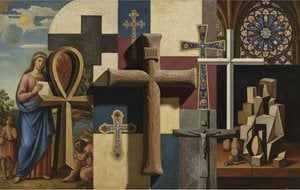
Delve into the profound symbolism of cross imagery in fine art history. From Renaissance masterpieces to sacred iconography, explore how religious motifs shape Western art through our expert cultural analysis and curated collection of museum-quality reproductions.

Explore 25 iconic Wassily Kandinsky masterpieces and the birth of abstraction. Discover the full collection online at WahooArt.com.
 미리보기

 공유하기
 공유하기
 상세 정보
 가이드 보기


 다운로드
 유사 작품 더 보기
 X-레이
 슬라이드 쇼 보기
 질의응답

 통계 정보


 더 보기









 유리 옵션은 110cm 미만 크기에서만 선택 가능합니다.


