x































작품의 원본 비율을 유지하는 미리 설정된 크기 중에서 선택하세요.

특정 프레임이나 공간에 맞도록 직접 크기를 입력할 수 있습니다. 선택하신 크기가 원본 이미지의 비율과 일치하지 않는 경우, 작품을 자르거나 추가적인 손으로 그린 요소를 사용하여 그림을 확장합니다. 제작 시작 전 승인을 위해 디지털 목업을 보내드립니다.
화면 미리 보기는 실제 자르기 또는 확장을 반영하지 않습니다. 최종 구성은 목업을 통해서만 정확하게 확인하실 수 있습니다.
맞춤 크기 제작도 가능하지만, 원본 비율을 유지하기 위해 사전 정의된 목록에서 크기를 선택하시는 것을 권장합니다.

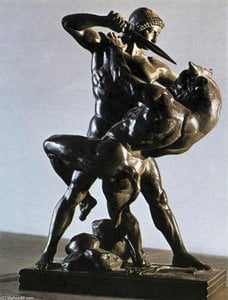
Prokne and Itys.
복제본 크기

In the golden twilight of the fifth century BC, as the Athenian Acropolis reached its zenith of sculptural splendor, a master emerged whose name would become synonymous with grace and meticulous finish. Alcamenes, a sculptor hailing from the island of Lemnos but deeply rooted in the artistic pulse of Athens, occupied a unique position in the classical hierarchy. As a younger contemporary and likely a pupil of the legendary Phidias, Alcamenes did not merely mimic the grandiosity of his predecessor; instead, he infused the marble with a distinctive delicacy that suggested a more intimate, refined approach to the human form. While history often remembers the monumental scale of the Parthenon’s creators, it is in the subtle textures and the soft, flowing lines attributed to Alcamenes that we find a different kind of classical mastery—one that prioritized the poetic nuance of movement over sheer architectural dominance.
The works of Alcamenes, though many lost to the ravages of time, survive through the echoes of Roman copies and the fragmented accounts of ancient geographers. His artistry is characterized by an exquisite attention to detail, a quality that earned him renown among his peers. Among the most celebrated subjects associated with his hand are the Aphrodite of the Gardens and a Hephaestus, works that likely embodied the serene beauty and divine elegance central to the Athenian aesthetic. There is a haunting quality to his surviving traces; even in the Hellenistic head of the Hermes Propylaeus discovered at Pergamum, one can sense the ghost of an original vision that sought to capture the divine through a lens of sophisticated realism. Though some later copies adopted a more conventional or archaistic character, the true spirit of Alcamenes remains tied to the progressive and original energy of the High Classical period.
To study Alcamenes is to wander through the mythological landscape of ancient Greece, where every chisel stroke served to bridge the gap between the mortal and the divine. His influence extended beyond the mere depiction of gods; he was a storyteller in stone. The historical record, though often debated by scholars, attempts to place him at the heart of Greece's most sacred sites. While some ancient accounts, such as those by Pausanias, suggest his involvement in the pediments of the Temple of Zeus at Olympia, modern historians view such claims with a cautious eye, noting the chronological complexities involved. Yet, this ambiguity only adds to his mystique, painting him as an artist whose reputation was so vast that it seemed to touch every corner of the Greek world.
His contributions to the Athenian landscape were profound, contributing to the very fabric of the city's visual identity. Whether through the bronze Pentathlete mentioned by Pliny the Elder or his potential role in the sculptural program of the Parthenon, Alcamenes helped define the "Severe" and "High Classical" transition. His ability to manipulate medium—working with both the strength of brass and the translucency of marble—allowed him to explore a range of emotional depths. The following elements define the essence of his artistic contribution:
Ultimately, Alcamenes remains an enigmatic figure, a master whose true masterpieces are lost to the dust of centuries, yet whose influence persists in every graceful curve of classical sculpture. He represents that fleeting moment in history when the sculptor's art moved beyond mere representation to achieve a profound, delicate truth—a legacy of beauty that continues to captivate the modern imagination.

Greece

Embark on a sophisticated journey through the history of classical sculpture. From Ancient Greek mastery to Renaissance bronze, discover the profound beauty and enduring legacy of the world's most iconic sculptural masterpieces.

Explore the profound legacy of marble sculpture, from Classical antiquity to Neoclassical mastery. A definitive guide for elite collectors and designers seeking to integrate the luminous, eternal beauty of stone into sophisticated, high-end architectural spaces.

Master the nuances of three-dimensional art with our expert guide. Explore sculptural history, from Phidias to Neoclassicism, and learn to evaluate materiality, form, and technique like a true connoisseur. Elevate your collection with profound insights into the world of sculpture.

Discover the enduring allure of bronze sculptures at WahooArt.com. From classical lost-wax casting to modern metal masterpieces, explore museum-quality artworks designed to elevate luxury interiors. Expert curation, authenticity guaranteed, and worldwide shipping for discerning collectors.

Discover the enduring elegance of bronze sculpture. From ancient Roman strength to Art Deco sophistication, explore our expert guide on collecting, casting techniques, and integrating timeless metal masterpieces into your fine art collection.


최신 미술 뉴스, 특별 혜택 및 인테리어 아이디어를 가장 먼저 만나보세요.
프로젝트에 대해 알려주시면 저희 미술 전문가들이 맞춤형 아트 제안 3가지를 전달해 드립니다.
당신만을 위한 맞춤형 옵션 3가지를 무료로 추천해 드립니다!


 미리보기
미리보기
 프린트 구매
 공유하기
공유하기 공유하기
공유하기
 상세 정보
상세 정보

 다운로드
다운로드
 유사 작품
유사 작품 X-레이
X-레이 슬라이드 쇼

 더 보기
더 보기









 유리 옵션은 110cm 미만 크기에서만 선택 가능합니다.