


x

 OilWallArtNorthern Renaissance
 1496
1496 251.0 x 367.0 cm
 Bibliothèque nationale de France
온라인 미리보기보다 훨씬 뛰어난 품질의 고해상도 디지털 이미지를 구매해 보세요.
각 파일은 사내 전문가가 고급 도구와 숙련된 수동 리터칭 기술을 사용하여 세심하게 준비합니다. 우리는 모든 이미지가 탁월한 선명도, 정확한 색상 재현력, 그리고 미세한 디테일까지 완벽하게 갖추도록 보장합니다.
최종 파일은 전문적인 편집 및 인쇄 환경에서 즉시 사용할 수 있도록 최적화되어 72시간 이내에 이메일로 발송됩니다. 이는 세계적인 디자인 스튜디오, 출판사 및 갤러리가 신뢰하는 것과 동일한 품질입니다.
WahooArt.com를 선택하시면 단순히 이미지를 받는 것을 넘어, 정밀한 보정 과정을 거친 전문적인 디지털 예술 작품을 만나보실 수 있습니다. 모든 작품에는 만족 보장 서비스가 함께 제공되며, 주문 시 다음과 같은 사항들이 자동으로 포함됩니다:

주문 후 72시간 이내에 고해상도 디지털 이미지 파일이 이메일로 발송되며, 즉시 사용하실 수 있습니다.

귀하의 작품은 고급 AI 도구와 수동 편집 과정을 거쳐 전문적으로 최적화되며, 이를 통해 디테일과 선명도, 색상의 정확도를 극대화합니다.

파일을 실수로 삭제하거나 분실하셨나요? 걱정 마세요. 언제든 무료로 다시 보내드립니다.

관세나 부가세, 배송비 부담 없이 작품을 즉시 감상하세요 - 디지털 다운로드는 언제나 면세 혜택이 적용됩니다.

전문적인 도구와 색상 관리 시스템을 통해 디지털 이미지가 원본의 색상을 최대한 정확하게 구현하도록 보장합니다.

구매하신 디지털 이미지에 만족하지 못하실 경우, 60일 이내에 수정 또는 100% 환불을 진행해 드립니다 - 어떠한 문의도 필요 없습니다.

만족하지 못하셨나요? 디지털 파일을 수령하신 후 60일 이내라면 별도의 이유를 밝힐 필요 없이 전액 환불해 드립니다.

이미지 3매 구매 시 10% 할인 - 5매 구매 시 15% 할인 - 10매 이상 구매 시 20% 할인. 크리에이티브 프로젝트, 갤러리, 에이전시에 매우 유용합니다.
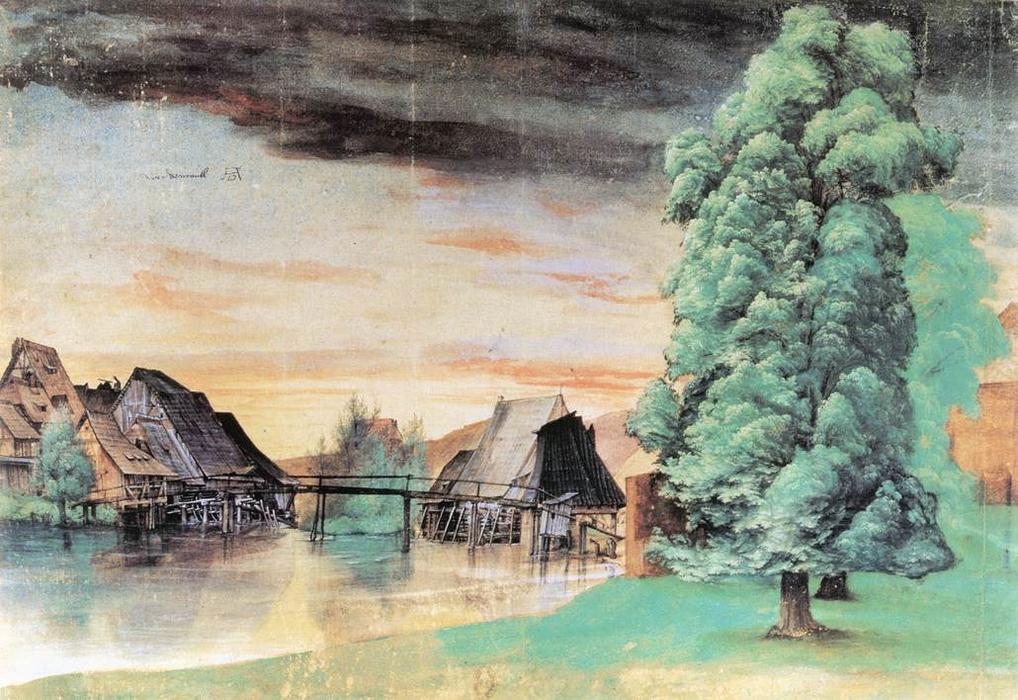
Albrecht Dürer’s “Willow Mill,” painted in 1496, isn't merely a landscape; it’s a carefully constructed meditation on the harmony between humanity and nature, rendered with the meticulous precision that defined the artist’s extraordinary career. This oil-on-wood panel offers a glimpse into a serene rural scene – a small mill nestled beside a gently flowing river, framed by rolling hills and dominated by a solitary, majestic willow tree. The painting immediately evokes a sense of quiet contemplation, inviting the viewer to step into this idyllic world and lose themselves in its understated beauty.
Dürer’s style here is firmly rooted in the Northern Renaissance tradition, yet it transcends simple imitation. He masterfully blends elements of Italianate perspective with the earthy realism favored by his German contemporaries. The composition is remarkably balanced, utilizing a horizontal arrangement that lends stability and order to the scene. Notice how the water, buildings, and tree are all presented with a deliberate symmetry, creating a visual equilibrium that speaks to a deep understanding of spatial relationships. The muted color palette – dominated by greens, browns, and subtle blues – contributes significantly to the painting’s tranquil atmosphere. It's not a vibrant, exuberant landscape; rather, it’s imbued with a sense of quiet dignity and timelessness.
Dürer’s technical skill is immediately apparent upon close inspection. He employs a layering technique – *glazing* – to build up color and form, creating an astonishingly rich surface texture. Thin washes of paint are applied in multiple layers, gradually building depth and luminosity. This method allows him to capture the subtle nuances of light and shadow, imbuing the scene with a remarkable sense of atmospheric perspective. The details are meticulously rendered: individual leaves on the willow tree, ripples in the water, the weathered planks of the mill’s structure – all contribute to the painting's immersive quality.
The use of *linear perspective* is particularly noteworthy. While not as dramatically foreshortened as some Italian Renaissance works, Dürer skillfully employs converging lines to create a convincing illusion of depth. The buildings recede into the distance, diminishing in size and detail, drawing the viewer’s eye towards the horizon. Furthermore, the artist demonstrates an exceptional command of *chiaroscuro* – the interplay of light and dark – using subtle gradations of tone to model forms and define shapes. This masterful manipulation of light not only enhances the painting's realism but also contributes significantly to its emotional impact.
“Willow Mill” is more than just a pretty picture; it’s laden with symbolic meaning, reflecting the prevailing intellectual currents of the Renaissance. The willow tree itself holds profound significance in European folklore – often associated with mourning, but also with resilience, adaptability, and connection to the earth. Its drooping branches suggest both sorrow and strength, hinting at the cyclical nature of life and death. The mill represents industry and prosperity, a vital component of rural life during this period. The river symbolizes flow, movement, and the passage of time.
Painted in 1496, “Willow Mill” sits squarely within the context of the burgeoning humanist movement. Dürer, deeply influenced by classical learning and Italian Renaissance art, sought to capture not just a realistic depiction of nature but also its underlying order and harmony. The painting embodies the Renaissance ideal of *mimesis* – the imitation of nature – as a means of achieving knowledge and understanding. It’s a testament to Dürer's ambition to elevate landscape painting from mere representation to a profound expression of human experience.
WahooArt offers high-quality reproductions of Albrecht Dürer’s “Willow Mill,” allowing you to bring this iconic Renaissance masterpiece into your own home. Whether you're an art collector, a design enthusiast, or simply someone seeking a touch of timeless elegance, our meticulously crafted prints capture the painting’s exquisite detail and atmospheric depth with remarkable fidelity. Consider how the muted palette and serene composition can create a calming focal point in any room – a space for reflection and appreciation of nature’s beauty. Explore our range of sizes and framing options to find the perfect way to display this enduring symbol of Northern Renaissance artistry.







1471 - 1528 , 이탈리아


최신 미술 뉴스, 특별 혜택 및 인테리어 아이디어를 가장 먼저 만나보세요.
프로젝트에 대해 알려주시면 저희 미술 전문가들이 맞춤형 아트 제안 3가지를 전달해 드립니다.
당신만을 위한 맞춤형 옵션 3가지를 무료로 추천해 드립니다!
 프린트 구매하기
 공유하기
공유하기 공유하기
공유하기
 상세 정보
상세 정보

 다운로드
다운로드
 유사 작품
유사 작품 X-레이
X-레이 슬라이드 쇼
 더 보기
더 보기


