
x


 GraphiteGerman Renaissance
 Renaissance
 17.0 x 12.0 cm
 슈타틸리체 무제엔
빠른 제작과 다양한 마감 옵션을 제공하는 박물관 품질의 지클레이 또는 캔버스 프린트. ( 손으로 그린 그림 구매 이미지 구매)
작품의 원본 비율을 유지하는 미리 설정된 크기 중에서 선택하세요.

특정 프레임이나 공간에 맞춰 직접 치수를 입력하실 수 있습니다. 선택하신 사이즈가 원본 이미지의 비율과 일치하지 않을 경우, 작품을 크롭(자르기)하거나 이미지를 대칭 또는 단색 채우기로 확장하여 제작합니다. 제작 시작 전, 최종 확인을 위해 디지털 목업이 전송됩니다.
화면상의 미리보기는 실제 크롭이나 확장 상태를 반영하지 않으므로, 최종 구도는 오직 목업을 통해서만 정확하게 확인하실 수 있습니다.
맞춤 사이즈 제작도 가능하지만, 원본 비율을 유지하기 위해서는 사전 정의된 목록에서 치수를 선택하시는 것을 권장합니다.

Two seated lions
복제본 크기
This exquisite black and white drawing, "Two Seated Lions," created around 1521 by the renowned German Renaissance artist Albrecht Dürer, offers a captivating glimpse into his meticulous observation of the natural world. More than just a depiction of two majestic animals, it represents a pivotal moment in art history where detailed realism began to intertwine with symbolic meaning.
The artwork portrays two lions seated side-by-side, rendered with remarkable detail. Dürer’s style is firmly rooted in the Northern Renaissance tradition, characterized by its emphasis on anatomical accuracy and naturalistic representation. Unlike earlier depictions of lions often found within mythological or heraldic contexts, this drawing presents them as observed creatures, showcasing their physical attributes with striking realism. The composition itself is balanced and stable, reflecting the inherent power and dignity of these animals. The lions are not engaged in any action; they simply exist, conveying a sense of quiet strength and watchful presence.
Dürer’s mastery of drawing techniques is evident throughout the piece. He primarily utilizes lines – hatching and cross-hatching – to define forms, create depth, and simulate texture. The varying density of these lines skillfully mimics the roughness of lion fur, bringing a tactile quality to the image. The lighting appears to originate from above and slightly in front, casting shadows that accentuate the volume and musculature of the lions’ bodies. This careful manipulation of light and shadow contributes significantly to the three-dimensional effect, despite the two-dimensionality of the medium (likely graphite or charcoal on paper). The precision with which Dürer renders each strand of fur and muscle fiber demonstrates his exceptional skill as a draftsman.
The creation of "Two Seated Lions" occurred during a period when European exposure to exotic animals was limited. Dürer likely drew these lions from observation at a zoo in Ghent, Belgium, demonstrating an early interest in zoological study within the realm of art. This drawing reflects a shift towards empirical observation and scientific inquiry that characterized the Renaissance. It’s significant because it moves beyond purely symbolic representations of lions (often associated with royalty or courage) to a more direct engagement with the animal itself. Dürer's travels throughout Europe exposed him to new artistic influences, including those from Italy, which further shaped his style and approach to realism.
While grounded in observation, "Two Seated Lions" also carries symbolic weight. Lions have long been associated with strength, courage, royalty, and guardianship. Dürer’s depiction imbues these animals with a sense of quiet nobility and inherent power. Interestingly, some scholars suggest that Dürer's fascination with lions may have stemmed from a personal connection – he was known to be proud of his own long hair, and the lion's mane could be seen as a symbolic parallel. The drawing evokes a feeling of awe and respect for these magnificent creatures, while also offering a glimpse into the mind of one of history’s greatest artists—a man dedicated to capturing the beauty and complexity of the world around him.


1471 - 1528 , 이탈리아

Explore the profound artistry of graphite drawing. Discover professional techniques for mastering depth, texture, and detail through a lens of art history, from classical sketches to modern masterpieces. Elevate your understanding of the pencil medium with our expert guide.

Elevate your artistic practice with this expert guide to mastering the line. Discover advanced techniques in graphite, charcoal, and contour drawing designed for art students seeking technical precision and expressive depth in their fine art studies.

Explore the profound precision of German Renaissance art. From Albrecht Dürer’s intricate engravings to the soulful depth of Northern Renaissance portraiture, discover a masterclass in detail, humanism, and technical mastery for the true art enthusiast.
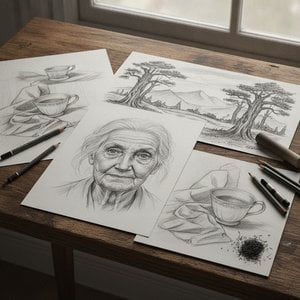
Explore the profound elegance of pencil and charcoal sketching. Discover how masters use line, shadow, and chiaroscuro to capture light and texture, bridging the gap between preparatory studies and timeless fine art masterpieces.

Explore the profound beauty of the sketch. Discover how masters use charcoal and graphite to capture raw emotion, anatomical precision, and fluid movement, bridging the gap between ephemeral marks and eternal oil masterpieces.


최신 미술 뉴스, 특별 혜택 및 인테리어 아이디어를 가장 먼저 만나보세요.
프로젝트에 대해 알려주시면 저희 미술 전문가들이 맞춤형 아트 제안 3가지를 전달해 드립니다.
당신만을 위한 맞춤형 옵션 3가지를 무료로 추천해 드립니다!


 미리보기
미리보기
 공유하기
공유하기 공유하기
공유하기
 상세 정보
상세 정보

 다운로드
다운로드
 유사 작품
유사 작품 X-레이
X-레이 슬라이드 쇼
 더 보기
더 보기






































 유리 옵션은 110cm 미만 크기에서만 선택 가능합니다.


