x
 판화 기법으로 금속판에 새겨서 표현하는 예술 매체기타Northern Renaissance
 1501
1501 35.0 x 26.0 cm
 국립미술관
국립미술관작품의 원본 비율을 유지하는 미리 설정된 크기 중에서 선택하세요.

특정 프레임이나 공간에 맞도록 직접 크기를 입력할 수 있습니다. 선택하신 크기가 원본 이미지의 비율과 일치하지 않는 경우, 작품을 자르거나 추가적인 손으로 그린 요소를 사용하여 그림을 확장합니다. 제작 시작 전 승인을 위해 디지털 목업을 보내드립니다.
화면 미리 보기는 실제 자르기 또는 확장을 반영하지 않습니다. 최종 구성은 목업을 통해서만 정확하게 확인하실 수 있습니다.
맞춤 크기 제작도 가능하지만, 원본 비율을 유지하기 위해 사전 정의된 목록에서 크기를 선택하시는 것을 권장합니다.

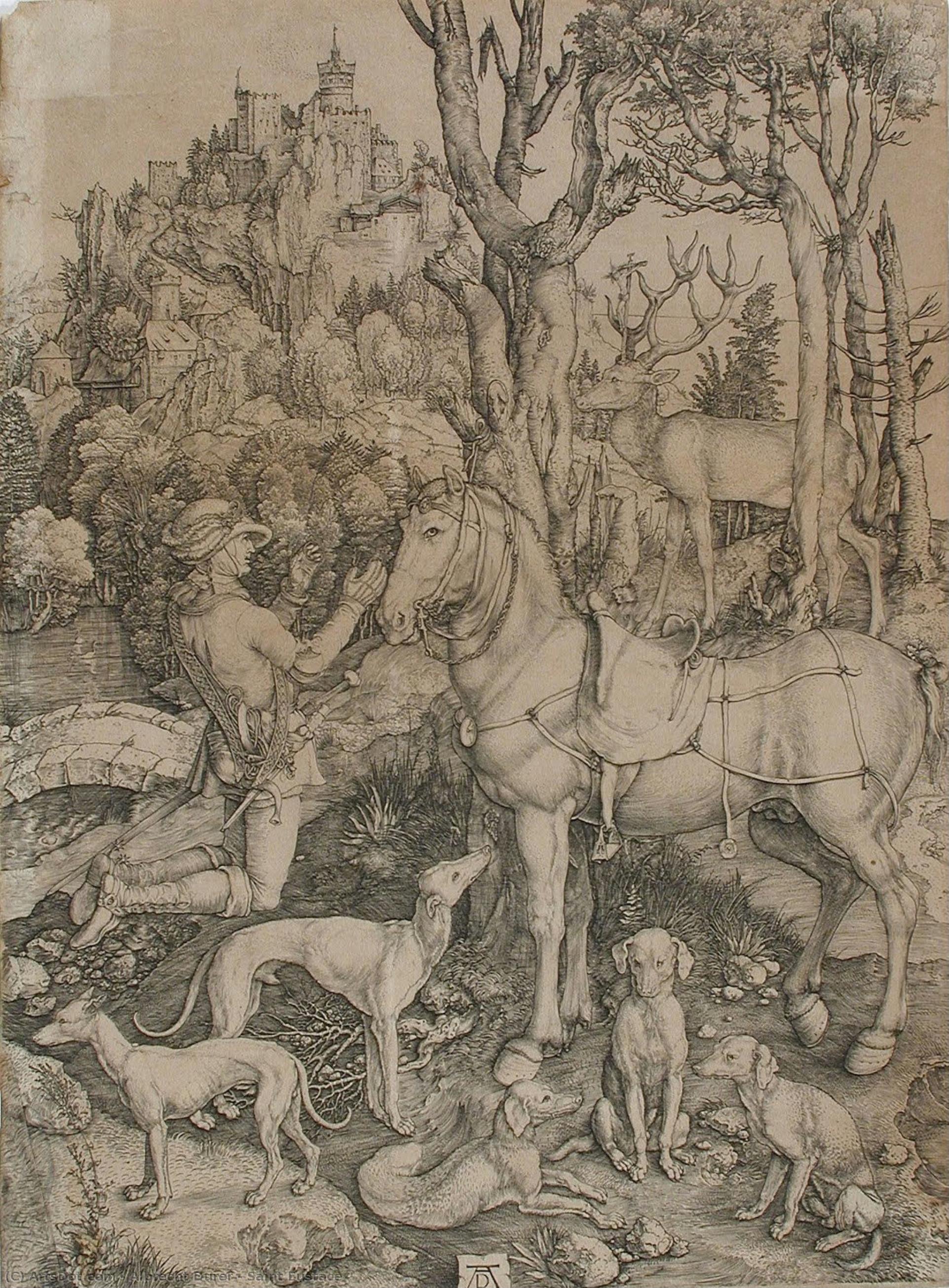
Saint Eustace
복제본 크기
Albrecht Dürer's “Saint Eustace,” completed in 1501, isn’t merely a depiction of a biblical scene; it’s a meticulously crafted meditation on conversion, power, and the primal connection between humanity and nature. This engraving, rendered with astonishing detail and imbued with the characteristic austerity of Northern Renaissance art, transports us to a shadowed woodland landscape teeming with life – both human and animal. The subject, Saint Eustace, the Roman general who famously slew a giant boar and adopted Christianity after encountering the cross in its antlers, is presented not as a triumphant warrior but as a man profoundly changed by an encounter with the divine.

Dürer’s mastery lies in his command of engraving, a technique demanding immense patience and precision. The image is built entirely from meticulously drawn lines, each carefully hatched to create subtle tonal variations—a remarkable feat considering the medium's limitations. This hatching isn’t simply decorative; it’s fundamental to the work’s depth and realism. Notice how the dense foliage in the background recedes into shadow, while the figures emerge with a crisp clarity. The use of linear perspective, though somewhat flattened by the engraving process, creates a convincing illusion of space, drawing the viewer into the scene. The texture is palpable – you can almost feel the rough bark of the trees and the bristly fur of the hounds.
Beyond the straightforward narrative of conversion, “Saint Eustace” is rich in symbolic meaning. The hounds themselves represent loyalty and skill—essential qualities for a hunter and, by extension, for a Christian disciple. The horse, a symbol of power and nobility, underscores Eustace’s former status as a Roman general. The presence of the castle in the distance hints at his aristocratic background, while the scattered dogs suggest a life once devoted to the pursuit of game. Even the stag, now bearing the cross, is a potent symbol of sacrifice and redemption. The entire composition speaks to a transformation—a shift from worldly ambition to spiritual devotion.
Despite its detailed depiction of action, “Saint Eustace” possesses an underlying sense of quiet contemplation. The muted palette, dominated by shades of brown and grey, contributes to a feeling of solemnity and introspection. The scene unfolds with a deliberate slowness, inviting the viewer to pause and reflect on the profound nature of Eustace’s journey. It's not a dramatic or overtly emotional portrayal; rather, it’s a subtle and deeply resonant meditation on faith, transformation, and the enduring power of the natural world. This engraving offers a glimpse into the soul of a Renaissance master, revealing both his technical brilliance and his profound understanding of human experience.

1471 - 1528 , 이탈리아
Explore 25 iconic artworks by Albrecht Dürer, a master of the German Renaissance. Discover the stories behind Melencolia I, Knight Death and Devil & more. Find museum-quality art reproductions for your home at WahooArt.com.

Explore the life & art of Albrecht Dürer, a pivotal German Renaissance master. Discover his groundbreaking printmaking techniques, iconic self-portraits, and lasting influence on Western art history. A deep dive into innovation & symbolism.
북부 르네상스 미술의 정수를 담은 10가지 대작! 뒤러, 반호이켄 등 거장의 작품으로 예술적 영감을 얻고, WahooArt.com에서 고품격 아트 프린트와 인테리어 아이디어를 만나보세요. 지금 바로 온라인 컬렉션을 탐험하세요.

Explore the groundbreaking art of Albrecht Altdorfer, a pioneer of the Northern Renaissance's Danube School. Discover his innovative landscapes, spiritual symbolism & lasting influence on German painting.

Explore the profound religious art of Matthias Grünewald, master of the Isenheim Altarpiece. Discover his unique expressionism, symbolism & lasting impact on Renaissance painting. A guide for collectors and enthusiasts.


최신 미술 뉴스, 특별 혜택 및 인테리어 아이디어를 가장 먼저 만나보세요.
프로젝트에 대해 알려주시면 저희 미술 전문가들이 맞춤형 아트 제안 3가지를 전달해 드립니다.
당신만을 위한 맞춤형 옵션 3가지를 무료로 추천해 드립니다!

 프린트 구매하기
 공유하기
공유하기 공유하기
공유하기
 상세 정보
상세 정보

 다운로드
다운로드
 유사 작품
유사 작품 X-레이
X-레이 슬라이드 쇼
 더 보기
더 보기






































 유리 옵션은 110cm 미만 크기에서만 선택 가능합니다.