

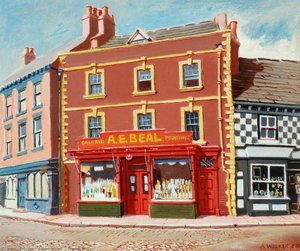
 41.0 x 30.0 cm
 The Mercer Art Gallery
이 페이지에 표시된 작품은 저작권법의 보호를 받으며, 이에 따라 동일한 복제품을 제작하거나 판매하는 것은 법으로 금지되어 있습니다. 이러한 권리 보호는 다음과 같은 국제 협약에 따라 시행됩니다. 베른 협약 또한 다음에서 명시하는 법률을 포함한 국내법에 의해 보호됩니다. 미국 저작권법 제17조.
이 방식은 저작권 보호를 받는 예술 작품을 복제하거나 그대로 재현하는 것이 아니기에 저작권 규정을 완벽히 준수합니다. 대신, 이는 창의적인 재해석의 과정을 거칩니다. 즉, 원작에서 영감을 받되 원작과 동일하지 않은 새로운 회화 작품을 의미합니다.
빠른 제작과 다양한 마감 옵션을 선택할 수 있는 박물관 수준의 지클레이 및 캔버스 프린트. ( 수작업 채색 복제본 주문하기 디지털 이미지 판매 채널로 전환)
작품의 원본 비율을 그대로 유지하는 프리셋 사이즈 중에서 선택해 보세요.

액자나 벽면 크기에 맞춰 필요한 가로와 세로 길이를 입력해 주세요. 프린트는 원본 이미지보다 크게 제작할 수 없으며 오직 자르는 것만 가능하므로, 비율이 다른 사이즈를 선택할 경우 이미지의 일부가 잘려 나갈 수 있습니다. 인쇄 작업에 들어가기 전, 최종 확인을 위해 디지털 목업을 보내드립니다. 이 페이지에 표시된 이미지는 실제 잘리는 영역을 나타내지 않으며, 오직 목업을 통해서만 정확한 확인이 가능합니다.
Self Portrait
복제본 규격

Albert Walker (1846–1915), a largely unsung figure of American landscape painting, offers a poignant glimpse into the fading grandeur of rural life in the late 19th century. Born in Springfield, Oregon, during a period of rapid westward expansion and profound social change, Walker’s work transcends mere topographical representation; it's imbued with a melancholic beauty, reflecting both the romantic ideals of the Victorian era and the encroaching realities of industrialization. His canvases capture not just scenes but also a sense of loss—the slow disappearance of traditional ways of life as the frontier gave way to settled communities.
Walker’s artistic journey began with formal training in Boston, where he studied under the esteemed landscape painter Asher B. Durand, a leading figure in the Hudson River School movement. Durand's emphasis on capturing the sublime beauty of nature and depicting it with scientific accuracy profoundly influenced Walker’s early style. However, unlike many of his contemporaries who embraced a purely objective approach, Walker infused his landscapes with a distinctly emotional quality. He wasn’t simply rendering a view; he was conveying a feeling—a sense of quiet contemplation, nostalgia, and perhaps even a subtle sadness for the past.
A crucial element in understanding Walker's artistic vision lies in his deep admiration for the work of Joseph Mallord William Turner. Like Turner, Walker was fascinated by light and atmosphere, employing loose brushstrokes and vibrant color palettes to create a sense of immediacy and movement within his landscapes. Turner’s ability to capture fleeting moments of beauty—the shimmering effects of sunlight on water, the dramatic interplay of clouds and shadows—served as a powerful model for Walker. He particularly admired Turner's use of atmospheric perspective, creating a sense of depth and distance through subtle variations in color and tone.
Furthermore, both artists shared a fascination with the power of nature to evoke profound emotions. Walker’s landscapes are not static representations; they are dynamic scenes teeming with life—rolling hills dotted with grazing cattle, winding rivers reflecting the sky, and towering trees casting long shadows across the fields. This emphasis on movement and vitality reflects Turner's belief that art should capture the essence of experience rather than simply depicting external reality.
Walker’s oeuvre is dominated by scenes of rural America—vast prairies, rolling hills, and picturesque waterways. He frequently depicted farms, barns, and livestock, capturing the rhythms of agricultural life with remarkable detail and sensitivity. However, his paintings are not simply celebrations of rural prosperity; they often carry a subtle undercurrent of melancholy, suggesting the vulnerability of these communities to economic hardship and social change. Many of his works depict scenes of solitude—a lone figure standing on a hilltop, a farmhouse silhouetted against the setting sun—evoking a sense of isolation and longing.
A recurring motif in Walker’s paintings is the depiction of water—rivers, lakes, and streams—which he often rendered with shimmering reflections and atmospheric effects. Water served as a powerful symbol for Walker, representing both the life-giving force of nature and the inevitability of change. His paintings of rivers, particularly, are imbued with a sense of fluidity and movement, mirroring the constant flux of time and the transience of human existence.
Among Walker’s most celebrated works are “Prairie Sunset” (1888), a breathtaking depiction of a vast prairie bathed in the golden light of twilight; “River Crossing” (1892), which captures a group of travelers making their way across a wide river; and “Barn at Dusk” (1895), a poignant portrayal of a solitary farmhouse silhouetted against the fading light. These paintings, along with many others in his collection, demonstrate Walker’s exceptional skill as a landscape painter and his ability to evoke powerful emotions through his art.
Despite not achieving widespread recognition during his lifetime, Albert Walker's work has been increasingly appreciated in recent years for its quiet beauty, emotional depth, and historical significance. He stands as a testament to the enduring power of landscape painting to capture the essence of American life—both its triumphs and its sorrows—and offers a valuable window into a bygone era.
1900 - 1984

 실제 크기로 보기
 보내기
보내기 공유하기
공유하기
 상세 보기
상세 보기 가이드 보기

 이미지 다운로드
 유사 작품 더 보기
 X-레이
X-레이 슬라이드 쇼 보기
 Q&A
Q&A 통계 정보
통계 정보 상세 보기
상세 보기






































 유리 옵션은 110cm 미만 크기에서만 선택 가능합니다.


