빠른 제작과 다양한 마감 옵션을 선택할 수 있는 박물관 수준의 지클레이 및 캔버스 프린트. ( 수작업 채색 복제본 주문하기 디지털 이미지 판매 채널로 전환)





























작품의 원본 비율을 그대로 유지하는 프리셋 사이즈 중에서 선택해 보세요.

특정 프레임이나 공간에 맞춰 직접 치수를 입력하실 수 있습니다. 선택하신 사이즈가 원본 이미지의 비율과 일치하지 않을 경우, 작품을 크롭(자르기)하거나 이미지를 대칭 또는 단색 채우기로 확장하여 제작합니다. 제작 시작 전, 최종 확인을 위해 디지털 목업이 전송됩니다.
화면상의 미리보기는 실제 크롭이나 확장 상태를 반영하지 않으므로, 최종 구도는 오직 목업을 통해서만 정확하게 확인하실 수 있습니다.
맞춤 사이즈 제작도 가능하지만, 원본 비율을 유지하기 위해서는 사전 정의된 목록에서 치수를 선택하시는 것을 권장합니다.

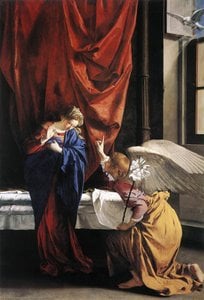
Annunciaton
복제본 규격

In the vibrant, sun-drenched landscape of eighteenth-century Rome, Agostino Masucci emerged as a painter of profound grace and technical refinement. Born in 1691, Masucci was a child of the Eternal City, coming of age at a moment when the heavy, dramatic grandeur of the High Baroque began to soften into the delicate, airy sensibilities of the Rococo. His artistic journey was one of seamless transition, navigating the shifting tides of European taste with a hand that remained anchored in classical tradition yet responsive to the burgeoning elegance of his era. Through his brush, the monumental weight of the previous century found a new, more luminous expression, bridging the gap between the theatricality of the Baroque and the nascent clarity of Neoclassicism.
The foundation of Masucci’s mastery was laid within the prestigious studios of Rome, where he first studied under Andrea Procaccino. However, it was his subsequent association with Carlo Maratta—the titan of Roman painting—that would most profoundly shape his aesthetic DNA. As a pupil in Maratta’s influential circle, Masucci absorbed a style characterized by clarity, balanced compositions, and a certain noble restraint. This lineage is evident in his religious works, which often possess a smooth, porcelain-like finish and a serene, cultivated atmosphere. While some critics of his time noted that his devotional Madonnas occasionally struggled to reach the heights of his master’s emotional intensity, there is no denying the exquisite technical precision and the "clear, cool" quality that defined his altarpieces.
Masucci’s influence extended far beyond the confines of a solitary studio; he was a central figure in the intellectual and social fabric of Rome’s artistic elite. His membership in the Accademia di San Luca provided him with a platform for scholarly exchange, and his appointment as Principe della Stamperia Re Reale Romana between 1736 and 1738 cemented his status as a leader within the Roman art world. This period of professional ascendancy allowed him to forge deep connections with the great architects of the age, such as Filippo Juvarra and Luigi Vanvitelli. These alliances transformed Masucci from a mere painter of canvases into a visionary of integrated spaces, where painting, architecture, and ornament coalesced into a singular, breathtaking experience.
Perhaps the most glittering testament to his international renown was his relationship with King John V of Portugal. This royal patronage led to one of the most ambitious artistic undertakings of the century: the design and oversight of the Chapel of Saint John the Baptist in Lisbon. In this monumental project, Masucci’s talent for narrative and decorative splendor was fully realized. His work on the chapel's magnificent mosaic panels demonstrated an ability to translate complex biblical narratives into enduring, opulent visual poetry, contributing to a religious space that remains one of the most costly and breathtakingly ornate in Europe.
While his large-scale religious commissions captured the public imagination, Masucci’s true versatility shone through in his intimate portraiture and his exceptional skill as a draughtsman. In an era where the portrait served as a vital instrument of social identity, Masucci proved himself a formidable chronicler of the Roman elite and European royalty alike. His portraits of figures such as Pope Clement XII and Cardinal Niccolò del Giudice reveal a keen eye for character and a sophisticated command of light and texture. It was in this genre that many contemporaries viewed him as the legitimate heir to Maratta, possessing a unique ability to imbue his subjects with both dignity and a lifelike presence.
Beyond the oil canvas, Masucci’s preparatory studies offer a window into his creative intellect. His drawings, executed in various media including black, red, and blue chalk, reveal an artist deeply engaged with the anatomical and compositional rigors of his craft. These works, such as his studies for Saint Anne in the Education of the Virgin, showcase a fluid, expressive line that anticipates the more spontaneous energy of the Rococo. Through this duality—the ability to execute monumental, structured compositions and to capture the fleeting delicacy of a sketch—Agostino Masucci secured his place as a pivotal figure whose work echoed the splendor and the evolving spirit of the Roman Golden Age.

1691 - 1758

Explore the dramatic world of Baroque art! Discover iconic artists like Caravaggio & Rubens, defining techniques, and its lasting impact on art history. Expert insights for collectors & enthusiasts at WahooArt.

Explore the opulent world of Rococo art! Discover its origins, key artists like Watteau & Boucher, and lasting influence on design. Expert insights for collectors & enthusiasts.

Explore the profound differences between Baroque drama and Rococo elegance. Our expert guide delves into art history, chiaroscuro, and the evolution of European masterpieces for collectors and enthusiasts seeking deep historical context.

화려함과 우아함의 절정, 로코코 미술! 부셰, 프라고나르 등 거장들의 걸작 10편을 통해 18세기 예술 황금시대를 만나보세요. WahooArt.com에서 박물관 수준의 명품 아트 프린트와 인테리어 영감을 얻으세요. 지금 바로 온라인 컬렉션을 탐험해보세요!
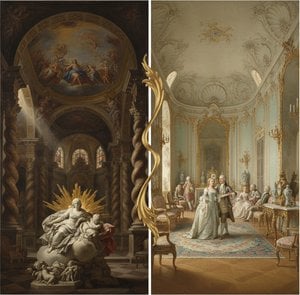
Explore the captivating evolution from Baroque's drama to Rococo's grace! Discover key artists, characteristics & lasting influence of these art movements with expert insights at WahooArt.

 실제 크기로 보기
 보내기
보내기 공유하기
공유하기
 상세 보기
상세 보기 가이드 보기

 이미지 다운로드
 유사 작품 더 보기
 X-레이
X-레이 슬라이드 쇼 보기
 통계 정보
통계 정보


 상세 보기
상세 보기









 유리 옵션은 110cm 미만 크기에서만 선택 가능합니다.