
 Oil On CanvasWallArtBaroque
 1696
1696 47.0 x 38.0 cm
 Wallace Collection
원하는 크기와 액자로 주문 제작되는, 작가들이 직접 캔버스에 손으로 그린 유화 작품입니다. ( 프린트 판매로 전환 디지털 이미지로 전환)





























작품의 원본 비율을 유지하는 미리 설정된 크기 중에서 선택하세요.

특정 프레임이나 공간에 맞도록 직접 크기를 입력할 수 있습니다. 선택하신 크기가 원본 이미지의 비율과 일치하지 않는 경우, 작품을 자르거나 추가적인 손으로 그린 요소를 사용하여 그림을 확장합니다. 제작 시작 전 승인을 위해 디지털 목업을 보내드립니다.
화면 미리 보기는 실제 자르기 또는 확장을 반영하지 않습니다. 최종 구성은 목업을 통해서만 정확하게 확인하실 수 있습니다.
맞춤 크기 제작도 가능하지만, 원본 비율을 유지하기 위해 사전 정의된 목록에서 크기를 선택하시는 것을 권장합니다.

Shepherd and Shepherdess
복제본 크기
Adriaen van der Werff's "Shepherd and Shepherdess," painted in 1696, isn’t merely a portrait; it’s a carefully constructed tableau of yearning and unspoken desire. This arresting scene, currently residing within the Wallace Collection in London, immediately draws the viewer into a world steeped in Baroque drama – a world where classical ideals intertwine with potent emotionality. The painting depicts a man and woman locked in an intense embrace amidst a subtly rendered pastoral backdrop, hinting at a narrative rooted in mythology, perhaps referencing the tragic tale of Narcissus and Echo, though Van der Werff’s masterful execution transcends simple allegory.
The composition is meticulously balanced, employing a pyramidal structure that anchors the central figures. The couple's intertwined forms dominate the upper portion of the canvas, their bodies almost merging in a gesture both passionate and vulnerable. Around them, a small group of onlookers – likely representing the community observing this intimate moment – adds depth to the scene and suggests a wider social context. Notice how Van der Werff uses light and shadow—a technique known as chiaroscuro—to sculpt the figures, highlighting their muscular forms and emphasizing the intensity of their connection. The cool blues and greens of the distant landscape provide a stark contrast to the warm golds and oranges that bathe the central couple, further intensifying the drama.
Van der Werff's skill as an artist is immediately apparent in the painting’s remarkable detail. He was renowned for his ability to render drapery with breathtaking realism – a testament to his rigorous training under Eglon van der Neer, a specialist in costume design. Observe how each fold of fabric appears to ripple and flow, conveying both weight and movement. The figures themselves are rendered with anatomical precision, yet imbued with an expressive quality that transcends mere representation. Van der Werff doesn’t simply depict; he captures the very essence of human emotion.
The painting's texture is rich and layered, achieved through meticulous application of oil paint. Van der Werff built up color gradually, creating subtle gradations in tone and value that add depth and luminosity to the scene. The artist’s use of glazing – applying thin layers of translucent paint over dried underlayers – allows light to penetrate deeply into the canvas, giving the figures a remarkable sense of volume and presence. The brushstrokes are generally smooth and controlled, contributing to the painting's overall polished appearance, yet there is also evidence of deliberate impasto—thickly applied paint—in areas where Van der Werff wanted to emphasize texture or create visual interest.
Created during the height of the Dutch Golden Age, “Shepherd and Shepherdess” reflects the era’s fascination with classical antiquity and its embrace of human emotion. The subject matter – a passionate love affair – was a common theme in Baroque art, often used to explore themes of desire, loss, and mortality. The inclusion of onlookers suggests that this intimate moment is being observed by society, highlighting the social implications of such intense emotions.
Beyond its immediate narrative, the painting can be interpreted as an allegory for the human condition. The embrace represents a yearning for connection and fulfillment, while the distant landscape symbolizes the isolation and uncertainty of life. The figures’ expressions – a mixture of longing, vulnerability, and perhaps even sorrow – invite viewers to contemplate their own experiences of love and loss. Van der Werff's ability to imbue such a seemingly simple scene with profound emotional resonance is what elevates “Shepherd and Shepherdess” beyond mere portraiture.
“Shepherd and Shepherdess” stands as a testament to Adriaen van der Werff’s extraordinary talent and his mastery of the Baroque style. Today, high-quality reproductions offer an accessible way to experience this captivating artwork, bringing its drama and beauty into any setting. Whether adorning a grand salon or a cozy study, a faithful reproduction captures the essence of Van der Werff's vision – a poignant exploration of human emotion set against a backdrop of classical elegance.

네덜란드 황금기라는 거대한 태피스트리 속에서, 아드리안 판 데르 베르프의 작품만큼 매끄럽고 찬란하게 빛나는 실은 찾아보기 어렵습니다. 1659년 헤이그에서 태어난 판 데르 베르프는 화가였던 아버지로부터 예술적 재능을 물려받은 가문에서 자라났으며, 덕분에 어린 시절부터 빛과 형태의 미묘한 차이를 아주 가까이서 접할 수 있었습니다. 그의 형성기 시절은 의복과 드레이퍼리(drapery)의 거장인 에글론 판 데르 네르의 엄격한 지도 아래 완성되었습니다. 이 스승의 영향은 판 데르 베르프의 후기 작품들을 정의하는 정교하고 실크 같은 질감 속에 여전히 살아 숨 쉬고 있습니다. 이러한 초기 훈련은 그에게 정밀함에 대한 숭고한 집념을 심어주었으며, 그의 붓을 피부와 직물의 가장 섬세한 변화까지 포착해낼 수 있는 하나의 악기로 탈바꿈시켰습니다.
경력이 쌓여감에 따라 판 데르 베르프는 단순한 기술적 숙련도를 넘어 유럽 귀족층을 매료시킨 심리적 깊이의 경지에 도달했습니다. 그는 형이자 제자인 피터 판 데르 베르프와 함께 로테르담에 강력한 화실을 구축했습니다. 예술계에서의 그의 부상은 성 루카 길드의 수장이라는 직책을 통해 증명되었는데, 이 명망 높은 위치 덕분에 당대 가장 영향력 있는 후원자들의 주목을 한 몸에 받을 수 있었습니다. 그의 작품은 초기 네덜란드 거장들의 투박한 사실주의와 새롭게 피어나던 로코코 양식의 세련되고 우아한 감수성을 잇는 가교 역할을 수행했습니다.
판 데르 베르프 작품 세계의 진정한 마법은 고대의 신화적, 성서적 서사에 생명력을 불어넣는 능력에 있습니다. 그는 단순히 이야기를 삽화로 그린 것이 아니라, 키아로스쿠로(chiaroscuro) 기법을 사용하여 깊은 감정을 불러일으키는 극적인 긴장감 속에 그 장면들을 무대 위에 올렸습니다. '롯과 그의 딸들'과 같은 작품에서는 빛과 그림자의 숙련된 상호작용을 목격할 수 있는데, 여기서 일렁이는 촛불 하나하나가 장면의 긴장감과 상징적 무게를 고조시키는 역할을 합니다. 그의 캔버스는 종종 고전적인 우아함이 흐르는 세계로 향하는 창문이 되어주며, 그 속에서 인체의 형태는 천상적인 느낌과 동시에 만질 수 있을 듯한 실재감을 지닌 도자기 같은 완벽함으로 그려집니다.
그의 기술적 레퍼토리는 놀라울 정도로 다양하여, 초상화와 서사 회화라는 서로 다른 양식 사이를 자유롭게 넘나들었습니다.
아드리안 판 데르 베르프의 영향력은 네덜란드의 국경을 훨씬 넘어 확장되었습니다. '정밀 화가(fine painter)'로서의 명성은 팔라틴 선제후 요한 빌헬름과 저명한 안나 마리아 루이사 데 메디치를 포함한 유럽 왕실 최상층의 후원을 이끌어냈습니다. 피렌체 궁정을 위해 제작된 기념비적인 작품들은 그가 바로크 시대의 국제적인 인물이었음을 증명하는 증거입니다. 메디치 가문의 세련된 취향을 만족시킨 그의 능력은 북유럽의 정밀함과 남유럽의 우아함을 결합할 수 있는 예술가로서 그의 유산을 공고히 했습니다.
궁극적으로 판 데르 베르프의 중요성은 과도기적 인물로서의 역할에 있습니다. 그는 질감, 빛, 그리고 진실에 대한 집착이라는 네덜란드 사실주의의 근본적인 요소들을 가져와, 이를 더욱 정제되고 궁정적인 언어로 격상시켜 18세기 미술의 궤적에 영향을 미쳤습니다. 비록 위대한 네덜란드 거장들의 시대는 결국 새로운 사조에 자리를 내주었지만, 판 데르 베르프가 창조한 빛나고 매끄러운 세계는 바로크 예술이 도달했던 정점을 보여주는 영원한 기념비로 남아 있습니다.

1659 - 1722 , 네덜란드
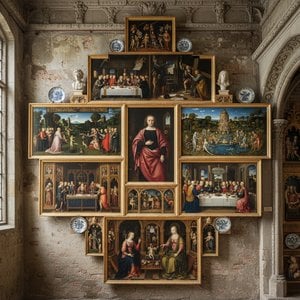
Journey into the Early Netherlandish Renaissance! Explore 10 iconic paintings by Jan van Eyck, Rogier van der Weyden & more. Discover stunning detail, symbolism, and oil painting techniques. Find museum-quality art reproductions for your home at WahooArt.com.
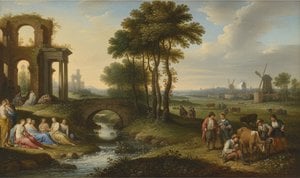
Discover Cornelis van Poelenburch, a pivotal Dutch Baroque landscape painter bridging Mannerism & Italianate styles. Explore his life, key works, and lasting influence on 17th-century art with WahooArt.

렘브란트 반 레인 명작 25선을 만나보세요. 빛과 그림자의 거장이 그린 역사화, 초상화 속 예술의 정수를 감상하고, 네덜란드 황금시대 바로크 미술의 깊이를 느껴보세요. WahooArt.com에서 고품질 복제화를 컬렉션하세요.

Explore the Dutch Golden Age of painting! Discover key artists like Vermeer & ter Borch, their innovative techniques, and the rich cultural context behind these Baroque masterpieces. Learn about collecting & appreciating this iconic art period.

Journey through the Golden Age with our guide to the Top 10 Dutch Baroque masterpieces! Explore iconic paintings by Rembrandt, Vermeer & Frans Hals. Find museum-quality art reproductions and elevate your home decor at WahooArt.com.


 미리보기
미리보기
 공유하기
공유하기 공유하기
공유하기
 상세 정보
상세 정보

 다운로드
다운로드
 유사 작품
유사 작품 X-레이
X-레이 슬라이드 쇼
 통계 정보
통계 정보 더 보기
더 보기









 유리 옵션은 110cm 미만 크기에서만 선택 가능합니다.


