Theodor Esbern Philipsen: A Pioneer of Danish Impressionism
Theodor Esbern Philipsen (10 June 1840 – 3 March 1920) stands as a pivotal figure in the history of Danish art, recognized primarily for his captivating landscapes and meticulously rendered animal portraits. Born into a prosperous merchant family in Copenhagen, Philipsen’s artistic journey began early, fueled by an innate fascination with animals—a passion that led him to pursue agricultural studies at his uncle's estate near Slangerup.
His formative years were marked by exposure to influential artists like Hans Smidth and Frederik Vermehren, who instilled in him a dedication to artistic excellence. Notably, he secured the Eckersberg Medal in 1890, cementing his reputation as a master of technique and capturing the essence of Nordic scenery.
Philipsen’s artistic evolution unfolded during his Parisian sojourn between 1873 and 1885, where he honed his skills under Léon Bonnat—a period characterized by intensive croquis drawing aimed at mastering movement and capturing fundamental poses. He cultivated friendships with luminaries like Rémy Cogghe, embarking on expeditions to Spain and Italy that broadened his artistic horizons.
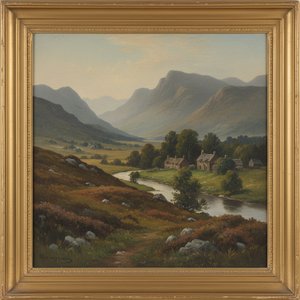
This multifaceted experience culminated in a distinctive style—one distinguished by loose brushwork and an acute sensitivity to light and atmosphere. His favored locations for painting included Saltholm and Amager, where he tirelessly documented the beauty of the Danish countryside. Philipsen’s commitment to Impressionistic principles profoundly impacted Danish art, establishing it as a prominent movement and securing his legacy as a visionary artist.
Philipsen's artistic output encompassed numerous celebrated works, including “A Lane at Kastrup,” depicting a serene winter landscape with masterful tonal gradation (1891), and “Street in Tunis,” showcasing vibrant colors and dynamic composition. These paintings exemplify Philipsen’s ability to convey emotion through visual representation.
Furthermore, his influence extended beyond his own canvases; he served as an advisor to Paul Gauguin during Gauguin's visit to Copenhagen, imparting invaluable insights into brushwork techniques—a testament to Philipsen’s generosity and dedication to fostering artistic growth.