უფასო ხელოვნების კონსულტაცია

x

მოკლე ინფორმაცია

  • Top-ranked work: Self-portrait in red
  • Museums on APS:
    • Arts Council Collection
    • Arts Council Collection
    • Arts Council Collection
    • Arts Council Collection
    • Arts Council Collection
  • Copyright status: Under copyright
  • Died: 2022
  • Also known as: Maria Paula Figueiroa Rego
  • Born: 1935
  • კიდევ…
  • Movements: contemporary realism
  • Art period: Modern
  • Top 3 works:
    • Self-portrait in red
    • Sleeping
    • Untitled (659)
  • Lifespan: 87 years
  • Creative periods: mature period
  • Works on APS: 39

ხელოვნების ტესტი

თითოეულ კითხვაზე მხოლოდ ერთი სწორი პასუხია.

კითხვა 1:
What was Paula Rego known for primarily?
კითხვა 2:
Where did Paula Rego study art?
კითხვა 3:
In what year was Paula Rego born?
კითხვა 4:
What type of art did Paula Rego predominantly use?
კითხვა 5:
Paula Rego was the first artist-in-residence at which prestigious gallery?

A Life Immersed in Story: The World of Paula Rego

Dame Paula Rego, born Maria Paula Figueiroa Rego in Lisbon, Portugal, in 1935 and passing away in London in 2022, stands as one of the most significant figures in late 20th and early 21st-century art. Her work, a potent blend of narrative power, psychological depth, and feminist perspective, has captivated audiences for decades. Rego wasn’t merely a painter; she was a storyteller, weaving tales that explored the complexities of human relationships, societal norms, and the often-hidden anxieties beneath the surface of everyday life. Her early life in Portugal profoundly shaped her artistic vision. The political climate of Salazar's dictatorship cast a long shadow, fostering a sense of unease and prompting a critical examination of power dynamics—themes that would become central to her oeuvre. She initially studied painting at the Escola de Belas Artes in Lisbon before continuing her education at the Slade School of Fine Art in London, an experience that broadened her artistic horizons and introduced her to new modes of expression.

From Abstraction to Narrative Figuration

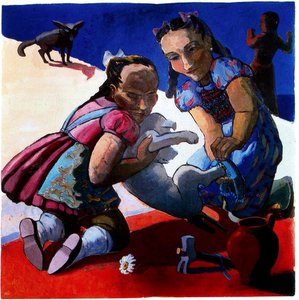
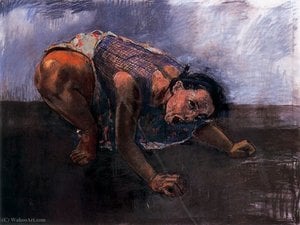
Rego’s artistic journey was marked by a significant stylistic evolution. She began with abstract works, influenced by contemporary trends, but gradually gravitated towards figuration—a shift driven by an increasing desire to depict specific narratives and characters. This wasn't simply a change in technique; it represented a fundamental reorientation of her artistic goals. She found herself increasingly drawn to the power of storytelling, particularly the rich folklore and traditional tales of Portugal. Her early figurative paintings often featured fragmented forms and unsettling imagery, hinting at the psychological tensions that would become more explicit in her later work. The choice of pastels over oils became a defining characteristic of her style, lending a unique softness and vulnerability to her depictions. This medium allowed for a fluidity and immediacy that perfectly suited her exploration of emotional states and interior worlds. She wasn’t interested in replicating reality; she sought to capture the *feeling* of a story, the underlying emotions and anxieties that resonated beneath the surface.

Themes of Power, Gender, and Portuguese Identity

Rego's work is deeply imbued with feminist concerns, challenging traditional representations of women and exploring themes of power, control, and vulnerability. Her paintings often depict female figures in ambiguous roles—sometimes victims, sometimes perpetrators, always complex and multifaceted. She fearlessly confronted taboo subjects, such as abortion, domestic violence, and sexual abuse, offering a powerful critique of patriarchal structures and societal expectations. However, her feminism wasn’t limited to explicit political statements; it was woven into the very fabric of her narratives, challenging viewers to question their own assumptions about gender roles and power dynamics. Equally important was her connection to Portuguese identity. She frequently drew upon traditional folk tales, fables, and historical events, reinterpreting them through a contemporary lens. These weren’t nostalgic celebrations of the past; they were critical examinations of Portugal's history and culture, exploring themes of colonialism, repression, and national trauma.

Major Achievements and Artistic Recognition

Throughout her career, Paula Rego received widespread recognition for her groundbreaking work. She was invited to become the first associate artist at the National Gallery in London in 1990, a pivotal moment that cemented her status as a leading contemporary artist. This residency led to two significant series of paintings: “Nursery Rhymes,” which subverted traditional children’s stories with unsettling imagery and psychological depth, and “Crivelli’s Garden,” inspired by the Renaissance master Carlo Crivelli, demonstrating her ability to engage with art history in a uniquely personal way. Retrospective exhibitions at institutions like the Calouste Gulbenkian Foundation in Lisbon and the Serpentine Gallery in London further solidified her reputation. She was awarded numerous honors, including the Order of the British Empire, recognizing her significant contribution to the arts. In 2017, Casa das Histórias Paula Rego, a museum designed by Eduardo Souto de Moura, opened in Cascais, Portugal, dedicated to showcasing her work and providing a space for artistic exploration.

A Lasting Legacy: The Power of Narrative Art

Paula Rego’s legacy extends far beyond the canvas. She redefined the possibilities of narrative art, demonstrating that painting could be a powerful medium for exploring complex psychological states, challenging societal norms, and confronting difficult truths. Her work continues to resonate with audiences today, inspiring artists and viewers alike to question their own assumptions about power, gender, and identity. She left behind a body of work that is both deeply personal and universally relevant—a testament to the enduring power of storytelling and the importance of artistic courage. Her paintings are not simply images; they are invitations to enter a world of unease, ambiguity, and profound emotional depth. She proved that art could be both beautiful and unsettling, challenging and comforting, ultimately offering a powerful reflection on the human condition.