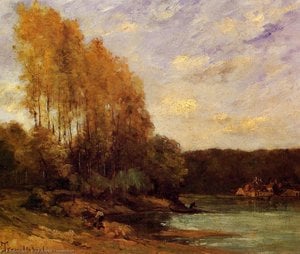
Paul Désiré Trouillebert: Bridging Barbizon Tradition and Impressionistic Vision
Paul Désiré Trouillebert (1829 in Paris, France – 28 June 1900 in Paris, France) stands as a pivotal figure within the French Barbizon School, an artistic movement that championed plein air painting and sought to capture the essence of rural landscapes with uncompromising realism. Born into Parisian bourgeois family, Trouillebert’s early life remains relatively obscure, yet his artistic trajectory swiftly established him as a talented observer and interpreter of nature's grandeur. He honed his skills under the tutelage of Ernest Hébert (1817–1908) and Charles Jalabert (1819–1901), absorbing the stylistic precepts of their respective approaches to landscape painting – principles that would profoundly shape Trouillebert’s own distinctive oeuvre.- Early Career & Salon Debut: Trouillebert debuted at the Salon of 1865, marking a significant milestone in his artistic career. At just 36 years old, he presented “A Quiet Backwater,” a landscape painting that immediately garnered critical acclaim and foreshadowed his burgeoning fascination with capturing atmospheric subtleties. Subsequent exhibitions at the Salon solidified his reputation as a respected artist within the Parisian art world.
- The Influence of Corot: Trouillebert’s artistic sensibilities were undeniably influenced by George Caleb Bingham (1817–1893), particularly the late manner of painting championed by Jean-François Millet and, crucially, Gustave Courbet. His landscapes bear a palpable resemblance to Corot's evocative compositions—characterized by diffused light, muted tones, and an emphasis on textural detail—demonstrating Trouillebert’s dedication to preserving the spirit of Barbizon tradition.
Landscape Painting & The Myth of Corot
Trouillebert's landscapes transcended mere topographical representation; they aimed to convey a profound emotional response to the natural world. He meticulously studied Corot’s techniques, adopting his characteristic brushstrokes and color palettes to imbue his canvases with an atmosphere of tranquility and contemplation. Paintings like “Path on the Banks of the Seine” exemplify this stylistic convergence, capturing the shimmering reflections of sunlight on water with remarkable precision—a testament to Trouillebert's unwavering commitment to artistic integrity. The celebrated forgery incident surrounding “Au bois rossignolet,” where one of his landscapes was falsely attributed to Corot and subsequently sold for a considerable sum, underscores the enduring legacy of Trouillebert’s work and its connection to the broader artistic discourse of the era.- Beyond Landscape: Portraits & Orientalist Explorations While landscape painting constituted his primary focus, Trouillebert possessed considerable versatility as an artist. He produced captivating portraits that skillfully captured the psychological nuances of his subjects—often depicting figures in intimate settings—and ventured into Orientalist themes, notably with “The Harem Servant Girl,” a striking depiction of a nude female figure rendered in the style of Greco-Roman antiquity.
- Notable Achievements & Recognition: Trouillebert’s paintings achieved considerable acclaim during his lifetime and continue to resonate with collectors and art historians today. His work was showcased at prestigious exhibitions, including the Paris Salon of 1884, where “The Bathers” garnered favorable reviews.
A Legacy Marked by Authenticity & Artistic Integrity
Despite the controversy surrounding the Corot forgery—a deliberate attempt to inflate the value of Trouillebert’s art—his artistic reputation rests firmly on the foundation of genuine innovation and unwavering adherence to Barbizon principles. Trouillebert's ability to distill the sublime beauty of rural landscapes into powerfully expressive paintings cemented his place as a significant contributor to French Impressionism, albeit one who remained steadfastly rooted in tradition. His enduring influence can be discerned in subsequent generations of landscape artists who sought to emulate his masterful command of color and texture—a testament to Trouillebert’s lasting contribution to the history of art.კითხვები და პასუხები
როგორ არის დაყოფილი Paul Désiré Trouillebert-ის კარიერა პერიოდებად?
Paul Désiré Trouillebert-ის ქრონიკა წარმოადგენს სქროლზე დაფუძნებულ ქრონოლოგიურ ხაზს, რომელიც ხელოვანის ნამუშევრებს ქრონოლოგიური თანმიმდევრობით აჯგუფებს მათი შემოქმედებითი ეპოქების მიხედვით.
რომელ ისტორიულ პერიოდში მოღვაწეობდა Paul Désiré Trouillebert?
Paul Désiré Trouillebert 19th Century პერიოდში მოღვაწეობდა. ეს ეპოქა ხელოვანის შემოქმედებას ისტორიულ კონტექსტს სვამს.
სად და რა წელს დაიბადა Paul Désiré Trouillebert?
Paul Désiré Trouillebert დაიბადა Paris-ში, 1829 წელს.