Lanceloot Blondeel: A Vision of Belgian Romanticism
Lanceloot Blondeel (1498 – 1561), a name whispered amongst connoisseurs of Flemish art, remains an enigmatic figure despite the considerable volume of surviving paintings attributed to him. Born in Poperinge, Belgium—a town nestled on the border between Flanders and Picardy—Blondeel’s life unfolded against the backdrop of turbulent times: the Reformation gripped Europe, reshaping religious beliefs and artistic sensibilities alike.
Little is known about Blondeel's formative years beyond his birthplace. Records indicate he apprenticed under Jan van Steenwyck II, a prominent Antwerp painter whose workshop fostered innovation and experimentation within the burgeoning Flemish Baroque movement. This apprenticeship undoubtedly instilled in Blondeel a foundational understanding of perspective, chiaroscuro—the dramatic interplay of light and shadow—and meticulous detail – techniques that would become hallmarks of his distinctive artistic style.
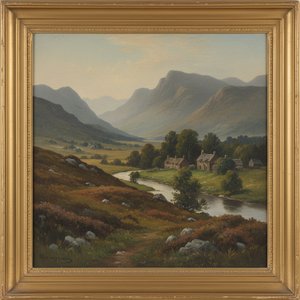
Blondeel’s oeuvre comprises approximately 150 paintings, predominantly landscapes interspersed with portraits. Unlike many of his contemporaries who embraced the opulent grandeur of Baroque decoration, Blondeel cultivated a serene aesthetic characterized by soft pastel hues and delicately rendered textures. His canvases depict idyllic rural scenes—rolling hills bathed in golden sunlight, tranquil meadows dotted with wildflowers—often populated by idealized figures engaged in pastoral pursuits.
However, Blondeel’s landscapes are not merely decorative fantasies; they carry profound symbolic weight. Recurring motifs of cypress trees and weeping willows evoke themes of mortality and remembrance, reflecting the humanist preoccupation with human experience during the Renaissance. Furthermore, Blondeel skillfully employed atmospheric perspective—a technique pioneered by Albert Dürer—to convey a sense of depth and realism that transcends mere visual representation.
Despite his considerable talent, Blondeel’s artistic reputation suffered from obscurity for centuries. His paintings were largely ignored by art historians until the late 19th century when scholars rediscovered them in provincial collections. The rediscovery coincided with a burgeoning interest in Flemish Romanticism—a movement that championed emotion and imagination as antidotes to Enlightenment rationalism.
Critics hailed Blondeel’s work as embodying the spirit of Romantic idealism, praising its lyrical beauty and psychological insight. His landscapes captured the sublime grandeur of nature—the awe-inspiring power of storms and mountains—while his portraits conveyed nuanced expressions of emotion and character. Blondeel's influence extended beyond Belgium; his paintings traveled throughout Europe, inspiring artists across disciplines.
Among Blondeel’s most celebrated achievements include “The Shepherdess,” a pastel portrait depicting a young woman gazing wistfully into the distance—a masterpiece lauded for its masterful rendering of light and shadow and its evocative portrayal of feminine vulnerability. Similarly, "Landscape with Figures" showcases Blondeel's mastery of atmospheric perspective and his ability to evoke a palpable sense of tranquility.
Today, Lanceloot Blondeel is recognized as one of the foremost practitioners of Flemish Romanticism—a testament to his enduring artistic legacy. His paintings continue to captivate audiences with their ethereal beauty and profound psychological depth, reminding us that art can transcend time and convey universal truths about human experience.