Ardengo Soffici: Bridging Modernism and Tuscan Roots
Ardengo Soffici (1879-1964) stands as a compelling figure in the landscape of 20th-century Italian art, a man whose career spanned diverse disciplines – writing, painting, poetry, sculpture, and intellectual pursuits. Born in Rignano sull’Arno near Florence, his life was inextricably linked to the artistic heartland of Tuscany, yet he simultaneously engaged deeply with the radical currents sweeping through Europe at the turn of the century. Soffici wasn't a single-minded revolutionary like Marinetti; instead, he navigated the shifting sands of modernism with a measured intelligence and a profound appreciation for tradition, creating a body of work that is both strikingly innovative and deeply rooted in his Tuscan heritage.
Early Life and Parisian Influences
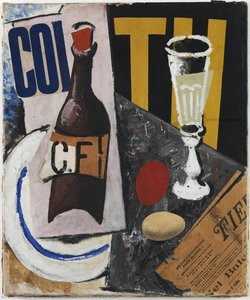
Soffici’s early years were marked by financial hardship following his father's death, forcing the family to relocate to Florence. This experience instilled in him a keen awareness of social realities and a sensitivity to the lives of ordinary people – themes that would subtly permeate much of his later work. He began his formal artistic training at the Accademia di Belle Arti in Florence, where he honed his skills before venturing to Paris in 1900. The Parisian art scene proved transformative. Immersed in the vibrant atmosphere of the Bateau-Lavoir, Soffici encountered a constellation of influential artists – Braque, Derain, Picasso, Apollinaire – and became acquainted with the burgeoning movements of Symbolism and Cubism. These early encounters shaped his artistic sensibilities, introducing him to new ways of seeing and representing the world. He began contributing to journals like *La Plume* and *Europe Artiste*, developing a critical eye and establishing himself as an observer and commentator on the evolving art landscape.
The Futurist Encounter and Artistic Divergence
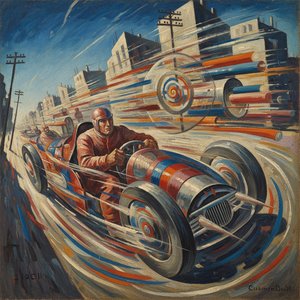
Soffici’s engagement with Futurism was complex and ultimately ambivalent. Initially, he was drawn to the movement's dynamism and its rejection of academic tradition. He attended the Futurists’ exhibition in Milan in 1912, a pivotal moment that exposed him to their radical ideas about speed, technology, and violence. However, his critical perspective quickly clashed with the more dogmatic tendencies within the group. His scathing review of the Futurist exhibition in *La Voce* – a journal he edited – ignited a furious confrontation, culminating in an assault on Soffici and his colleagues. Despite this antagonism, he continued to engage with Futurism, contributing theoretical essays and exhibiting alongside the movement. Yet, crucially, he never fully embraced its tenets, maintaining a distinct artistic voice that prioritized observation and reflection over overt propaganda. His paintings from 1913, such as *Linee di una strada*, demonstrate the influence of Futurist techniques – bold lines, fragmented forms – but retain a sense of quiet contemplation.
A Return to Tradition and Tuscan Landscapes
Following the First World War, Soffici experienced a significant shift in his artistic focus. Rejecting the excesses of Futurism, he turned towards a renewed appreciation for the natural beauty of Tuscany. This wasn’t a simple retreat into nostalgia; rather, it represented a conscious effort to find stability and meaning amidst the turmoil of the modern world. He established a studio in Poggio a Caiano, near his birthplace, and dedicated himself to painting landscapes, still lifes, and portraits – subjects that allowed him to explore the subtle nuances of light, color, and form. His later works, characterized by their meticulous detail and understated elegance, are imbued with a profound sense of place and a deep connection to the Tuscan countryside. These paintings aren’t merely representations of scenery; they are meditations on time, memory, and the enduring spirit of the region.
Legacy and Critical Significance
Ardengo Soffici's contribution to Italian art is often underestimated, yet he occupies a unique position as a bridge between modernism and tradition. He was a keen observer and insightful critic, playing a crucial role in shaping the discourse surrounding Cubism and Futurism in Italy. His writings on French artists – particularly Picasso and Braque – were instrumental in introducing these movements to a wider Italian audience. While he never achieved widespread fame during his lifetime, Soffici’s work continues to be recognized for its quiet intensity, its subtle innovations, and its profound connection to the cultural landscape of Tuscany. He represents a vital thread in the complex tapestry of 20th-century art, demonstrating that artistic innovation can coexist with a deep respect for established values and traditions. His legacy lies not only in his paintings but also in his insightful writings and his enduring influence on subsequent generations of Italian artists.