The Genesis of a Visionary
Born into the intellectual splendor of Saint Petersburg in 1844, Vasily Dmitrievich Polenov was destined to become much more than a mere chronicler of nature; he was to be its poet. His early life was a tapestry woven from the threads of scientific inquiry and artistic passion, shaped profoundly by an enlightened upbringing.His father, the esteemed archaeologist Dmitri Vasilevich Pollev, led him on formative pilgrimages through the heart of Russia—to Novgorod, Rostov, and Yaroslavl—where the ancient churches and weathered monasteries instilled in the young artist a deep reverence for history. This ancestral connection to the Russian soil was complemented by the influence of his mother, Maria Alekseevna, a painter herself, who nurtured his burgeoning talent. These childhood journeys were not merely travels but essential sketching expeditions that laid the foundation for a lifelong devotion to capturing the soulful spirit of the Russian landscape.
The Knight of Beauty and the Peredvizhniki Movement
Polenov’s artistic journey led him from the rigorous study of mathematics and physics to the hallowed halls of the Saint Petersburg Imperial Academy of Arts. Under the mentorship of giants such as Ilya Repin and Ivan Kramskoi, he embraced the tenets of the Peredvizhniki movement, a group of realist rebels dedicated to social responsibility and artistic freedom.Yet, while his contemporaries often focused on the starker realities of social injustice, Polenov carved out a unique niche that earned him the moniker “the knight of beauty.” He sought to transcend the purely didactic, striving instead to find a harmonious balance between European technical mastery and the profound emotional resonance of Russian folklore and Orthodox Christianity. His style underwent a fascinating metamorphosis, drifting from the light-drenched observations of Impressionism toward the more ethereal realms of Symbolism, all while maintaining a steadfast commitment to the meticulous observation of the natural world.
A Legacy of Luminous Landscapes
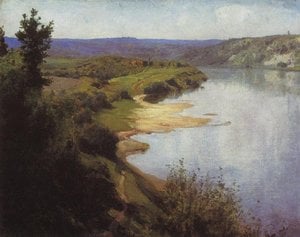
The true essence of Polenov’s work lies in his unwavering belief that art should promote happiness and joy. This humanist conviction is vibrantly expressed through his mastery of light and color. His canvases, such as the serene Oka River or the evocative Interior of a Cathedral, are characterized by luminous palettes and textured surfaces that invite the viewer into a state of spiritual contemplation.Polenov possessed an uncanny ability to imbue even the most tranquil landscapes with a sense of historical weight and religious significance. His enduring legacy is defined by several key artistic pillars:
- The seamless integration of European Impressionist light with the Russian soul.
- A commitment to meticulous realism and the accurate depiction of nature.
- The use of landscape as a medium for spiritual and moral reflection.
Q&A
Vassily Dmitrievitch Polenovの作品を年表順に辿るには、どうすればよいですか?
Vassily Dmitrievitch Polenovの作品年表はこちら:作品の年表ページでは、制作日順に作品が並んでいます。
Vassily Dmitrievitch Polenov氏の作品のカラープロファイルはどこで確認できますか?
Vassily Dmitrievitch Polenovの作品のカラープロファイルは、アーティストのパレット・ゲノムページでご確認いただけます。
美術様式別に分類されたVassily Dmitrievitch Polenovの作品は、どこで閲覧できますか?
Vassily Dmitrievitch Polenovが活動した各ムーブメント(芸術運動)は、作品をムーブメント別に分類しているアーティストのすべてのムーブメントページでご覧いただけます。