オノレ・ドーミエ, 1808 – 1879

オノレ・ドーミエ:最も有名な絵画100選

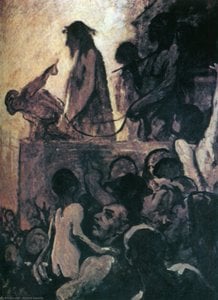
オノレ・ドーミエ 「バルバトゥスを放て」(エッケ・ホモ) (1852)はオノレ・ドーミエの最も有名な作品であり、エッセンの美術館フォルクヴァングに所蔵されています。 The Third-class Carriage (1860)とUnknown, maybe Hippolyte Lucien-Joseph Lucas (1807-1878), a Journalist, maybe P.Mendez de Vigo (1790-1860) a Spanish General, but Most Probably the Count Pelet de la Lozere (1785-1871), a Politician (1833)は、世界で最もよく知られている次の2つの作品です。 当カタログに含まれるオノレ・ドーミエの355作品の中から、コレクターや美術館の来館者が最も注目する100作品を厳選しました。各作品の制作年、所蔵美術館、そしてその背景にある物語をご紹介します。

各作品の検索数、閲覧数、および注文数を組み合わせた当サイトの人気スコアに基づきランキングを作成しています。最終更新:10月 2026 このページに掲載されているすべての名作は、ご希望のサイズで、美術館品質の手描き油彩複製画、またはファインアートプリントとしてご注文いただけます。

オノレ・ドーミエの肖像画
オノレ・ドーミエ · 1808 – 1879
生没年
1808 – 1879, マルセイユ
ムーブメント
写実主義
カタログ掲載作品
355
最も有名な
オノレ・ドーミエ 「バルバトゥスを放て」(エッケ・ホモ) (1852)
最多収蔵館
オルセー美術館

トップ10:オノレ・ドーミエの代表作

オノレ・ドーミエ 「バルバトゥスを放て」(エッケ・ホモ) (1852) による オノレ・ドーミエ
1

オノレ・ドーミエ 「バルバトゥスを放て」(エッケ・ホモ)

1852 · 油彩 キャンバス · 美術館フォルクヴァング, エッセン

人間の苦悩と社会正義の力強い描写 この心を揺さぶる傑作は、慈愛、不条理、そして社会批判というテーマと深く共鳴する、痛切な聖書の場面を捉えています。荒々しく表現豊かなスタイルで描かれたその情景は、観る者を集団的な感情と道徳的な内省の瞬間へと誘います。身振り手振りに即時性を感じさせる人物たちは、切迫感と人間の脆弱さを呼び起こし、社会的な良心と精神的な共感に対する深遠な声明となっています。 芸術的スタイルと技法 1852年に名高いフランスの芸術家オノレ・ドーミエによって生み出されたこの作品は、19世紀半ばの美術を特徴づける写実主義と感情的な強烈さを体現しています。ドーミエは、動きと生の感情を伝えるために、ゆったりとした力強い筆致と重層的なテクスチャーを用いています。茶色、黒、オーカー(黄土色)を中心とした控えめで土着的なカラーパースペクティブが、沈鬱なムードを高める一方で、繊細なハイライトが主要な人物や仕草に視線を引きつけます。構図の重層的な奥行きは、物語の感情的な核心を強調しながら、観る者の瞳を画面の中へと導いていきます。 歴史的背景と象徴性 フランスが社会的な激動と政治的不安の時代にあった時期に制作されたドーミエの作品は、社会正義への献身と、社会の不条理に対する批判をしばしば反映していました。バルバことイエスに関する聖書の記述に触発されたこの場面は、無実、罪、そして社会的な選択というテーマを象徴しています。人物たちの表情豊かな顔や仕草は、集団的な苦しみ、慈悲、そして社会が直面する道徳的ジレンマを象徴しています。作品の重々しいトーンは、これらのテーマの重大さを強調し、正義と人間の尊厳について観る者に深い思索を促します。 感情的なインパクトと芸術的意義 ドーミエの真骨頂は、表現力豊かな形態と質感のある技法を通じて、共感を呼び起こし、思考を刺激する能力にあります。力強い線と対照的な色調によって伝わる感情的なエネルギーは、没入感のある体験を生み出し、人間の脆弱性と道徳的責任という普遍的なテーマに向き合わせるのです。個人コレクションや洗練されたインテリアのいずれにおいても、この作品は社会的な良心と精神的な慈愛が持つ、時代を超えた重要性を力強く思い出させてくれる存在となります。 収集とインスピレーションのための時代を超えた名作 意味深く高品質な複製画を求めるアート愛好家、コレクター、そしてインテリアデザイナーにとって理想的なこの作品は、審美的な美しさと深遠な物語の奥行きの両方を備えています。その歴史的重要性は、ドーミエ独自のスタイルと相まって、ギャラリー、洗練された邸宅、あるいは文化施設など、あらゆる空間に魅惑的な彩りを添えます。今日においても観る者にインスピレーションを与え、問いを投げかけ続ける、19世紀の社会批判と芸術的極致の一片を、ぜひその手に。

The Third-class Carriage (1860) による オノレ・ドーミエ
2

The Third-class Carriage

1860 · Oil On Canvas · メトロポリタン美術館, ニューヨーク

In the crowded, dimly lit confines of a mid-19th-century railway carriage, Honoré Daumier captures more than just a moment in transit; he captures the very essence of human endurance. The Third-class Carriage serves as a profound window into the burgeoning urban reality of France during the Second Empire. As the industrial revolution reshaped the landscape of Europe, Daumier turned his gaze away from the gilded salons of the aristocracy and…

Unknown, maybe Hippolyte Lucien-Joseph Lucas (1807-1878), a Journalist, maybe P.Mendez de Vigo (1790-1860) a Spanish General, but Most Probably the Count Pelet de la Lozere (1785-1871), a Politician (1833) による オノレ・ドーミエ
3

Unknown, maybe Hippolyte Lucien-Joseph Lucas (1807-1878), a Journalist, maybe P.Mendez de Vigo (1790-1860) a Spanish General, but Most Probably the Count Pelet de la Lozere (1785-1871), a Politician

1833 · Clay / Terracotta · オルセー美術館, パリ

This evocative portrait captures more than just the likeness of an elderly gentleman; it arrests a moment in time, freezing the very essence of 19th-century Parisian intellectual life. The subject, whose identity is suggested by the possibilities of a journalist or politician, possesses a gaze that seems to look past the viewer, into some distant, weighty contemplation. Rendered with the unmistakable hand of Honoré Daumier, the piece transcends mere portraiture;…

Ratapoil (front view) (1850) による オノレ・ドーミエ
4

Ratapoil (front view)

1850 · Bronze · オルセー美術館, パリ

Honoré Daumier's "Ratapoil (front view)," created around 1850, is more than just a bronze sculpture; it’s a potent distillation of 19th-century French social commentary and political critique. This arresting figure, rendered with remarkable dynamism and a touch of unsettling realism, offers a captivating window into the turbulent world of post-Revolutionary France – a world grappling with nascent democracy, imperial ambitions, and the pervasive inequalities of its society. The sculpture’s enduring…

Intermission at the Comédie Française (1858) による オノレ・ドーミエ
5

Intermission at the Comédie Française

1858 · Watercolor · エルミタージュ美術館, サンクトペテルブルク

Honoré Daumier's “Intermission at the Comédie Française,” painted in 1858, isn’t merely a depiction of an elderly gathering; it’s a meticulously crafted observation of a specific moment frozen in time – and brimming with unspoken commentary. The artwork immediately draws the viewer into a densely packed scene: rows upon rows of men, their faces etched with age and lined with contemplation, are absorbed in reading newspapers or pamphlets within the…

Ratapoil (1850) による オノレ・ドーミエ
6

Ratapoil

The photograph captures a pivotal moment – a frozen dance of energy and emotion rendered in the enduring medium of bronze. This exquisite reproduction offers an intimate encounter with "Ratapoil," a sculpture by the visionary artist Honoré Daumier, born in Marseille in 1808 and tragically lost in 1879. More than just a depiction of a figure, it’s a window into the social anxieties and artistic fervor that defined mid-19th century…

Scene from a Comedy (1858) による オノレ・ドーミエ
8

Scene from a Comedy

1858 · Oil On Canvas · オルセー美術館, パリ

Honoré Daumier's "Scene from a Comedy," painted in 1858, isn’t merely a depiction of two figures; it’s a meticulously crafted snapshot of Parisian society and the biting social commentary that defined the artist’s career. Housed within the walls of the Musée d’Orsay, this oil on canvas offers a rare glimpse into Daumier's world – a world brimming with observation, critique, and an undeniable sense of humor laced with profound sadness.…

Ratapoil (1850) による オノレ・ドーミエ
9

Ratapoil

1850 · Acrylic On Canvas · アーティゾン美術館, 東京

Honoré Daumier's "Ratapoil," created in 1850, isn’t merely a sculpture; it’s a distilled embodiment of the anxieties and frustrations simmering beneath the surface of mid-19th century France. This arresting figure, rendered in cast iron with a deliberate roughness that mirrors its subject matter, captures a moment of profound disillusionment – a silent indictment of societal hypocrisy and the precariousness of human existence. The sculpture’s power lies not just in its…

Family on the Barricades in 1848 (1854) による オノレ・ドーミエ
10

Family on the Barricades in 1848

1854 · Oil · ナショナル・ギャラリー, プラハ

In the heart of Honoré Daumier’s 1854 masterpiece, Family on the Barricades in 1848, we find a moment suspended in the amber of history. This is not merely a painting of a political uprising; it is a profound psychological study of human resilience. As the Second French Revolution tore through the streets of Paris, Daumier captured the very essence of the era's turbulent spirit. The scene presents a family huddled…

オノレ・ドーミエランキングの残り、11位から100位

The Print Collector (1865) による オノレ・ドーミエ
#11

The Print Collector

1865 · シカゴ美術館

Honoré Daumier's "The Print Collector" isn’t merely a depiction of a man surrounded by prints; it’s a carefully constructed tableau of introspection, a poignant meditation on knowledge, legacy,…

お部屋に飾る →
The Republic (1848) による オノレ・ドーミエ
#12

The Republic

1848 · オルセー美術館

Honoré Daumier’s “The Republic” (1848) isn't merely a painting; it’s a potent distillation of the anxieties and aspirations swirling within post-revolutionary France. Captured with his signature blend of…

お部屋に飾る →
Comedy scene (scene from Molière) (1862) による オノレ・ドーミエ
#13

Comedy scene (scene from Molière)

1862 · オルセー美術館

Honoré Daumier's 1862 painting, "Comedy Scene (Scene from Molière)," isn’t merely a depiction of a theatrical moment; it’s a vibrant snapshot of Parisian society grappling with wit, social…

お部屋に飾る →
On a Bridge at Night (1848) による オノレ・ドーミエ
#14

On a Bridge at Night

1848 · フィリップス・コレクション

The scene captures a moment of silent intimacy under the artificial glow of lamplight. Two figures move across a bridge, their forms defined by expressive, simplified outlines that…

お部屋に飾る →
Burden (1850) による オノレ・ドーミエ
#16

Burden

1850 · エルミタージュ美術館

In the quiet, somber depths of Honoré Daumier’s 1850 masterpiece, "Burden," we are invited into a moment of profound human endurance that transcends the boundaries of time. The…

複製画を注文する →
The Studio (1870) による オノレ・ドーミエ
#19

The Studio

1870 · J・ポール・ゲティ美術館

In this intimate oil on canvas, a man leans toward a seated woman within a dimly lit interior. The composition is tightly cropped, creating a sense of enclosure…

複製画を注文する →
Jean-Marie Fruchard (1788-1872), Deputy (1833) による オノレ・ドーミエ
#20

Jean-Marie Fruchard (1788-1872), Deputy

1833 · オルセー美術館

Honoré Daumier’s 1833 sculpture of Jean-Marie Fruchard, a deputy of the French parliament, functions as a sharp political indictment. Rather than an idealized likeness, the bust utilizes deliberate…

Load (Washerwoman) (1853) による オノレ・ドーミエ
#21

Load (Washerwoman)

1853 · ナショナル・ギャラリー

In this 1853 lithograph, a woman moves through a Parisian street, her form defined by the heavy burden she carries. A large basket, filled to the brim with…

お部屋に飾る →
Two Lawyers (1860) による オノレ・ドーミエ
#24

Two Lawyers

1860 · シカゴ美術館

This small-scale oil painting presents two men in profile, positioned side-by-side while facing one another. The subjects are captured from the upper torso upward, creating a close-up view…

複製画を注文する →
Outside the Print–Seller's Shop (1860) による オノレ・ドーミエ
#25

Outside the Print–Seller's Shop

1860 · ダラス美術館

This painting, titled Outside the Print–Seller's Shop, was created by the French artist Honoré Daumier. It offers a quiet glimpse into the social fabric of 19th-century France, capturing…

お部屋に飾る →
Exit from the Theater (1863) による オノレ・ドーミエ
#26

Exit from the Theater

1863 · ネルソン・アトキンス美術館

The work titled Exit from the Theater is an oil on panel. It is attributed to the artist Honoré Daumier. The painting captures a street scene of theater-goers…

お部屋に飾る →
The Uprising (L (1848) による オノレ・ドーミエ
#28

The Uprising (L

1848 · フィリップス・コレクション

For Duncan Phillips, the jewel of his unit of works by Honoré Daumier was The Uprising. When this long forgotten painting appeared on the market, Phillips seized the…

複製画を注文する →
Susannah and the Elders (1853) による オノレ・ドーミエ
#33

Susannah and the Elders

1853 · バーレル・コレクション

A central female figure is caught in a claustrophobic embrace of shadow and light. The composition is tight, pressing the viewer into the immediate space shared by the…

複製画を注文する →
Penelopa's Dream (1842) による オノレ・ドーミエ
#34

Penelopa's Dream

1842 · フランス国立図書館

Penelopa's Dream is a lithograph created by the artist Honoré Daumier. The work was produced in 1842. This specific piece belongs to the Ancient History series, a collection…

お部屋に飾る →
Jean-Auguste Chevandier de Valdrome, Parliamentarian (The Fool) (1832) による オノレ・ドーミエ
#35

Jean-Auguste Chevandier de Valdrome, Parliamentarian (The Fool)

1832 · オルセー美術館

Honoré Daumier's "Jean-Auguste Chevandier de Valdrome, Parliamentarian (The Fool)" is not merely a sculpture; it’s a profound distillation of human sorrow and the weight of political disillusionment. Completed…

The Washerwoman (1863) による オノレ・ドーミエ
#36

The Washerwoman

1863 · オルセー美術館

Honoré Daumier’s “The Washerwoman,” painted in 1863, is more than just a depiction of a woman laboring by the Seine; it's a poignant meditation on poverty, resilience, and…

複製画を注文する →
The Beautiful Narcissus (1842) による オノレ・ドーミエ
#59

The Beautiful Narcissus

1842 · フランス国立図書館

Honoré Daumier’s lithograph, "The Beautiful Narcissus," transcends mere depiction; it embodies the spirit of Realism—a courageous confrontation with societal realities tempered by profound artistic sensitivity. Created in 1842…

お部屋に飾る →
Two Singers による オノレ・ドーミエ
#66

Two Singers

ハーバード美術館

In this oil painting, we find ourselves drawn into a quiet, private moment between two figures. A man and a woman are positioned closely together, their upper bodies…

お部屋に飾る →
The Serenade (1858) による オノレ・ドーミエ
#69

The Serenade

1858 · スコットランド国立美術館

The Serenade is a painting by Honoré Daumier, created about 1858. In this work, the artist captures a strolling player singing within the setting of a garden restaurant.…

手描き複製画をオーダーする →
The Print Amateur (1855) による オノレ・ドーミエ
#70

The Print Amateur

1855 · ハーバード美術館

The Print Amateur is an oil on panel by Honoré Daumier. Created in France, this work captures a specific moment of observation. The pigment rests upon the hard,…

お部屋に飾る →
Jacques Lefévre (1777-1856), Banker and Deputy (1833) による オノレ・ドーミエ
#72

Jacques Lefévre (1777-1856), Banker and Deputy

1833 · オルセー美術館

Honoré Daumier's 1833 sculpture, “Jacques Lefévre (1777-1856), Banker and Deputy,” is far more than a simple bust; it’s a meticulously crafted caricature brimming with social commentary. Captured in…

The Print Collector (1862) による オノレ・ドーミエ
#73

The Print Collector

1862 · バーレル・コレクション

is an oil on canvas work by Honoré Daumier, dated 1865. The painting belongs to the Realism and Satirical realism movements of the 19th Century. It captures the…

複製画を注文する →
Rue Transnonain, April 15, 1834 (1834) による オノレ・ドーミエ
#79

Rue Transnonain, April 15, 1834

1834 · フランス国立図書館

Honoré Daumier's "Rue Transnonain, April 15, 1834" isn’t merely a depiction of an event; it’s a visceral scream frozen in lithograph ink. Published six months after the brutal…

お部屋に飾る →
Theater Audience (1856) による オノレ・ドーミエ
#80

Theater Audience

1856 · 国立西洋美術館

Theater Audience is an oil painting by the French artist Honoré Daumier. The work was created about 1856-60. Daumier was a male artist born in 1808 and he…

複製画を注文する →
Don Quixote Reading (1866) による オノレ・ドーミエ
#81

Don Quixote Reading

1866 · National Museum Cardiff

In this oil on canvas, Honoré Daumier presents us with a quiet, intense moment of absorption. The work, titled Don Quixote Reading, captures the titular character lost within…

お部屋に飾る →
Avant l (1865) による オノレ・ドーミエ
#84

Avant l

1865

Honoré Daumier’s “Avant l’audience” (Before the Hearing), painted in 1865, is a deceptively simple yet profoundly resonant work that captures a pivotal moment of restrained tension and intellectual…

複製画を注文する →
Don Quixote and Sancho Panza (1864) による オノレ・ドーミエ
#89

Don Quixote and Sancho Panza

1864 · バーレル・コレクション

The composition centers on the physical and psychological distance between two travelers moving through a rugged, mountainous landscape. In the foreground, Sancho Panza is seen from behind, riding…

複製画を注文する →
Don Quixote and Sancho Panza (1870) による オノレ・ドーミエ
#90

Don Quixote and Sancho Panza

1870 · コートールド・ギャラリー

Don Quixote and Sancho Panza is an oil painting by the artist Honoré Daumier. Dated 1866, this work is categorized within the movements of Realism, Satire, and Narrative.…

お部屋に飾る →
The Reader による オノレ・ドーミエ
#91

The Reader

The quiet intensity of The Reader meets the viewer through the focused gaze of its subject. Painted by Honoré Daumier, this work captures a moment of profound stillness.…

複製画を注文する →
Street Scene (1864) による オノレ・ドーミエ
#92

Street Scene

1864 · ボイジャンズ・ヴァン・ビューニンゲン美術館

The shadows of a mid-19th-century urban environment emerge through Street Scene, a work by the French painter Honoré Daumier. Created about 1864, this piece captures a fleeting moment…

手描き複製画をオーダーする →
To the Street (1850) による オノレ・ドーミエ
#97

To the Street

1850 · フィリップス・コレクション

In the evocative monochrome of Honoré Daumier’s To the Street, we are transported back to the mid-19th century, a period defined by the rapid pulse of urban transformation.…

お部屋に飾る →
Three Lawyers (1857) による オノレ・ドーミエ
#98

Three Lawyers

1857 · フィリップス・コレクション

In the evocative monochrome of Honoré Daumier’s "Three Lawyers," we are invited into a world where the gravity of the law meets the biting wit of social critique.…

手描き複製画をオーダーする →
Mother (1855) による オノレ・ドーミエ
#100

Mother

1855 · Народний музей Сербії

Executed in 1855, Mother by Honoré Daumier presents a portrait of disquiet. This work functions as a genre painting, utilizing a depiction of a mother and child to…

お部屋に飾る →

オノレ・ドーミエの年代別絵画

オノレ・ドーミエ が最も多く描いた主題

これらの傑作の中で最も頻繁に描かれる4つの主題と、それぞれの最高傑作をご紹介します。

オノレ・ドーミエの作品を見るには

このページに掲載されている絵画を最も多く所蔵している 8 の美術館

美術館 都市 オノレ・ドーミエの作品 このリストの絵画
オルセー美術館, パリオルセー美術館 パリ 33 Unknown, maybe Hippolyte Lucien-Joseph Lucas (1807-1878), a Journalist, maybe P.Mendez de Vigo (1790-1860) a Spanish General, but Most Probably the Count Pelet de la Lozere (1785-1871), a Politician, Ratapoil (front view), Ratapoil (rear view)
バーレル・コレクション, グラスゴーバーレル・コレクション グラスゴー 9 The Good Samaritan, Susannah and the Elders, The Miller, His Son and the Donkey
フィリップス・コレクション, Washington, D.C.フィリップス・コレクション Washington, D.C. 8 On a Bridge at Night, The Uprising (L, The Strong Man
シカゴ美術館, シカゴシカゴ美術館 シカゴ 4 The Print Collector, Street Musicians, Two Lawyers
National Museum Cardiff, カーディフNational Museum Cardiff カーディフ 8 Head of a Man, A Third Class Carriage, Don Quixote Reading
Rhode Island School of Design Museum of Art, プロビデンスRhode Island School of Design Museum of Art プロビデンス 4 Second-Class Carriage, Mme Pipelet, the Concierge, Au Palais de Justice (At the Law Courts)
フランス国立図書館, パリフランス国立図書館 パリ 3 Penelopa's Dream, The Beautiful Narcissus, Rue Transnonain, April 15, 1834
ハーバード美術館, ケンブリッジハーバード美術館 ケンブリッジ 3 Scapin, Two Singers, The Print Amateur

オノレ・ドーミエの歩み:時代を彩る名作を、一作品ずつ

  1. 1830s
  2. 1840s
    The Republic (1848) による オノレ・ドーミエ
    第12/100位

    The Republic

    年齢 32歳 – 41歳 · オルセー美術館

    Honoré Daumier’s “The Republic” (1848) isn't merely a painting; it’s a potent distillation of the anxieties and aspirations swirling within post-revolutionary France. Captured with his signature blend of…

  3. 1850s
    オノレ・ドーミエ 「バルバトゥスを放て」(エッケ・ホモ) (1852) による オノレ・ドーミエ
    100件中1位

    オノレ・ドーミエ 「バルバトゥスを放て」(エッケ・ホモ)

    年齢 42歳 – 51歳 · 美術館フォルクヴァング

    人間の苦悩と社会正義の力強い描写 この心を揺さぶる傑作は、慈愛、不条理、そして社会批判というテーマと深く共鳴する、痛切な聖書の場面を捉えています。荒々しく表現豊かなスタイルで描かれたその情景は、観る者を集団的な感情と道徳的な内省の瞬間へと誘います。身振り手振りに即時性を感じさせる人物たちは、切迫感と人間の脆弱さを呼び起こし、社会的な良心と精神的な共感に対する深遠な声明となっています。 芸術的スタイルと技法 1852年に名高いフランスの芸術家オノレ・ドーミエによって生み出されたこの作品は、19世紀半ばの美術を特徴づける写実主義と感情的な強烈さを体現しています。ドーミエは、動きと生の感情を伝えるために、ゆったりとした力強い筆致と重層的なテクスチャーを用いています。茶色、黒、オーカー(黄土色)を中心とした控えめで土着的なカラーパースペクティブが、沈鬱なムードを高める一方で、繊細なハイライトが主要な人物や仕草に視線を引きつけます。構図の重層的な奥行きは、物語の感情的な核心を強調しながら、観る者の瞳を画面の中へと導いていきます。 歴史的背景と象徴性 フランスが社会的な激動と政治的不安の時代にあった時期に制作されたドーミエの作品は、社会正義への献身と、社会の不条理に対する批判をしばしば反映していました。バルバことイエスに関する聖書の記述に触発されたこの場面は、無実、罪、そして社会的な選択というテーマを象徴しています。人物たちの表情豊かな顔や仕草は、集団的な苦しみ、慈悲、そして社会が直面する道徳的ジレンマを象徴しています。作品の重々しいトーンは、これらのテーマの重大さを強調し、正義と人間の尊厳について観る者に深い思索を促します。 感情的なインパクトと芸術的意義 ドーミエの真骨頂は、表現力豊かな形態と質感のある技法を通じて、共感を呼び起こし、思考を刺激する能力にあります。力強い線と対照的な色調によって伝わる感情的なエネルギーは、没入感のある体験を生み出し、人間の脆弱性と道徳的責任という普遍的なテーマに向き合わせるのです。個人コレクションや洗練されたインテリアのいずれにおいても、この作品は社会的な良心と精神的な慈愛が持つ、時代を超えた重要性を力強く思い出させてくれる存在となります。 収集とインスピレーションのための時代を超えた名作 意味深く高品質な複製画を求めるアート愛好家、コレクター、そしてインテリアデザイナーにとって理想的なこの作品は、審美的な美しさと深遠な物語の奥行きの両方を備えています。その歴史的重要性は、ドーミエ独自のスタイルと相まって、ギャラリー、洗練された邸宅、あるいは文化施設など、あらゆる空間に魅惑的な彩りを添えます。今日においても観る者にインスピレーションを与え、問いを投げかけ続ける、19世紀の社会批判と芸術的極致の一片を、ぜひその手に。

  4. 1860s
    The Third-class Carriage (1860) による オノレ・ドーミエ
    100件中 2番目

    The Third-class Carriage

    年齢 52歳 – 61歳 · メトロポリタン美術館

    In the crowded, dimly lit confines of a mid-19th-century railway carriage, Honoré Daumier captures more than just a moment in transit; he captures the very essence of human…

  5. 1870s
    The Studio (1870) による オノレ・ドーミエ
    100件中19位

    The Studio

    年齢 62歳 – 71歳 · J・ポール・ゲティ美術館

    In this intimate oil on canvas, a man leans toward a seated woman within a dimly lit interior. The composition is tightly cropped, creating a sense of enclosure…

オノレ・ドーミエの絵画に関するよくある質問

オノレ・ドーミエの最も有名な絵画は何ですか?回答を表示

オノレ・ドーミエ 「バルバトゥスを放て」(エッケ・ホモ) (1852)(美術館フォルクヴァング, エッセン)。続いてThe Third-class Carriage (1860)、そしてUnknown, maybe Hippolyte Lucien-Joseph Lucas (1807-1878), a Journalist, maybe P.Mendez de Vigo (1790-1860) a Spanish General, but Most Probably the Count Pelet de la Lozere (1785-1871), a Politician (1833)が続きます。

オノレ・ドーミエがオノレ・ドーミエ 「バルバトゥスを放て」(エッケ・ホモ)を描いたのは何歳の時でしたか?回答を表示

44歳:オノレ・ドーミエ 「バルバトゥスを放て」(エッケ・ホモ)は1852年の作品で、オノレ・ドーミエは1808生まれです。

オノレ・ドーミエの最も有名な絵画トップ10は?回答を表示

オノレ・ドーミエ 「バルバトゥスを放て」(エッケ・ホモ), The Third-class Carriage, Unknown, maybe Hippolyte Lucien-Joseph Lucas (1807-1878), a Journalist, maybe P.Mendez de Vigo (1790-1860) a Spanish General, but Most Probably the Count Pelet de la Lozere (1785-1871), a Politician, Ratapoil (front view), Intermission at the Comédie Française, Ratapoil, Ratapoil (rear view), Scene from a Comedy, Ratapoil と Family on the Barricades in 1848。上記のランキングには、それぞれの制作年と所蔵美術館が記載されています。

オノレ・ドーミエによる絵画は何点ありますか?回答を表示

当カタログには、1832年から1870年にかけて制作されたオノレ・ドーミエによる355点の作品が掲載されています。

オノレ・ドーミエの最も有名な作品はどこで見ることができますか?回答を表示

その多くはオルセー美術館 (パリ), バーレル・コレクション (グラスゴー) と フィリップス・コレクション (Washington, D.C.)に所蔵されています。上記の表に各美術館を一覧で記載しています。

オノレ・ドーミエが最も有名な作品を描いたのは、どの時期ですか?回答を表示

1850sにおける作品は、このページにある全100点のうち34点にのぼり、その中にはオノレ・ドーミエ 「バルバトゥスを放て」(エッケ・ホモ)が含まれます。

オノレ・ドーミエによる最も初期の有名な作品と、最も新しい作品は何ですか?回答を表示

このページで最も古い作品はCount Antoine-Maurice-Apollinaire d'Argout (1782-1858), Minister and Peer of France (1832)、最新の作品はThe Studio (1870)です。

オノレ・ドーミエはどのような主題を描きましたか?回答を表示

このページに掲載されている100作品のうち、People (18), Satire (15) と Man (13)

オノレ・ドーミエは何に、何を使って描いたのでしょうか?回答を表示

Oil On Canvas: このページには全100作品中15件の作品があります。

オノレ・ドーミエの作品は、どの芸術運動に属していますか?回答を表示

このページに掲載されている絵画が示す通り、写実主義

オルセー美術館にはオノレ・ドーミエのどのような絵画が収蔵されていますか?回答を表示

Unknown, maybe Hippolyte Lucien-Joseph Lucas (1807-1878), a Journalist, maybe P.Mendez de Vigo (1790-1860) a Spanish General, but Most Probably the Count Pelet de la Lozere (1785-1871), a Politician, Ratapoil (front view) と Ratapoil (rear view)は、オルセー美術館, パリが所蔵するこのページ内の19点の作品のうちの一つです。

オノレ・ドーミエの複製画はどこで購入できますか?回答を表示

はい。このページに掲載されているすべての絵画は、各作品の個別ページから、ご希望のサイズで、美術館品質の手描き油彩複製画、またはファインアートプリントとしてご注文いただけます。

オノレ・ドーミエ:略歴

生誕とパリへの移住:画家としての萌芽

1808年、フランスのマルセイユにオノレ・ヴィクトリン・ドーミエは生まれました。彼の人生は、19世紀フランスの激動の流れと深く結びついています。父親が詩人を目指し、1814年にパリへ移住したことで、幼いドーミエは芸術的エネルギーに満ちた都市に没頭しました。当初は法曹界への道を進む運命でしたが、彼の傾倒は不可逆的に芸術へと向かいました。アレクサンドル・レノワールのもとで修行し、古典的な影響を受けつつ、ルーベンスの劇的なキアロスクーロにも感銘を受けました。アカデミー・スイスでの研鑽もまた、彼の独特なスタイルを形成する上で重要な基礎となりました。写実主義と表現力豊かな描写技巧の融合が、ドーミエの特徴となり、彼を取り巻く社会的不正や政治的な不条理に対する深い感受性が、その芸術活動を推進しました。

風刺画としての覚醒:社会批判のペン

1830年革命の後、ドーミエのキャリアは本格的に始動します。この出来事はフランスの歴史の流れを変え、彼の才能が開花する肥沃な土壌となりました。彼はすぐに優れたリトグラファーとして頭角を現し、当初は匿名で様々な出版物に寄稿していましたが、シャルル・フィリポンが創刊した独立系の風刺雑誌『シャリヴァリ』での活躍を通じて名声を確立しました。ここでドーミエの天才が真に花開きます。彼のカリカチュアは単なるユーモラスな表現ではなく、ブルジョワジー、司法制度、そして政治権力に対する痛烈な批判でした。彼はルイ・フィリップ王を容赦なく風刺し、1832年には特に辛辣なカリカチュアによって6ヶ月の禁固刑を受けました。しかし、この経験は彼を沈黙させるどころか、芸術を通じて偽善を暴き、権威に挑戦するという彼の決意をより強固なものとしました。彼のリトグラフ作品は視覚的なマニフェストとなり、時代の反抗精神を捉え、社会の病弊に対する鋭いコメントとして機能しました。この時期における彼の驚異的な生産量は目を見張るべきものであり、数千枚のリトグラフが、大衆娯楽と強力な政治声明の両方の役割を果たしました。

風刺を超えて:絵画と彫刻の探求

ドーミエはリトグラフィーで最も高く評価されていますが、彼を単にカリカチュア作家として限定することは大きな過失です。彼は献身的な画家であり彫刻家でもありましたが、これらの作品に対する評価は彼の晩年になってから高まりました。彼の絵画は、日常のパリの生活を描いたものであり—三等客車、洗濯婦、弁護士など—深い写実主義と共感に満ちています。それらは理想化された表現ではなく、苦難や闘争を容赦なく描いたものです。彼はルーズな筆致と劇的な照明を巧みに使い、感情と雰囲気を伝え、後に印象派が取り入れるであろう技法を予見しました。彼の彫刻作品は、主に粘土で制作されました(生涯に焼き上げられなかった作品も多数)、人間の形を正直に捉え、心理的な深みを表現することへの同様の献身を示しています。彼の死後再発見されたこれらの彫刻は、卓越したモデリング技術と、身体的ジェスチャーを通して心理的な複雑さを伝える能力を証明しています。

永続する遺産:影響と歴史的重要性

オノレ・ドーミエの芸術史への影響は否定できません。彼はロマン主義と写実主義の橋渡し役となり、未来の世代の画家たち—ギュスターヴ・クールベやエドゥアール・マネなど—が世界をありのままに描こうとする道を切り開きました。彼の容赦ない社会批判はこれらの芸術家に影響を与え、革新的なリトグラフィー技術は版画の世界に革命をもたらしました。彼の作品は今日でも共鳴し続け、権威に挑戦し、不正を暴き、人間の状態を目撃する芸術の力を思い出させてくれます。パリのオルセー美術館には、彼の絵画と彫刻の重要なコレクションが収蔵されており、彼が鮮やかに描き出した世界を垣間見ることができます。彼のリトグラフはWahooArtのようなコレクションを通じて広く入手可能であり、彼の風刺的な天才が思考を刺激し、対話を促し続けています。ドーミエは単なる芸術家ではありませんでした。彼は時代の記録者—声なき人々に声をかけ、権力者を責任ある立場に置く視覚的な詩人でした。彼の遺産は、社会変革のための芸術の永続的な関連性を示す証です。

オノレ・ドーミエによる全 355点の作品 →