当社のアーティストが、お客様のご希望のサイズと額縁に合わせて、キャンバスに手描きで制作する油彩画です。 ( プリント版に切り替え デジタル画像販売へ切り替え)





























作品のオリジナル比率に合わせた、当店の規定サイズからお選びください。

特定のフレームやスペースに合わせて、ご希望のサイズをご入力いただけます。選択されたサイズが元の画像の比率と異なる場合、アートワークをトリミングするか、手描きで要素を追加して絵画を拡張いたします。デジタルモックアップ を制作し、制作開始前にご確認(承認)をいただきます。
画面上のプレビューは、実際のトリミングや拡張を正確に反映しているものではありません。最終的な構図は、モックアップによってのみ正確にご確認いただけます。
カスタムサイズもご利用いただけますが、元の比率を維持するためには、あらかじめ用意されたリストからサイズを選択することをお勧めいたします。

Penelopa's Dream
複製画のサイズ
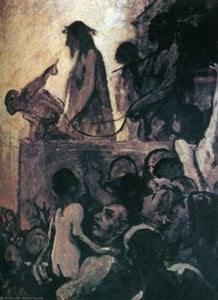
Honoré Daumier’s “Penelopa’s Dream,” created in 1842, stands as a cornerstone of Realism within his oeuvre and a poignant meditation on themes of memory, longing, and the enduring power of myth. Published in Le Charivari, a satirical Parisian newspaper during a period rife with political upheaval—the Second Republic—this lithograph transcends mere visual representation to deliver a complex emotional narrative rooted in Homer’s Odyssey.
The artwork depicts Penelope, Odysseus's wife from Greek legend, reclining on a chair. She is surrounded by symbols of scholarly pursuits: scrolls and writing implements – an intentional juxtaposition highlighting the contrast between active engagement with the world and contemplative reflection. Above Penelope’s head floats a grotesque helmeted head, emerging from what appears to be her dreamscape. This fantastical element isn't merely decorative; it embodies anxieties surrounding past experiences and represents a confrontation with unresolved emotions.
The helmeted head is arguably the artwork’s most striking symbol. It represents a warrior spirit—Odysseus’s past battles—but simultaneously embodies Penelope’s internal struggle to reconcile her memories with the present reality. The overall emotional impact is one of profound sorrow and contemplation, capturing the essence of Penelope's enduring grief for Odysseus and her unwavering determination to persevere despite hardship.
“Penelopa’s Dream” isn’t simply a depiction of myth; it’s an exploration of human psychology—the way memory shapes perception and influences emotional response. Daumier’s masterful technique elevates the image beyond mere illustration, transforming it into a powerful statement about the complexities of human experience.
Further research suggests that this piece aligns perfectly with Daumier's broader artistic mission: to expose social injustices and challenge conventional narratives through satirical observation. Its enduring appeal lies in its ability to resonate with viewers across generations who recognize the universal themes of loss, resilience, and the transformative power of imagination.


1808 - 1879 , フランス

Embark on a sophisticated journey through the surrealist movement. Discover how masters like Dalí and Ernst blurred the lines between dreams and reality through innovative techniques, exploring the profound impact of the subconscious on fine art history with expert authority.

Embark on a sophisticated journey through the eternal allure of mythological art. Discover how master painters breathe life into ancient legends, from Greek deities to Baroque masterpieces, and learn to curate these timeless narratives within your own exquisite art collection.

Embark on a scholarly journey through the alchemy of lithography. This definitive guide offers collectors profound insights into the chemical mastery of stone and ink, the medium's historical legacy, and essential expertise for acquiring rare, museum-quality prints with absolute confidence.

Explore the profound beauty of mythological figures through the lens of art history. From Renaissance masterpieces to custom oil reproductions, discover how legendary tales of heroism and divinity are immortalized in fine art for discerning collectors.

Explore the breathtaking world of the Pre-Raphaelite Brotherhood. Discover how this movement redefined Victorian art through vivid detail, mythological depth, and romanticism. An expert guide for classic art enthusiasts seeking to rediscover these timeless masterpieces.


 プレビュー
プレビュー
 シェアする
シェアする シェアする
シェアする
 詳細を見る
詳細を見る ガイド
ガイド

 ダウンロード
 似ている作品
 X線調査
X線調査 スライドショー
 統計情報
統計情報


 詳細を見る
詳細を見る









 ガラスオプションは、110cm未満のサイズでのみご利用いただけます。