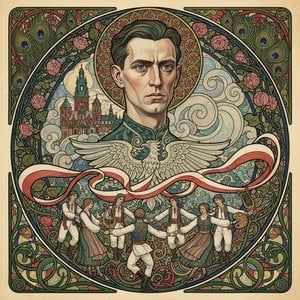
A Life of Sovereignty and Diplomacy
Stanisław Leszczyński was not a visual artist, but a political figure who served twice as the King of Poland and Grand Duke of Lithuania. Born in Lwów in 1677, his life was defined by the shifting tides of the Great Northern War and the War of the Polish Succession. Supported by Sweden, he was installed on the throne in 1704, though he later lost power following the Battle of Poltava. He eventually returned to the Polish throne in 1733 with French support, before abdicating in 1736.
Beyond his royal titles, he held positions as the Prince of Deux-Ponts and the Duke of Bar and Lorraine. His daughter, Marie Leszczyńska, became the Queen of France through her marriage to Louis XV. In his later years, residing in Lunéville, he engaged in political philosophy and public works, leaving a legacy that includes the Place Stanislas in Nancy.
アーティストへのQ&A
Stanisław Leszczyńskiの出身地(都市および国)はどこですか?
Stanisław Leszczyńskiは、UkraineのLvivで生まれました。
Stanisław Leszczyńskiは、どの時代に活動していましたか?
Stanisław LeszczyńskiはEarly Modernに活動していました。この時代背景は、その画家の足跡を歴史の中に位置づけるものです。
Stanisław Leszczyńskiの作品は、時とともにどのように進化を遂げてきたのでしょうか?
Stanisław Leszczyńskiのキャリアは、アーティスト・クロニクルページにて、活動時期ごとに章立てされた作品群を横型のタイムライン形式で辿ることができます。