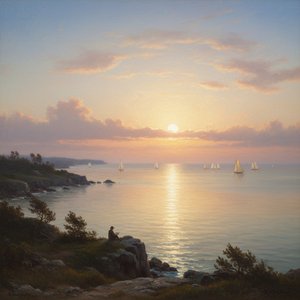
The Master of the Royal Stud: The Life and Art of Richard Barrett Davis
In the golden age of British sporting art, few names resonate with as much prestige and anatomical precision as Richard Barrett Davis. Born in 1782 in the quiet town of Watford, Hertfordshire, Davis was destined for a life intertwined with the grandeur of the English countryside and the nobility of the equine form. His early years were steeped in the atmosphere of the hunt; his father served as a huntsman to King George III, an association that likely planted the seeds of his lifelong fascination with the spirited movement of horses and the rugged beauty of the wild. This connection to the monarchy would later manifest in a career defined by royal patronage and a profound ability to capture the majesty of both domesticated and untamed creatures.
Davis’s artistic evolution was shaped by a rigorous classical education, beginning under the watchful eyes of masters such as William Evans of Eton and William Beechey. These mentors provided him with a formidable foundation in technique, which he further refined upon entering the prestigious Royal Academy in 1802. His training was not merely about the application of pigment to canvas but an immersion into the study of light, form, and the subtle nuances of animal behavior. As his skills matured, Davis moved beyond simple documentation, embracing the emotional depth of the Romantic movement. His landscapes were never static; they breathed with atmospheric perspective and a delicate tonal gradation that suggested the damp mist of an English morning or the heat of a summer afternoon.
A Legacy of Royal Patronage and Sporting Grandeur
The trajectory of Davis’s career reached a magnificent zenith in 1831, when he was appointed as the official animal painter to King William IV. This appointment was more than a professional milestone; it was a validation of his status as one of the premier equestrian artists of the Victorian era. Through this royal connection, Davis gained unparalleled access to the finest specimens of the Royal Stud, allowing him to produce works like Mares and Foals from the Royal Stud (1808) that celebrated the strength and grace of the English Thoroughbred. His ability to translate the power of a galloping horse and the delicate vulnerability of a foal onto canvas earned him a place in the hearts of the aristocracy.
Beyond the stable, Davis’s repertoire expanded into the thrilling narratives of the hunt and the dramatic tension of the wild. His works often captured the high-stakes energy of British sporting life, featuring:
- The Thrill of the Chase: Detailed depictions of foxhunting scenes, such as Foxhunting—Road Riders Or Funkers, where the movement of hounds and the determination of riders are rendered with breathtaking realism.
- Narrative Landscapes: Compositions like Travellers Attacked by Wolves (1831), which showcase his ability to weave tension and drama into a naturalistic setting.
- Historical Commemoration: His monumental involvement in depicting the coronation procession of William IV, a feat that demonstrated his capacity for large-scale, historical storytelling.
Artistic Influence and Historical Significance
The enduring significance of Richard Barrett Davis lies in his seamless blend of scientific accuracy and romantic imagination. While he was a meticulous observer of anatomy—a trait essential for any successful animal painter—he was also deeply influenced by the classical compositions of Claude Lorrain and Nicolas Poussin. This influence allowed him to elevate his subjects from mere sporting illustrations to profound works of art that commanded respect in the galleries of the Society of British Artists, which he joined in 1829.
As we look back upon his life, which concluded in 1854, we see an artist who bridged the gap between the Enlightenment's focus on observation and the Victorian era's passion for grandeur. His paintings remain vital windows into a bygone era of British history, preserving the elegance of the hunt and the untamed spirit of the landscape. Through his brush, the horses of the Royal Stud and the hounds of the English countryside continue to gallop through the halls of art history, forever captured in their most majestic moments.
Q&A
Richard Barrett Davisの出生地と誕生年はいつですか?
Richard Barrett Davisは1782年にWatfordで生まれました。
Richard Barrett Davisの作品を、芸術運動(ムーブメント)別に閲覧することはできますか?
Richard Barrett Davisの作品は、アーティストのすべてのムーブメントページから、各ムーブメント(芸術運動)別に閲覧いただけます。
Richard Barrett Davisの出生地(都市および国)はどこですか?
Richard Barrett Davisは、United KingdomのWatfordで生まれました。
特定の技法によるRichard Barrett Davisの全作品を探すには、どうすればよいですか?
特定の技法によるRichard Barrett Davisの全作品をご覧いただくには、アーティストの全技法ページをご利用ください。
Richard Barrett Davisの出身国はどこですか?
Richard Barrett DavisはUnited Kingdomで生まれました。
Richard Barrett Davisによるすべての作品を見るには、どうすればよいですか?
当サイトにおけるRichard Barrett Davisのすべての作品は、アーティストのすべての作品一覧ページからご覧いただけます。
Richard Barrett Davisの全作品を通じた色彩の使い方を詳しく知ることはできますか?
Richard Barrett Davisの作品のカラープロファイルは、アーティストのパレット・ゲノムページでご確認いただけます。