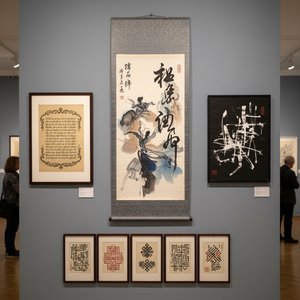
Fu Shan (1607 – 1684), a figure largely overshadowed by the grandeur of Ming Dynasty emperors, nevertheless stands as an influential artist whose distinctive cursive script and landscape paintings cemented his place in the annals of Chinese art history. Born into a family steeped in scholarly tradition, Fu Shan’s early life was marked by intellectual pursuits that ultimately steered him away from official careers—a path he bravely embraced through his medical practice, securing a modest yet respected livelihood. Despite failing the provincial examinations, which were crucial for advancement within the imperial bureaucracy, Fu Shan possessed an innate talent that blossomed into unparalleled artistic achievement.
Early Influences: His formative years coincided with the burgeoning Neo-Confucian movement, profoundly shaping his worldview and informing his artistic sensibilities. The emphasis on moral cultivation and harmonious contemplation permeated his creative output, reflecting a deep engagement with philosophical ideals.
Distinctive Style: Fu Shan’s signature style—characterized by its fluid, expressive cursive script—represented a radical departure from prevailing conventions. Unlike the meticulous precision demanded by official calligraphy, Fu Shan prioritized conveying emotion and capturing the essence of nature through dynamic brushstrokes and unconventional compositions.
Landscape Painting Innovations: He excelled in landscape painting, particularly in the genre known as *shan shui*, which championed spontaneity and subliminal beauty. His canvases eschewed idealized representations, favoring misty mountains, rugged cliffs, and serene lakes—elements meticulously rendered to evoke a profound sense of tranquility and spiritual contemplation.
Notable Works & Artistic Legacy
Fu Shan’s artistic output spanned decades, producing numerous paintings and calligraphic scrolls that continue to captivate scholars and connoisseurs alike. Among his most celebrated pieces are “Notes From Readings,” a breathtaking depiction of misty peaks bathed in ethereal light—a testament to his mastery of *shan shui* technique. Similarly, "Poem In Cursive Script" exemplifies his expressive calligraphy style, conveying profound emotion through masterful brushwork and elegant lettering. These works stand as enduring symbols of Neo-Confucian aesthetics and represent a pivotal contribution to the development of modern Chinese art.
“Notes From Readings” – Demonstrates Fu Shan’s ability to capture atmospheric conditions and convey spiritual contemplation with remarkable subtlety.
“Poem In Cursive Script” – Exemplifies his expressive calligraphy style, showcasing a dynamic interplay between brushstrokes and character placement.
Historical Significance & Influence
Fu Shan’s artistic vision resonated deeply within the intellectual currents of his time, influencing subsequent generations of artists who sought to emulate his distinctive approach. He championed a humanist aesthetic that prioritized inner harmony and communion with nature—values that continue to inspire artistic endeavors today. Although he never achieved fame during his lifetime, Fu Shan's legacy persists as a beacon of creativity and spiritual contemplation—a reminder that true artistry transcends temporal boundaries and speaks across cultures. His work serves as an invaluable window into the intellectual landscape of Ming Dynasty China and remains a cornerstone of Chinese art history.
Embark on a visual journey through history's most iconic landscapes. Discover the mastery of Impressionism and the sublime power of nature through our expert guide to classical landscape art, curated for the discerning collector and fine art enthusiast.
Explore the profound beauty of calligraphy art. From the fluid running script of Chinese masters to historical ink masterpieces, discover how the elegance of line transforms spaces with timeless grace and scholarly sophistication.
Embark on a profound journey through the soul of Chinese calligraphy. Explore the historical mastery of ink, brush, and script, from ancient Zhuanshu to elegant running script, and discover how this timeless art form reflects the enduring spirit of classical East Asian aesthetics.