Frederic Whiting: A Pioneer of the American West
Frederic Whiting (1874 – 1962) stands as a pivotal figure in the late 19th and early 20th-century Western art scene, a painter whose evocative depictions of frontier life and landscapes captured the spirit of a rapidly changing America. Born in London, his artistic journey led him to establish himself as a significant voice documenting the American West – a region he experienced firsthand through extensive travels and a deep fascination with its rugged beauty and pioneering ethos.
Whiting’s early training encompassed traditional academic approaches, studying at St John’s Wood Art School and the Royal Academy Schools in London. However, it was his time in Paris, where he honed his skills at the Académie Julian, that truly shaped his artistic vision. This exposure to Impressionism and a broader European art landscape provided him with techniques and perspectives that would later inform his distinctive style. Crucially, Whiting’s career intersected with significant historical events; he served as a war correspondent for *The Graphic*, covering both the Chinese and Russo-Japanese Wars, experiences which undoubtedly fueled his interest in portraying the realities of frontier existence.
A Life Among Cowboys and Horses
Whiting's artistic focus centered almost exclusively on the American West. He spent considerable time in the United States, immersing himself in the lives of cowboys, ranchers, Native Americans, and the vast landscapes that defined this region. This dedication resulted in a prolific output of paintings and prints, often characterized by a remarkable attention to detail and a palpable sense of authenticity. Unlike some contemporary artists who romanticized the West, Whiting sought to present a more nuanced portrayal – capturing both the grandeur and the hardships of frontier life.
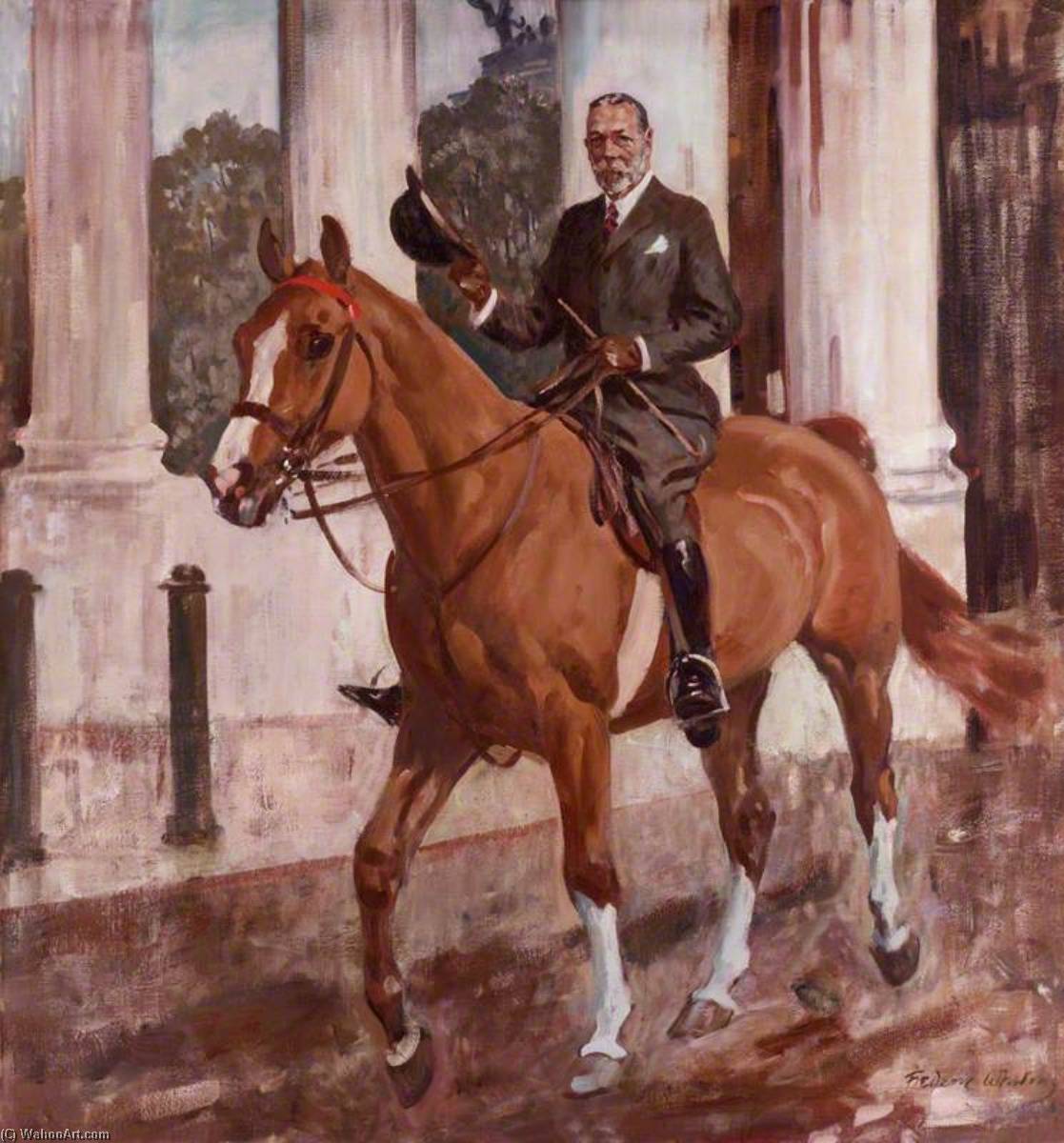
His subjects frequently included equestrian scenes—cowboys on horseback, cattle drives, and portraits of Native American figures. These works were not merely depictions of action; they conveyed a deep understanding of the animals he painted, imbuing them with personality and movement. Whiting’s ability to capture the texture of horse coats, the glint of sunlight on saddles, and the weathered faces of his subjects speaks volumes about his observational skills and artistic talent.
Technique and Style: Remington's Influence
Whiting’s style is often compared to that of Frederic Remington, another prominent Western artist. While both depicted scenes from the frontier, Whiting’s work possesses a slightly softer, more romantic quality than Remington’s often starker realism. Both artists shared a commitment to capturing the essence of the West, but Whiting's paintings frequently incorporate a subtle sense of melancholy and introspection – reflecting the isolation and challenges faced by those who inhabited this remote region.
He employed a palette rich in earthy tones—browns, ochres, and grays—to effectively convey the colors of the Western landscape. His brushwork was generally smooth and blended, creating an atmospheric effect that enhanced the sense of space and depth. Whiting’s use of light and shadow further contributed to the dramatic quality of his paintings, highlighting key elements and drawing the viewer's eye.
Legacy and Recognition
Frederic Whiting enjoyed considerable recognition during his lifetime, exhibiting his work in prestigious galleries across Britain and America. He was a member of several prominent art organizations, including the Royal Academy and the Royal Society of Artists. His paintings are now held in important collections, including those at the Walker Art Gallery in Liverpool and the Frederic Remington Art Museum in Ogdensburg, New York – testament to his enduring artistic legacy.
Whiting’s contribution to Western art lies not only in his stunning depictions of a bygone era but also in his ability to capture the spirit of adventure, resilience, and the profound connection between humans and the land. He remains an important figure for understanding the visual representation of the American West and its enduring fascination.