アーティストの略歴
Yona Friedman (1923–2020): Architect of Mobile Utopia
Yona Friedman (5 June 1923 – 20 February 2020) was a Hungarian-born French architect, urban planner and designer. He was influential in the late 1950s and early 1960s, best known for his theory of ‘mobile architecture,’ which envisioned a radical reimagining of cities as dynamic systems capable of adapting to evolving needs and conditions. Friedman’s pioneering approach challenged conventional architectural dogma and cemented his place as a visionary figure in the history of modernism.
Early Life and Education
Born in Budapest, Hungary, into an ethnic Jewish family grappling with antisemitic legislation during the period of Nazi occupation, Friedman faced considerable obstacles pursuing higher education. Despite these difficulties, he persevered, securing admission to Technische Universität Wien (TU Wien) where he studied architecture—a formative experience that instilled in him a lifelong fascination with spatial exploration and experimentation. Following his graduation in 1948, Friedman embarked on a journey of artistic discovery, relocating to Israel in 1957 at the invitation of Jean Prouvé, cementing his connection to the burgeoning Bauhaus movement’s spirit of innovation.
The Genesis of Mobile Architecture
Friedman's intellectual breakthrough arrived in 1956 with the publication of *Mobile Architecture,* a manifesto that fundamentally altered perceptions of urban design and architectural practice. Rejecting static structures as inherently inflexible and unresponsive, Friedman argued for a paradigm shift toward “mobile architecture”—a concept he elaborated upon through intricate drawings and diagrams—where buildings could expand outwards to accommodate growth without sacrificing their core identity. This audacious proposition drew inspiration from the principles of Gestalt psychology and explored connections between mathematics, geometry, and spatial perception. He envisioned cities as interconnected networks of structures that would adapt to changing populations and circumstances, prioritizing human comfort and fostering a sense of collective dynamism.
Collaborations with Archigram and Superstudio
Friedman’s theoretical framework quickly gained traction within the influential Team 10 architectural group—a collective dedicated to challenging established norms and advocating for humanist values in design. He collaborated closely with fellow architects Richard Rogers, Ernő Goldfinger, Dennis Lasdun, and Alison Macintosh on projects that embodied the spirit of Team 10's rebellious idealism. Notably, Friedman’s partnership with Archigram produced groundbreaking experimental buildings—such as Habitat ’67—that pushed the boundaries of structural engineering and architectural aesthetics. Similarly, his collaboration with Superstudio resulted in iconic artworks—like *Container Structures II*—which utilized paper cutouts to generate mesmerizing visual patterns—a precursor to future urban landscapes and a testament to Friedman’s ability to transform conceptual ideas into tangible realities.
Recognition and Legacy
Throughout his prolific career, Friedman received numerous accolades for his contributions to architecture and urban planning, including the Austrian Frederick Kiesler Prize for Architecture and the Arts in 2018—a prestigious honor recognizing his enduring influence on architectural thought. His drawings were exhibited internationally, captivating audiences with their meticulous detail and evocative exploration of spatial relationships. Friedman’s work continues to inspire architects and artists alike, serving as a reminder that innovation stems from questioning assumptions and embracing imaginative possibilities. He passed away peacefully in Paris in February 2020 at the age of 96, leaving behind an indelible mark on the history of modern architecture—a legacy characterized by unwavering optimism and a steadfast belief in the transformative power of design to shape human experience.



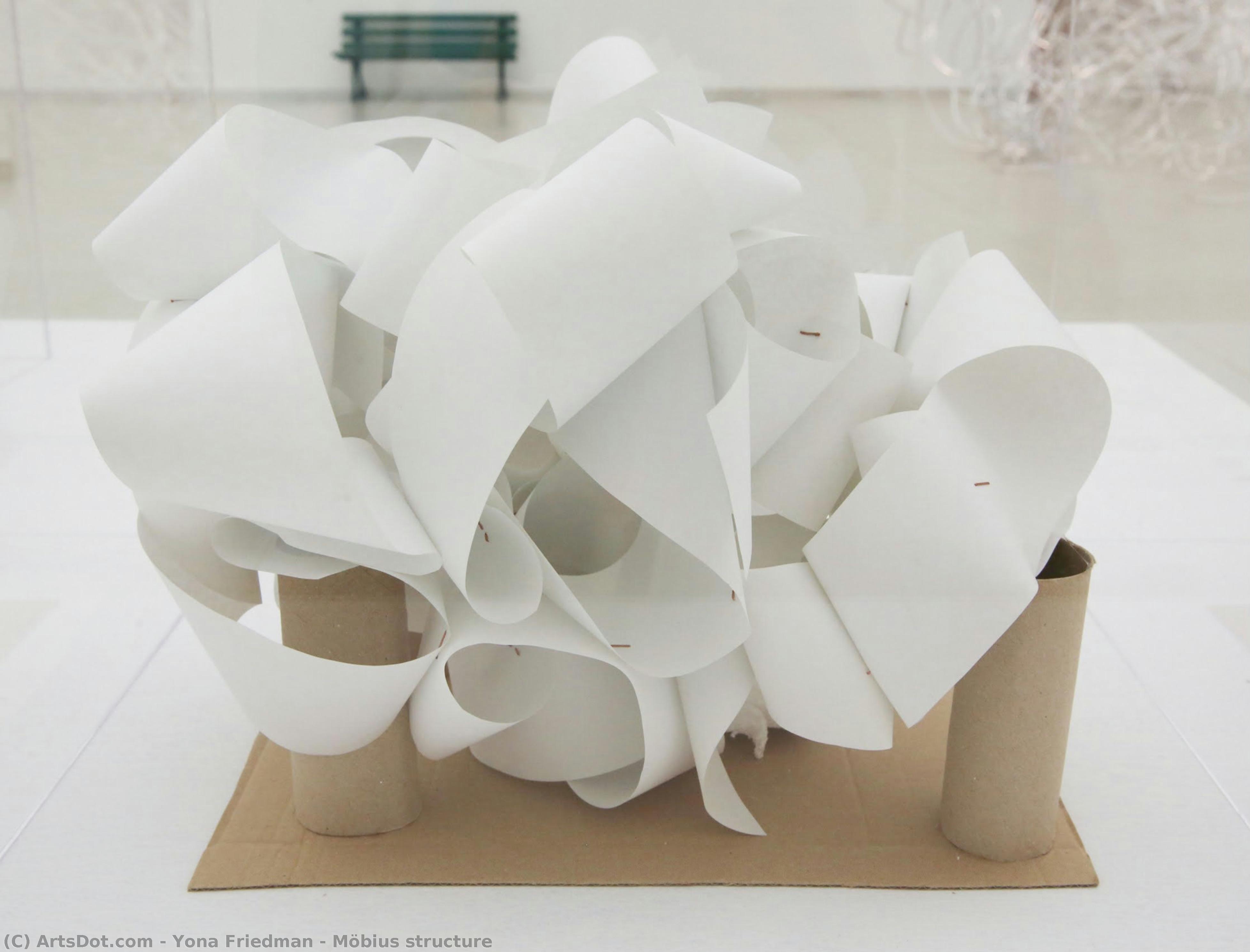
 2000
2000 32.0 x 23.0 cm
 Power Station of Art




 手描き複製画を注文する
 シェアする
シェアする シェアする
シェアする
 詳細を見る
詳細を見る

 ダウンロード
 似ている作品
 X線
X線 スライドショー
 詳細を見る
詳細を見る






































 ガラスオプションは、110cm未満のサイズでのみご利用いただけます。


