x


迅速な制作と多彩な仕上げオプションを備えた、ミュージアムクオリティのジークレーまたはキャンバスプリント。 ( 手描きの絵画を購入 画像を購入)





























作品のオリジナル比率に合わせた、当店の規定サイズからお選びください。

特定のフレームやスペースに合わせて、ご自身でサイズを指定することも可能です。選択されたサイズが元の画像の比率と一致しない場合、作品をトリミングするか、鏡面反射または単色での塗りつぶしによって画像を拡張いたします。制作を開始する前に、ご確認用のデジタルモックアップをお送りいたします。
画面上のプレビューには、実際のトリミングや拡張は反映されませんのでご注意ください。最終的な構図を正確に確認できるのは、モックアップのみとなります。
カスタムサイズも承っておりますが、元の比率を維持するためには、あらかじめ用意されたリストからサイズを選択することをお勧めいたします。

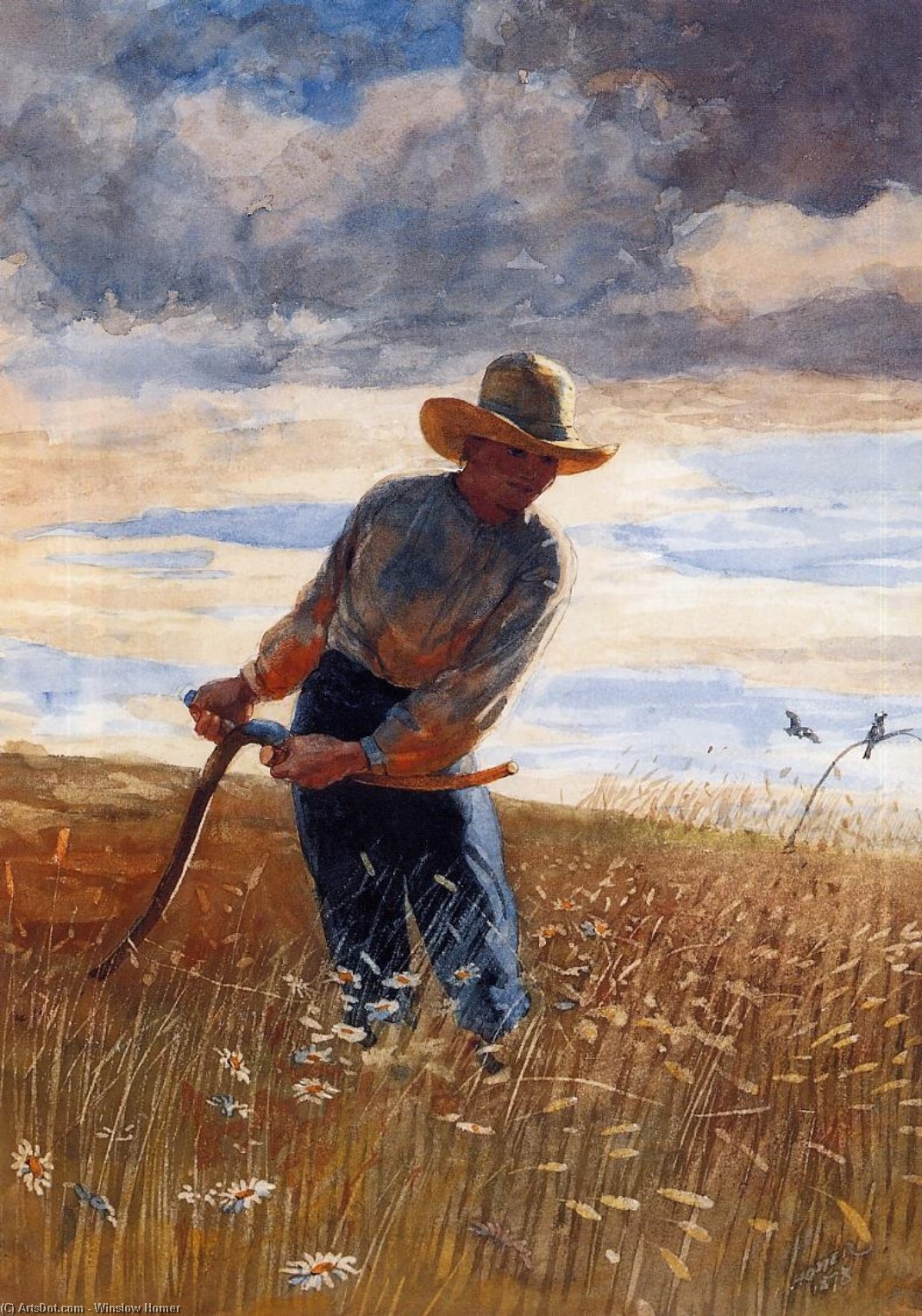
The Reaper
複製画のサイズ
Winslow Homer’s “The Reaper,” painted in 1878, is more than just a depiction of a rural scene; it’s a profound meditation on the dignity of labor, the rhythms of nature, and the burgeoning sense of national identity taking root in America. This watercolor captures a solitary figure – a man in a worn straw hat – engaged in the timeless task of harvesting grain with a scythe. The composition is deceptively simple, yet brimming with quiet intensity, reflecting Homer’s unique approach to artmaking that prioritized direct observation and emotional resonance over academic convention.
Homer’s artistic journey was markedly different from that of many of his European contemporaries. He eschewed formal training at traditional academies, instead apprenticing himself to the demands of illustration for Harper’s Weekly beginning at just twelve years old. This early experience instilled in him a remarkable ability to capture fleeting moments and details with astonishing accuracy – a skill honed by necessity in the fast-paced world of print media. His focus wasn't on recreating idealized landscapes or historical narratives, but on truthfully representing the lives he observed around him: the bustling streets of Boston, the quiet dignity of rural New England, and ultimately, the evolving story of America itself.
“The Reaper” exemplifies Homer’s mastery of watercolor. He employs a loose, expressive brushstroke to convey movement and texture, particularly in the swaying grass and the flowing scythe. The color palette is dominated by earthy tones—greens, browns, and grays—creating a harmonious blend that reflects the natural world. The subtle gradations of light and shadow add depth and realism to the scene, while the careful placement of birds scattered throughout the painting introduces an element of spontaneity and life. Homer’s technique isn't about precise representation; it’s about capturing *feeling* – the quiet strength and resilience of the farmer, the vastness of the landscape, and the enduring connection between humanity and nature.
Beyond its realistic depiction, “The Reaper” carries significant symbolic weight. The solitary figure represents not just agricultural labor but also themes of perseverance, self-reliance, and the cyclical nature of life. The act of harvesting is a metaphor for renewal and hope, while the vastness of the field suggests both opportunity and isolation. Homer’s work resonates with a deep emotional current – a sense of quiet dignity, connection to the land, and an appreciation for the simple beauty of everyday existence. This painting speaks to the enduring spirit of America, rooted in its hardworking people and its boundless landscapes.


1836 - 1910 , アメリカ合衆国

Discover the ethereal beauty of watercolor through an art-historical lens. Master the delicate balance of light, fluidity, and pigment to capture the luminous essence of nature, inspired by the legendary techniques of the Old Masters and Impressionist greats.

Master the nuances of Giclée printing with our expert guide. Discover how pigment-based inks and museum-grade substrates create fade-resistant, high-fidelity art reproductions designed for discerning collectors seeking unparalleled quality and longevity.

WahooArt.comが贈る、至高のポスタープリント・ガイド。エリートコレクターのために、美術館品質を再現するGiclée(ジークレー)プリントの技術的卓越性や、アーカイブ級のインク、長期保存のための専門知識を解説します。本物の美しさを求める審美眼をお持ちの皆様へ、空間を格上げするアート選びの極意をお届けします。


最新の美術ニュース、限定オファー、そしてインテリアのアイデアをいち早くお届けします。
お客様のプロジェクトについてお聞かせください。当社の美術専門家が、お客様に合わせた3つのパーソナライズされた芸術提案をご提供いたします。
あなたにぴったりの3作品を無料で厳選いたします

 プレビュー
プレビュー
 シェアする
シェアする シェアする
シェアする
 詳細を見る
詳細を見る

 ダウンロード
 似ている作品
 X線調査
X線調査 スライドショー

 詳細を見る
詳細を見る









 ガラスオプションは、110cm未満のサイズでのみご利用いただけます。