Oil On CanvasWallArtAmerican Genre Painting
 184019th Century
 105.0 x 86.0 cm
当社のアーティストが、お客様のご希望のサイズと額縁に合わせて、キャンバスに手描きで制作する油彩画です。 ( プリント版に切り替え デジタル画像販売へ切り替え)





























作品のオリジナル比率に合わせた、当店の規定サイズからお選びください。

特定のフレームやスペースに合わせて、ご希望のサイズをご入力いただけます。選択されたサイズが元の画像の比率と異なる場合、アートワークをトリミングするか、手描きで要素を追加して絵画を拡張いたします。デジタルモックアップ を制作し、制作開始前にご確認(承認)をいただきます。
画面上のプレビューは、実際のトリミングや拡張を正確に反映しているものではありません。最終的な構図は、モックアップによってのみ正確にご確認いただけます。
カスタムサイズもご利用いただけますが、元の比率を維持するためには、あらかじめ用意されたリストからサイズを選択することをお勧めいたします。

Textile Merchant
複製画サイズ一覧
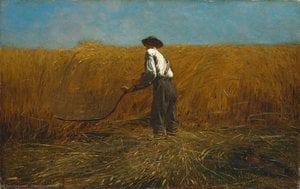
Winslow Homer, a titan amongst American landscape painters and genre artists alike, possessed an extraordinary ability to distill the essence of everyday life into powerfully resonant images. His oeuvre is marked by a remarkable sensitivity to observation—a characteristic honed during his formative years as a commercial illustrator—and it’s this meticulous attention to detail that distinguishes works like Textile Merchant (1840), currently available for exquisite reproductions at WahooArt.com.
The painting depicts a solitary man seated at a desk, bathed in soft light, surrounded by stacks of books and meticulously rendered textiles—a visual shorthand for the burgeoning textile trade that defined mid-nineteenth century America. Homer’s masterful use of oil on canvas allows for textural richness and luminous color palettes, capturing not merely what is seen but also conveying an atmosphere of focused contemplation.
Homer's compositional choices are deliberate and understated. The central figure dominates the frame, positioned slightly off-center, drawing the viewer’s eye downward towards his gaze—a gesture that speaks volumes about his concentration. The desk itself is a carefully constructed space, populated with books arranged in an orderly fashion, symbolizing knowledge and intellectual pursuit. Notice the subtle inclusion of a cup resting on the edge of the desk; it's a small detail that suggests a brief respite from labor, hinting at the human element within this seemingly sterile depiction.
Homer’s technique is characterized by a remarkable blending of realism and impressionistic brushstrokes. While he strives for accurate representation—evident in the meticulous rendering of the man's clothing and facial features—he simultaneously employs loose, expressive strokes to convey light and atmosphere. This duality reflects Homer’s broader artistic philosophy: to capture not just what *is*, but also what *feels*.
Painted in 1840, Textile Merchant resides firmly within the context of Homer's early career—a period marked by a fascination with depicting scenes from rural America. This painting aligns with his broader exploration of American identity during a time of rapid industrialization and westward expansion. The textiles themselves carry symbolic weight, representing prosperity and economic advancement alongside the laboriousness inherent in their production.
Furthermore, Homer’s portrayal of the solitary figure embodies themes of diligence, perseverance, and quiet dignity—values that resonated deeply with the sensibilities of his era. It's a portrait not merely of a man at work, but of a human being grappling with purpose and responsibility within a changing world.
Ultimately, Textile Merchant transcends mere visual representation; it evokes an emotional response in the viewer. Homer’s masterful use of color—particularly the muted hues of brown and beige—creates a sense of tranquility and introspection. The painting invites contemplation on themes of labor, intellect, and the quiet beauty found within ordinary existence. Like other notable works by Homer such as Sisters and Lady Wearing Spectacles, Textile Merchant stands as a testament to his enduring legacy as one of America’s greatest artists.


1836 - 1910 , アメリカ合衆国

Explore the profound beauty of American Realism. From Winslow Homer’s rural landscapes to the dignity of everyday life, discover how master artists captured the soul of a nation through evocative oil paintings and timeless fine art techniques.

Explore the profound beauty of American art history. From the Hudson River School to iconic landscapes, discover a curated journey through the masterpieces that defined a nation's spirit and the enduring legacy of American Romanticism.

Discover the profound allure of oil on canvas. Explore the mastery of impasto textures, the science of pigment longevity, and expert guides to selecting museum-quality reproductions that elevate your collection with timeless elegance and tactile depth.

Explore the profound beauty of American Regionalism. Delve into the art history of Grant Wood and John Steuart Curry, uncovering how these masters captured the soul of the American Heartland through iconic landscapes and rural identity.

 設置イメージを確認
 送る
送る シェア
シェア
 詳細情報
詳細情報 ガイドを表示

 画像をダウンロード
 似ている作品
 X線調査
X線調査 スライドショー
 統計情報
統計情報 続きを読む
続きを読む









 ガラスオプションは、110cm未満のサイズでのみご利用いただけます。