当社のアーティストが、お客様のご希望のサイズと額縁に合わせて、キャンバスに手描きで制作する油彩画です。 ( プリント版に切り替え デジタル画像販売へ切り替え)





























作品のオリジナル比率に合わせた、当店の規定サイズからお選びください。

特定のフレームやスペースに合わせて、ご希望のサイズをご入力いただけます。選択されたサイズが元の画像の比率と異なる場合、アートワークをトリミングするか、手描きで要素を追加して絵画を拡張いたします。デジタルモックアップ を制作し、制作開始前にご確認(承認)をいただきます。
画面上のプレビューは、実際のトリミングや拡張を正確に反映しているものではありません。最終的な構図は、モックアップによってのみ正確にご確認いただけます。
カスタムサイズもご利用いただけますが、元の比率を維持するためには、あらかじめ用意されたリストからサイズを選択することをお勧めいたします。

Hilltop Barn
複製画のサイズ
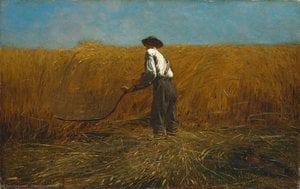
Winslow Homer’s “Hilltop Barn,” completed in 1874, stands as a quintessential example of American Realism—a movement that sought to depict the everyday lives and landscapes of ordinary people with unflinching honesty. More than just a picturesque depiction of rural Vermont farmland, this watercolor captures a profound sense of stillness and contemplation, reflecting Homer’s deep connection to the natural world and his masterful ability to convey emotion through subtle visual cues.
The painting presents a deceptively simple scene: two horses patiently pulling a carriage down a dirt road leading up to a weathered barn. Scattered amongst the animals are three figures—presumably members of a family—and a dog, adding human presence to the expansive landscape. Homer’s careful positioning of these elements creates a harmonious balance between man and nature, emphasizing the quiet dignity of rural life.
Homer's signature technique—watercolor—is crucial to the painting’s atmosphere. He employs delicate brushstrokes that blend seamlessly together, layering washes of muted greens, browns, and blues to build up a rich textural surface. The artist skillfully captures the diffused light filtering through the trees, creating an ethereal glow that illuminates the barn and its surroundings. This technique isn't merely about representation; it’s about conveying feeling—a sense of serenity and timeless beauty.
"Hilltop Barn" aligns itself with the broader artistic currents of its time, particularly the Transcendentalist movement. Influenced by thinkers like Ralph Waldo Emerson and Henry David Thoreau, American artists sought to express spiritual truths through observation of nature. Homer’s work embodies this ethos—a belief in the inherent goodness of humanity and the transformative power of experience—mirroring the sentiments expressed in Thoreau's Walden.
The barn itself serves as a powerful symbol within the painting. It represents not just agricultural productivity but also resilience, permanence, and connection to tradition. Homer’s depiction of it—worn yet sturdy—suggests an enduring spirit—a quiet dignity that speaks to the fundamental values of rural America. The horse's patient demeanor reinforces this theme, embodying perseverance and acceptance of the natural order.
"Hilltop Barn" transcends mere visual description; it evokes a palpable emotional response. Its tranquil composition invites contemplation—a feeling of peace and contentment derived from observing the beauty of the countryside. Homer’s masterful use of watercolor captures not only the physical appearance of Vermont but also its intangible essence—the quiet dignity of rural life, untouched by the anxieties of modern existence.


1836 - 1910 , アメリカ合衆国

Discover the ethereal beauty of watercolor through an art-historical lens. Master the delicate balance of light, fluidity, and pigment to capture the luminous essence of nature, inspired by the legendary techniques of the Old Masters and Impressionist greats.


 プレビュー
プレビュー
 シェアする
シェアする シェアする
シェアする
 詳細を見る
詳細を見る ガイド
ガイド

 ダウンロード
 似ている作品
 X線調査
X線調査 スライドショー
 統計情報
統計情報

 詳細を見る
詳細を見る









 ガラスオプションは、110cm未満のサイズでのみご利用いただけます。