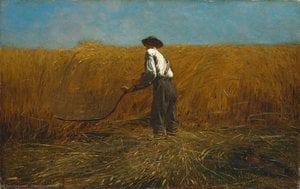
スピーディーな制作と多彩な仕上げオプションが魅力の、ミュージアムクオリティなジークレー・キャンバスプリント。 ( 手描き複製画を注文する デジタル画像販売へ切り替え)





























作品のオリジナル比率に合わせた、当店の規定サイズからお選びください。

額縁や壁のスペースに合わせて、ご希望の幅と高さを入力してください。プリントはカットすることは可能ですが、元の画像より大きくすることはできないため、異なる比率のサイズを選択された場合は、画像の一部が欠けることになります。印刷を開始する前に、内容を確認していただくためのデジタルモックアップをお送りいたします。このページに表示されている画像は、実際のカット後の状態を示すものではありません。実際の仕上がりはモックアップにてご確認ください。
Fallen Deer
複製画サイズ一覧
In the delicate medium of watercolor, Winslow Homer achieved something truly extraordinary with his 1892 masterpiece, Fallen Deer. This painting is far more than a mere wildlife study; it is an embodiment of American Romanticism captured through a lens of profound tranquility. As the viewer gazates upon the scene, they are drawn into a world where time seems to suspend itself. The composition is masterfully balanced, with the deer positioned horizontally across the canvas, its form dominating the frame while being grounded by the textured presence of surrounding rocks and trees. There is a subtle animation provided by two birds circling in the sky above, which introduces a sense of natural movement that never disrupts the deep, meditative stillness at the heart of the work. Through his understated technique, Homer utilizes the ethereal qualities of watercolor to capture the most nuanced shifts in light and shadow, creating a scene that feels both physically present and dreamlike.
The technical brilliance of Fallen Deer lies in its ability to find harmony within simplicity. Homer’s meticulous attention to detail does not strive for grand spectacle; instead, it seeks the essence of a single, fleeting moment—a deer pausing for refreshment amidst the quiet beauty of the wilderness. The soft, muted hues of greens and blues promote an immediate sense of calm, making this piece an ideal inspiration for those seeking to introduce serenity into a living space. For the collector or interior designer, the painting offers a window into a pristine natural world, where the water symbolizes purity and renewal, mirroring the deer's act of drinking as a gesture of sustenance and acceptance of the natural order.
Beyond its aesthetic allure, Fallen Deer carries a profound symbolic weight that resonates with the intellectual currents of its era. Created during the rise of the Transcendentalist movement in America, the painting reflects a deep-seated desire for communion with nature as a pathway to spiritual enlightenment. The deer itself serves as a poignant metaphor; its prone position suggests a certain vulnerability and fragility amidst the powerful forces of the wild, yet its upward gaze signifies an unwavering resilience and a steadfast connection to life’s rhythms. This duality creates a visual meditation on mortality and rebirth that is both haunting and hopeful.
To encounter this work is to experience the restorative power of the unspoiled wilderness. Homer captures a sense of escape from urban pressures, inviting the observer to reflect on our fundamental relationship with the environment. The painting does not merely depict a landscape; it evokes an emotional truth about the human condition—our shared need for solace, reflection, and connection to the earth. Whether viewed as a historical document of American Romanticism or as a timeless piece of fine art, Fallen Deer remains a cornerstone of beauty, offering a lasting impression of peace that continues to captivate audiences across generations.
「Fallen Deer」のAmerican Romanticism様式には、Tranquilな感情が添えられています。
「Fallen Deer」の複製画は、Living Roomに美しく調和します。
ウィンズロー・ホマー作「Fallen Deer」に関連する芸術運動はAmerican Romanticismです。この分類により、本作は関連する他の芸術家や作品群の中に位置づけられます。

1836 - 1910 , アメリカ合衆国

Discover the ethereal beauty of watercolor through an art-historical lens. Master the delicate balance of light, fluidity, and pigment to capture the luminous essence of nature, inspired by the legendary techniques of the Old Masters and Impressionist greats.

Explore the profound beauty of American art history. From the Hudson River School to iconic landscapes, discover a curated journey through the masterpieces that defined a nation's spirit and the enduring legacy of American Romanticism.

Explore the profound beauty of American Romanticism. Discover how the Hudson River School captured the wild frontier through masterful landscapes, exploring the legacy of legends like Thomas Cole and Asher Durand in this deep dive into art history.

Explore the profound beauty of American Realism. From Winslow Homer’s rural landscapes to the dignity of everyday life, discover how master artists captured the soul of a nation through evocative oil paintings and timeless fine art techniques.
 設置イメージを表示
 シェアする
シェアする シェアする
シェアする
 詳細を見る
詳細を見る ガイドを表示

 ダウンロード
 似ている作品
 X線調査
X線調査 スライドショーを表示
 Q&A
Q&A
 統計情報
統計情報


 詳細を表示
詳細を表示









 ガラスオプションは、110cm未満のサイズでのみご利用いただけます。