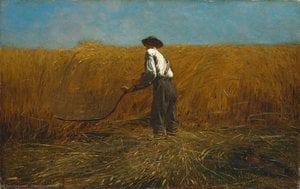
当社のアーティストが、お客様のご希望のサイズと額縁に合わせて、キャンバスに手描きで制作する油彩画です。 ( プリント版に切り替え デジタル画像販売へ切り替え)





























作品のオリジナル比率に合わせた、当店の規定サイズからお選びください。

特定のフレームやスペースに合わせて、ご希望のサイズをご入力いただけます。選択されたサイズが元の画像の比率と異なる場合、アートワークをトリミングするか、手描きで要素を追加して絵画を拡張いたします。デジタルモックアップ を制作し、制作開始前にご確認(承認)をいただきます。
画面上のプレビューは、実際のトリミングや拡張を正確に反映しているものではありません。最終的な構図は、モックアップによってのみ正確にご確認いただけます。
カスタムサイズもご利用いただけますが、元の比率を維持するためには、あらかじめ用意されたリストからサイズを選択することをお勧めいたします。

Dad-s_Coming!
複製画のサイズ
In the quiet, salt-sprayed atmosphere of Winslow Homer’s “Dad’s Coming!”, we find much more than a simple coastal vignette; we encounter a profound distillation of the American spirit. Painted around 1874, this masterpiece captures a moment of suspended animation on a rugged shoreline. At its heart lies a tableau of maternal devotion: a woman stands poised against the vastness of the Atlantic, cradling her infant son with an intimacy that feels both private and universal. There is a palpable sense of waiting in her posture, a quiet anticipation that transforms a mundane seaside moment into a powerful study of familial love and the protective instinct.
Homer, a master of capturing the rhythms of rural life, eschews the grand, sweeping narratives of European academic traditions to focus on the subtle textures of New England. The woman’s attire—a simple hat and a rope cinched around her waist—speats of a life lived in harmony with the elements, grounded in the practicalities of coastal existence. As she gazes toward the horizon, the viewer is invited to share in her vigil, feeling the weight of the child in her arms and the rhythmic pull of the tide.
Technically, “Dad’s Coming!” showcases Homer’s exceptional ability to manipulate light and atmosphere to evoke deep emotion. Drawing inspiration from the delicate sensibilities of Japanese landscape prints, Homer utilizes a sophisticated approach to perspective and color gradation. His brushwork, though possessing a certain looseness characteristic of his watercolor roots, is incredibly deliberate in how it builds depth. The sea and sky are not merely backgrounds but active participants in the narrative, rendered with subtle tonal shifts that suggest the damp, heavy air of a coastal afternoon.
The artist’s use of light serves to illuminate the central figures, pulling them forward from the hazy, receding horizon. This creates a beautiful tension between the solid, tactile presence of the mother and child and the ethereal, almost dreamlike quality of the distant ocean. For collectors and interior designers, this technique offers a remarkable versatility; the painting’s ability to command attention through soft luminosity makes it an exquisite centerpiece for spaces that value tranquility, depth, and a connection to the natural world.
To understand the true resonance of this work, one must look toward the historical landscape of Reconstruction-era America. The painting was birthed during a period of profound national transition, a time when the country was seeking stability and a renewed sense of purpose following the Civil War. In this context, the scene becomes an allegory for burgeoning optimism. The boats visible in the distance are far more than mere maritime details; they symbolize aspiration, commerce, and the steady movement of progress toward a brighter future.
The interplay between the domestic intimacy of the mother and child and the industrious movement of the ships on the horizon creates a beautiful balance between tradition and evolution. It celebrates the sanctity of the home while acknowledging the wider world of opportunity. For those seeking to adorn their homes with art that inspires, “Dad’s Coming!” offers a timeless emotional impact—a reminder of the enduring strength found in our most fundamental connections and the quiet beauty that awaits us when we look toward the horizon with hope.


1836 - 1910 , アメリカ合衆国

Discover the ethereal beauty of premium watercolor reproductions and bespoke commissions at WahooArt. From museum-quality landscapes to custom AI-enhanced portraits, our master artists deliver unparalleled craftsmanship and white-glove service for discerning collectors worldwide.

Discover the ethereal beauty of watercolor through an art-historical lens. Master the delicate balance of light, fluidity, and pigment to capture the luminous essence of nature, inspired by the legendary techniques of the Old Masters and Impressionist greats.

Explore the profound beauty of American Regionalism. Delve into the art history of Grant Wood and John Steuart Curry, uncovering how these masters captured the soul of the American Heartland through iconic landscapes and rural identity.

Explore the profound beauty of American Realism. From Winslow Homer’s rural landscapes to the dignity of everyday life, discover how master artists captured the soul of a nation through evocative oil paintings and timeless fine art techniques.


 プレビュー
プレビュー
 シェアする
シェアする シェアする
シェアする
 詳細を見る
詳細を見る

 ダウンロード
 似ている作品
 X線調査
X線調査 スライドショー
 統計情報
統計情報

 詳細を見る
詳細を見る









 ガラスオプションは、110cm未満のサイズでのみご利用いただけます。