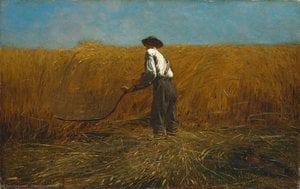
迅速な制作と多彩な仕上げオプションを備えた、ミュージアムクオリティのジークレーまたはキャンバスプリント。 ( 手描きの絵画を購入 デジタル画像販売へ切り替え)





























作品のオリジナル比率に合わせた、当店の規定サイズからお選びください。

特定のフレームやスペースに合わせて、ご自身でサイズを指定することも可能です。選択されたサイズが元の画像の比率と一致しない場合、作品をトリミングするか、鏡面反射または単色での塗りつぶしによって画像を拡張いたします。制作を開始する前に、ご確認用のデジタルモックアップをお送りいたします。
画面上のプレビューには、実際のトリミングや拡張は反映されませんのでご注意ください。最終的な構図を正確に確認できるのは、モックアップのみとなります。
カスタムサイズも承っておりますが、元の比率を維持するためには、あらかじめ用意されたリストからサイズを選択することをお勧めいたします。

Canoe in the rapids
複製画のサイズ
Winslow Homer's "Canoe in the Rapids," painted in 1897, isn’t merely a depiction of two figures navigating a churning river; it’s a profound meditation on humanity’s relationship with nature and the quiet strength found within resilience. This watercolor masterpiece, currently residing at the Fogg Art Museum in Cambridge, offers a glimpse into Homer's signature Realism – an approach that prioritized honest observation and emotional resonance over idealized beauty. The painting immediately draws the viewer in with its muted palette of grays, blues, and browns, creating an atmosphere thick with moisture and the promise of both challenge and serenity. It’s a scene brimming with understated drama, inviting us to contemplate the delicate balance between power and control.
Homer's masterful use of watercolor is immediately apparent. Loose, flowing brushstrokes define the movement of the water, creating a sense of exhilarating turbulence that contrasts sharply with the figures’ relative stillness. The transparency of the colors allows light to diffuse naturally, lending an ethereal quality to the scene – a characteristic often associated with Homer’s work. Notice how he employs washes to build up layers of tone and texture, particularly in the depiction of the trees lining the riverbank. These aren't sharply defined forms; instead, they are suggested through delicate layering and subtle variations in value, contributing to the painting’s overall sense of atmospheric depth. The horizontal composition emphasizes the vastness of the landscape, while the slight off-center placement of the canoe creates a dynamic visual balance.
"Canoe in the Rapids" is firmly rooted in 19th-century American art, reflecting Homer’s deep connection to his native land. Born in Boston in 1836, Homer initially found success as a commercial illustrator, honing his observational skills and developing an acute eye for detail – qualities that would later inform his artistic vision. This early experience instilled in him a profound respect for the American landscape and its people. Within the painting itself, the canoe represents not just a means of transportation but also a symbol of human agency—a deliberate choice to navigate the unpredictable currents of life. The rapid water embodies challenges and obstacles, while the figures’ presence suggests an ability to persevere and find enjoyment even amidst adversity. The surrounding greenery speaks to the restorative power of nature, offering a visual metaphor for renewal and resilience.
Beyond its technical brilliance and historical significance, “Canoe in the Rapids” evokes a powerful emotional response. There’s an undeniable sense of tranquility interwoven with a subtle undercurrent of excitement. The figures appear absorbed in their task, yet there's no hint of struggle or panic. Instead, we perceive a quiet confidence—a shared understanding and appreciation for the beauty and power of the natural world. The diffused lighting and muted colors contribute to this feeling of serenity, inviting us to step into the scene and experience a moment of peaceful contemplation. It’s a painting that reminds us of the simple pleasures of connection with nature and the enduring spirit of human resilience.


1836 - 1910 , アメリカ合衆国

Discover the ethereal beauty of watercolor through an art-historical lens. Master the delicate balance of light, fluidity, and pigment to capture the luminous essence of nature, inspired by the legendary techniques of the Old Masters and Impressionist greats.

Explore the profound beauty of American Realism. From Winslow Homer’s rural landscapes to the dignity of everyday life, discover how master artists captured the soul of a nation through evocative oil paintings and timeless fine art techniques.


 プレビュー
プレビュー
 シェアする
シェアする シェアする
シェアする
 詳細を見る
詳細を見る

 ダウンロード
 似ている作品
 X線調査
X線調査 スライドショー
 統計情報
統計情報


 詳細を見る
詳細を見る









 ガラスオプションは、110cm未満のサイズでのみご利用いただけます。