スピーディーな制作と多彩な仕上げオプションが魅力の、ミュージアムクオリティなジークレー・キャンバスプリント。 ( 手描きの複製画を注文する デジタル画像販売へ切り替え)





























作品のオリジナル比率に合わせた、当店の規定サイズからお選びください。

額縁や壁のスペースに合わせて、ご希望の幅と高さを入力してください。プリントはカットすることは可能ですが、元の画像より大きくすることはできないため、異なる比率のサイズを選択された場合は、画像の一部が欠けることになります。印刷を開始する前に、内容を確認していただくためのデジタルモックアップをお送りいたします。このページに表示されている画像は、実際のカット後の状態を示すものではありません。実際の仕上がりはモックアップにてご確認ください。
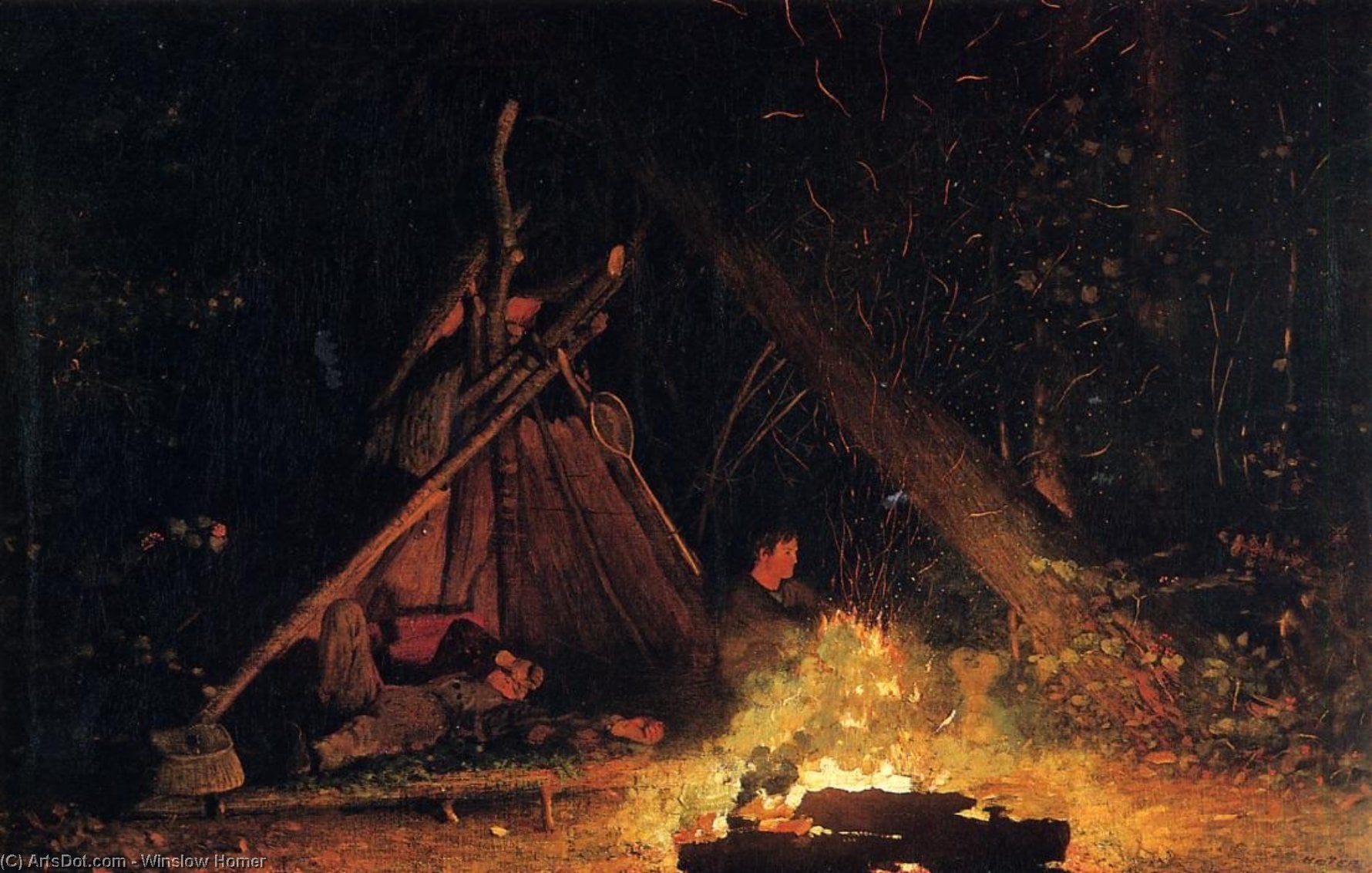
Camp Fire
複製画サイズ一覧
Winslow Homer’s “Camp Fire,” completed around 1883 and currently residing at the Metropolitan Museum of Art, stands as a cornerstone of American Realism—a movement dedicated to portraying life accurately without romantic embellishment. More than just a depiction of a campfire scene, it's an exquisitely crafted meditation on solitude, companionship, and the profound connection between humanity and nature.
Subject Matter & Composition: Homer captures a quintessential moment of rural American life—a group of men gathered around a crackling fire in the Adirondack Mountains. Two dogs flank the central figure, adding warmth and visual interest to the composition. The artist’s keen eye meticulously observes details like backpacks strapped on shoulders and a simple wooden chair positioned near the hearth, subtly conveying the activity of hikers or campers.
Style & Technique: Homer employed watercolor with blotting and scraping—a technique that allowed him to achieve remarkable textural effects. As noted by fellow artist Henry William Brewer, Homer skillfully utilized resist—thin layers of wax applied to paper before painting—to define the contours of tree trunks. This method ensured precise lines while simultaneously creating a dense, textured surface where subsequent washes were applied. The artist meticulously scrubbed away the resist after drying, leaving visible fragments that contributed to the overall visual richness.
Historical Context & Symbolism: Painted during Homer’s prolific period exploring the Adirondacks, “Camp Fire” reflects the burgeoning interest in plein air painting and the Romantic fascination with wilderness landscapes. The campfire itself symbolizes warmth, comfort, and human connection—a refuge from the anxieties of urban life. Furthermore, the towering cedar tree serves as a powerful emblem of resilience and endurance, mirroring Homer’s own artistic vision.
Emotional Impact: Viewing “Camp Fire” evokes a palpable sense of serenity and contemplation. The subdued palette—dominated by browns, blues, and ochres—enhances the painting's atmosphere of quiet reflection. Homer’s masterful rendering captures not only the visual beauty of the scene but also its emotional resonance—a celebration of simple pleasures and the restorative power of nature.
Resources for Further Exploration: To delve deeper into Winslow Homer’s artistic legacy, visit The Metropolitan Museum of Art to examine “Camp Fire” alongside other iconic works from his oeuvre. Alternatively, explore the history of painting on Wikipedia: History of Painting. For a stunning watercolor reproduction, consider purchasing one at WahooArt.com.
「Camp Fire」は、ウィンズロー・ホマーのMature Periodを象徴する作品です。
ウィンズロー・ホマー作「Camp Fire」 の人気度は Iconic です。この分類は、その作品がどの程度広く知られているかを表しています。
「Camp Fire」には、専用の統計情報ページがあります。このページでは、その作品およびアーティストの他の作品の月間訪問者数を、国別・言語別の内訳とともにグラフで表示しています。


1836 - 1910 , アメリカ合衆国

Explore the profound beauty of American Realism. From Winslow Homer’s rural landscapes to the dignity of everyday life, discover how master artists captured the soul of a nation through evocative oil paintings and timeless fine art techniques.

 設置イメージを確認
 送る
送る シェア
シェア
 詳細情報
詳細情報 ガイドを表示

 画像をダウンロード
 似ている作品
 X線調査
X線調査 スライドショー
 統計情報
統計情報

 続きを読む
続きを読む









 ガラスオプションは、110cm未満のサイズでのみご利用いただけます。