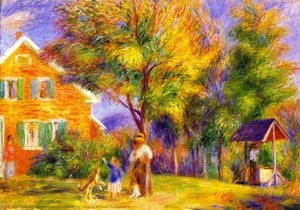
William James Linton作、Greater plantain, ()、熟練の絵師による手描きの油彩画複製画
設置イメージを表示 ARで試着 プリント版に切り替え デジタル画像販売へ切り替え シェアする
詳細を見る ガイドを表示 お気に入りに追加 ダウンロード 似ている作品 X線調査 スライドショーを表示 Q&A PowerPointをダウンロード 統計情報

Greater plantain, 手描きの油彩画複製画

Experience William James Linton’s ‘Greater Plantain,’ a captivating botanical painting from the 1800s. Admire its spiral leaf arrangement & vibrant purple flowers. Hand-painted reproduction available.

William James Linton (1812-1897) was a British-born American wood engraver, landscape painter & political activist. Known for detailed botanical studies, Italian scenes, and championing the 'white line' technique in wood engraving. Author & reformer.

手描き油彩複製画

当社のアーティストが、ご希望のサイズと額縁に合わせてキャンバスに手描きで制作する、オーダーメイドの油彩画です。 ( プリント版に切り替え デジタル画像販売へ切り替え)

Corner sample of the P118B picture frame: 成型ポリスチレン, 5 cm wide and 3 cm thick
P118B ¥10
Corner sample of the P118H picture frame: 成型ポリスチレン, 5 cm wide and 3 cm thick
P118H ¥10
Corner sample of the P118W picture frame: 成型ポリスチレン, 5 cm wide and 3 cm thick
P118W ¥10
Corner sample of the P438Z picture frame: 成型ポリスチレン, 5.5 cm wide and 3.5 cm thick
P438Z ¥10
Corner sample of the P508JH picture frame: 成型ポリスチレン, 7 cm wide and 3.5 cm thick
P508JH ¥12
Corner sample of the P508YH picture frame: 成型ポリスチレン, 7 cm wide and 3.5 cm thick
P508YH ¥12
Corner sample of the P805H picture frame: 成型ポリスチレン, 5 cm wide and 3.5 cm thick
P805H ¥10
Corner sample of the P805Z picture frame: 成型ポリスチレン, 5 cm wide and 3.5 cm thick
P805Z ¥10
Corner sample of the P919BZ picture frame: 成型ポリスチレン, 7 cm wide and 3.5 cm thick
P919BZ ¥10
Corner sample of the P919G picture frame: 成型ポリスチレン, 7 cm wide and 3.5 cm thick
P919G ¥10
Corner sample of the P919XJ picture frame: 成型ポリスチレン, 7 cm wide and 3.5 cm thick
P919XJ ¥10
Corner sample of the P959ZH picture frame: 成型ポリスチレン, 5 cm wide and 3 cm thick
P959ZH ¥10
Corner sample of the P968JZ picture frame: 成型ポリスチレン, 6 cm wide and 4 cm thick
P968JZ ¥12
Corner sample of the W106C picture frame: 無垢材, 5 cm wide and 3 cm thick
W106C ¥8
Corner sample of the W218G picture frame: 無垢材, 5 cm wide and 3 cm thick
W218G ¥10
Corner sample of the W218JH picture frame: 無垢材, 5 cm wide and 3 cm thick
W218JH ¥8
Corner sample of the W218Y picture frame: 無垢材, 5 cm wide and 3 cm thick
W218Y ¥10
Corner sample of the W307PJ picture frame: 無垢材, 6 cm wide and 3 cm thick
W307PJ ¥10
Corner sample of the W316G picture frame: 無垢材, 6 cm wide and 3 cm thick
W316G ¥10
Corner sample of the W316PJ picture frame: 無垢材, 6 cm wide and 3 cm thick
W316PJ ¥8
Corner sample of the W316Y picture frame: 無垢材, 6 cm wide and 3 cm thick
W316Y ¥10
Corner sample of the W398PJ picture frame: 無垢材, 5 cm wide and 3 cm thick
W398PJ ¥8
Corner sample of the W4111J picture frame: 無垢材, 6.5 cm wide and 3.5 cm thick
W4111J ¥10
Corner sample of the W500HY picture frame: 無垢材, 7 cm wide and 5 cm thick
W500HY ¥15
Corner sample of the W500JH picture frame: 無垢材, 7 cm wide and 5 cm thick
W500JH ¥15
Corner sample of the W692G picture frame: 無垢材, 8 cm wide and 4 cm thick
W692G ¥12
Corner sample of the W849H picture frame: 無垢材, 5 cm wide and 3 cm thick
W849H ¥8
Corner sample of the W940BG picture frame: 無垢材, 7.5 cm wide and 4.5 cm thick
W940BG ¥15
Corner sample of the W953PJ picture frame: 無垢材, 6 cm wide and 3.5 cm thick
W953PJ ¥8

標準サイズ
オーダーメイド
CM
INCH

作品のオリジナル比率に合わせた、当店の規定サイズからお選びください。

横幅
高さ

フレームや壁のスペースに合わせて、ご希望の幅と高さを入力してください。本作品は手描きのため、異なる比率のサイズをご希望の場合、絵画の周囲を少し広げて描くか、あるいは端を少しカットして調整することが可能です。お客様のご要望に合わせます。制作を開始する前に、仕上がりを確認するためのデジタルモックアップをお送りいたします。このページに表示されている画像は完成品の実物ではなく、あくまでモックアップによるイメージです。

カスタマイズの例:顔をお客様の写真に置き換える、ペットを追加する(例:猫を犬に変更)、背景に隠れたメッセージを入れる、背景の風景や要素を変更するなど。
ご注文後、WahooArt.com チームより詳細な指示をお送りするとともに、仕上がりイメージ(モックアップ)をご提供いたします。

世界中への配送()は、通常の5週間ではなく、3〜4週間でお届けいたします。(9 11月)。品質には一切妥協いたしません。

世界中へ無料エクスプレス配送
高品質なリネンキャンバス
配送時完全保険付
関税・輸入税の払い戻し保証
真の色彩再現に関する保証
100日間返品保証(製造上の欠陥がある場合のみ)
100% 全額返金保証
まとめ買い割引のご案内

合計金額

¥ 43054

Greater plantain,

再現技法

複製画サイズ一覧

-

合計金額

¥ 43054


作家プロフィール

The Life and Legacy of William James Linton

Born in the vibrant, industrious atmosphere of Mile End, East London, in 1812, William James Linton was a man whose life was defined by an unyielding passion for both artistic precision and political liberty. His journey began far from the grand galleries of Europe, rooted in the disciplined world of craftsmanship. As a young apprentice to the wood-engraver George Wilmot Bonner, Linton mastered the intricate language of line and shadow, a skill that would later allow him to bridge the gap between fine art and mass communication. His early career was marked by a rigorous dedication to the craft, contributing to significant pictorial works such as the biblical illustrations of John Martin and Richard Westall, where his burgeoning talent for capturing light and texture first began to emerge.

The trajectory of Linton’s life was never merely about the pursuit of aesthetic beauty; it was deeply intertwined with the turbulent political currents of the 19th century. After a period of journeyman work and personal financial struggles, Linton emerged as a formidable figure in the realm of republican propaganda and social reform. His move to America and his involvement in international political movements transformed him from a skilled engraver into a true intellectual and activist. Whether he was exposing violations of privacy by the English post office or writing under the pseudonym "Spartacus" for the Dublin Nation, Linton used his pen and his burin as weapons for justice. His friendship with Italian revolutionaries like Mazzini infused his work with a sense of romantic struggle and a profound commitment to the cause of European liberty.

Mastery of the White Line and Artistic Evolution

In the realm of technical achievement, Linton is perhaps most celebrated for his revolutionary contributions to the art of wood engraving. He was a staunch champion of the "white line" technique, a method that allowed engravers to create luminous, delicate details by focusing on the removal of material rather than the addition of ink. This approach demanded an extraordinary level of foresight and precision, as every stroke carved into the wood block was permanent. Through this method, Linton achieved a level of tonal complexity and atmospheric depth that few of his contemporaries could match, making him a pivotal figure in the evolution of printmaking.

Beyond the stark contrasts of political prints, Linton’s artistic soul found solace in the natural world. His development as a landscape painter and botanical illustrator revealed a softer, more contemplative side of his genius. His works often featured:

  • Intricate Botanical Studies: Capturing the delicate architecture of flora with scientific accuracy and poetic grace.
  • Evocative Italian Landscapes: Scenes that reflected his deep connection to European history and the romanticism of the Mediterranean light.
  • Detailed Textural Depictions: A mastery of organic forms, from the ruggedness of stone to the softness of foliage.

A Polymath of the Nineteenth Century

The historical significance of William James Linton lies in his refusal to be confined by a single discipline. He was a true polymath—an engraver, painter, author, poet, and reformer whose life work spanned the boundaries of art and activism. His memoirs and novels provided a window into the social upheavals of his era, while his political verses echoed the cries for reform across the Atlantic and beyond. Even as he navigated the complexities of running a business and supporting families through the volatility of the publishing industry, his commitment to the "international league" of patriots remained steadfast.

Ultimately, Linton’s legacy is one of profound intersectionality. He demonstrated that the precision required for fine engraving could be applied to the pursuit of political truth, and that the observant eye of a naturalist could find beauty amidst the chaos of revolution. To study the works of William James Linton is to witness the heartbeat of the 19th century—a period of immense change, where the stroke of an engraver's tool could help shape the consciousness of a generation.

William James Linton

William James Linton

1812 - 1897 , United Kingdom

プロフィール概要

  • Artistic Movement Or Style: Wood engraving and landscape painting
  • Artists Who Influenced This Artist: ['George Wilmot Bonner']
  • Date Of Birth: 1812
  • Date Of Death: 1897
  • Full Name: William James Linton
  • Nationality: British-American
  • Place Of Birth: London, United Kingdom