
 EngravingWallArtMoralistic Engraving
 1750Early Modern
 359.0 x 341.0 cm
当社のアーティストが、お客様のご希望のサイズと額縁に合わせて、キャンバスに手描きで制作する油彩画です。 ( プリント版に切り替え デジタル画像販売へ切り替え)





























作品のオリジナル比率に合わせた、当店の規定サイズからお選びください。

フレームや壁のスペースに合わせて、ご希望の幅と高さを入力してください。本作品は手描きのため、異なる比率のサイズをご希望の場合、絵画の周囲を少し広げて描くか、あるいは端を少しカットして調整することが可能です。お客様のご要望に合わせます。制作を開始する前に、仕上がりを確認するためのデジタルモックアップをお送りいたします。このページに表示されている画像は完成品の実物ではなく、あくまでモックアップによるイメージです。
Gin Lane
複製画サイズ一覧
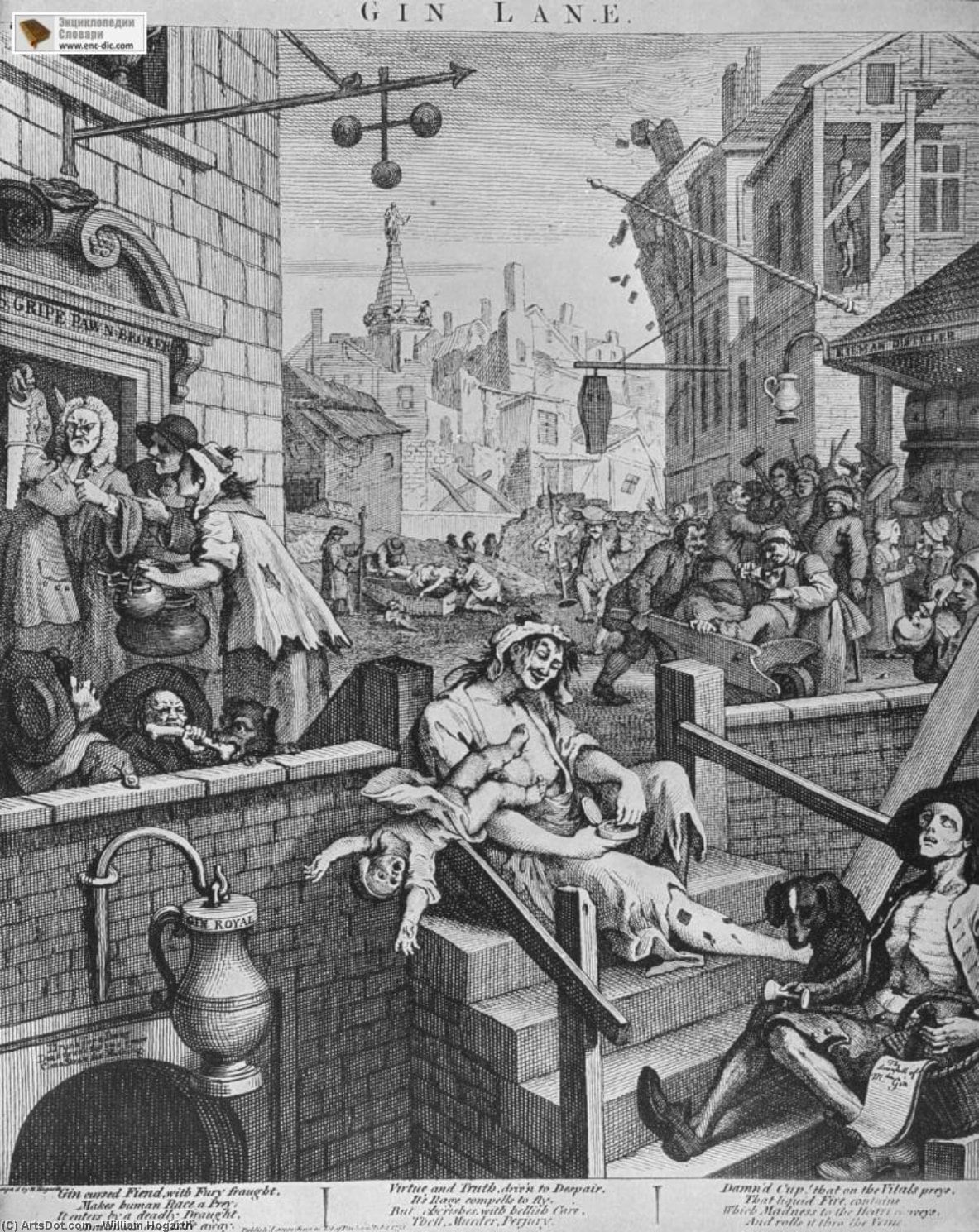
In the heart of 18th-century London, amidst the swirling fog and the growing shadows of social upheaval, William Hogarth captured a moment of profound human tragedy that continues to haunt the viewer centuries later. His masterpiece, Gin Lane, is far more than a mere engraving; it is a visceral, breathing chronicle of a city in the throes of moral and physical decay. Completed in 1751, this work serves as a searing indictment of the "Gin Craze," a period when the cheap, accessible spirit flooded the streets of London, leaving a trail of broken families and shattered lives in its wake. As one gazes upon this intricate tableau, the sense of claustrophobia is immediate. The composition is a deliberate chaos, a densely populated lane where figures overlap and collide, creating an overwhelming atmosphere of misery that pulls the observer into the very center of the struggle.
Hogarth, a master of social satire and a keen observer of the human condition, employs a technique that breathes life into the grim reality of his subject. Through the meticulous use of hatching and cross-hatching, he achieves a remarkable tonal variation that defines the textures of a crumbling urban landscape. The starkness of the black and white medium enhances the dramatic lighting, casting deep, heavy shadows that seem to swallow the figures whole. Every line is purposeful, serving to delineate the skeletal forms of the suffering and the jagged, angular architecture of the decaying buildings. This precision allows the viewer to witness the fine details of despair—the slumped posture of a man lost to intoxication, the frantic movements of those caught in the grip of poverty, and the chilling stillness of death that permeates the scene.
Beyond its surface-level depiction of poverty, Gin Lane is rich with symbolic language designed to provoke deep contemplation and social reform. Hogarth meticulously placed emblems of excess throughout the lane; overflowing gin barrels stand as silent sentinels of corruption, while the very architecture seems to be collapsing under the weight of vice. The presence of decaying bodies and the neglect of the innocent—such as the heartbreaking depiction of a mother unable to care for her child—act as powerful metaphors for the erosion of the social contract. This was not art created for mere decoration, but art intended to galvanette public opinion. It was part of a larger reformist movement, designed to be viewed alongside its counterpart, Beer Street, to contrast the perceived stability of traditional brewing with the destructive anarchy of the gin epidemic.
For the modern collector or interior designer, bringing a high-quality reproduction of this work into a space offers more than just a historical artifact; it introduces a profound narrative depth. The piece possesses an undeniable emotional gravity that commands attention, making it a striking focal point for those who appreciate art that challenges the status quo and explores the complexities of the human spirit. Whether placed in a study filled with historical texts or as a bold, monochromatic statement in a contemporary gallery-style room, Gin Lane serves as a timeless reminder of the power of art to act as a mirror to society, capturing the eternal struggle between chaos and order, and vice and virtue.
ウィリアム・ホガースは53歳の時に「Gin Lane」を制作しました。作家は1697年に生まれ、本作の制作年は1750年です。
「Gin Lane」を手がけたアーティストはウィリアム・ホガースです。この作品はウィリアム・ホガースの名でカタログに登録されています。
ウィリアム・ホガース作「Gin Lane」 の色彩分析は、Bold なコントラストと Strong Color Unity な調和を記録しています。


1697 - 1764 , イギリス

Explore the profound mastery of engraving and intaglio printmaking. Delve into the rich history, technical precision of the burin, and the enduring legacy of fine art techniques that shaped the world's most iconic masterpieces.

 設置イメージを確認
 送る
送る シェア
シェア
 詳細情報
詳細情報 ガイドを表示

 画像をダウンロード
 似ている作品
 X線調査
X線調査 スライドショー
 統計情報
統計情報 続きを読む
続きを読む









 ガラスオプションは、110cm未満のサイズでのみご利用いただけます。


