x


 Acrylic On PaperRomanticism
 1795High Medieval
 40.0 x 53.0 cm




























作品のオリジナル比率に合わせた、当店の規定サイズからお選びください。

特定のフレームやスペースに合わせて、ご希望のサイズをご入力いただけます。選択されたサイズが元の画像の比率と異なる場合、アートワークをトリミングするか、手描きで要素を追加して絵画を拡張いたします。デジタルモックアップ を制作し、制作開始前にご確認(承認)をいただきます。
画面上のプレビューは、実際のトリミングや拡張を正確に反映しているものではありません。最終的な構図は、モックアップによってのみ正確にご確認いただけます。
カスタムサイズもご利用いただけますが、元の比率を維持するためには、あらかじめ用意されたリストからサイズを選択することをお勧めいたします。

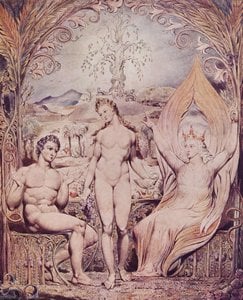
Satan Exulting over Eve
複製画のサイズ
William Blake, a figure perpetually adrift from the conventional currents of his era, remains one of the most profoundly influential artists and poets of the Romantic Age. His work transcends mere representation; it's an immersive journey into realms of mysticism, symbolism, and deeply personal visions. “Satan Exulting over Eve,” created in 1795 as a pen drawing, stands as a potent emblem of this artistic philosophy – a meticulously crafted narrative exploring themes of temptation, fall, and the inherent duality within human nature. This isn’t simply a depiction of biblical lore; it's a visceral exploration of the soul’s struggle against desire, rendered with Blake’s signature innovative technique and imbued with an unsettling emotional resonance.

Blake's approach to art was revolutionary for his time, a deliberate departure from established practices. He didn’t merely sketch and paint; he orchestrated an elaborate three-step process designed to capture the intensity of his visions. First, he applied thick, sticky watercolors directly onto stiff paper board – a technique that created a unique textural surface. This wet canvas was then stamped onto fresh paper, transferring the image with remarkable clarity. Finally, he meticulously enhanced the print with watercolor washes and precise pen and ink detailing, layering these elements to build depth and complexity. This method, born from necessity and fueled by his artistic ambition, resulted in an unparalleled level of detail and symbolic richness, a hallmark of Blake’s distinctive style.
“Satan Exulting over Eve” immediately commands attention with its dynamic composition. The central figures – Satan, depicted as a winged, triumphant being holding a shield, and Eve, entwined by the serpent – dominate the scene, creating a palpable sense of drama and conflict. The background is deliberately ambiguous, blending earthly elements with supernatural ones, suggesting a realm beyond the confines of ordinary experience. The serpent itself isn’t merely a symbol of evil; it's an active participant in the narrative, its coils intimately bound to Eve, representing the seductive power of knowledge and desire. Notice the stark contrast between Satan’s fiery red hues – symbolizing his triumph and passion – and the muted earth tones used for Eve, highlighting her vulnerability and surrender. The overall effect is a powerful visual metaphor for the consequences of choice and the allure of transgression.
William Blake’s visionary art profoundly impacted subsequent generations of artists and writers. His work, often considered pre-Romantic, anticipated many of the key themes and aesthetics of the movement – a fascination with imagination, spirituality, and the sublime. His images are housed in prestigious institutions like the Tate Gallery in London and The J. Paul Getty Museum in Los Angeles, testament to their enduring artistic merit. Blake’s unique approach to printmaking, combining watercolor and pen & ink, was truly innovative for his time, influencing artists long after his death. Reproductions of “Satan Exulting over Eve” offer a remarkable opportunity to experience the depth and complexity of this iconic work, bringing its powerful symbolism into any setting.


1757 - 1827 , イギリス

Explore the mystical art & poetic genius of William Blake (1757-1827). Discover his revolutionary illuminated printing, rich symbolism, and lasting influence on Romanticism. Find handmade reproductions at WahooArt.

Explore the life & art of Sir William Blake Richmond, a pivotal figure bridging Pre-Raphaelitism and Aestheticism. Discover his stunning portraits, mosaics at St Paul's Cathedral, and lasting influence on Victorian art.

Explore the life & work of Reginald Grenville Eves, a leading British portraitist who transitioned to captivating landscape painting. Discover his legacy and prominent works at WahooArt.

Explore the captivating world of Penry Williams (1802-1885), a Welsh artist renowned for his evocative Impressionistic landscapes and scenes of Italy. Discover his life, style & legacy with WahooArt.

Explore the groundbreaking work of Christopher Williams, a pivotal figure in contemporary art. This analysis delves into his deconstruction of representation, materiality, and institutional critique – essential reading for serious collectors.


最新の美術ニュース、限定オファー、そしてインテリアのアイデアをいち早くお届けします。
お客様のプロジェクトについてお聞かせください。当社の美術専門家が、お客様に合わせた3つのパーソナライズされた芸術提案をご提供いたします。
あなたにぴったりの3作品を無料で厳選いたします


 プレビュー
プレビュー
 プリントを購入
 シェアする
シェアする シェアする
シェアする
 詳細を見る
詳細を見る

 ダウンロード
 似ている作品
 X線調査
X線調査 スライドショー
 詳細を見る
詳細を見る









 ガラスオプションは、110cm未満のサイズでのみご利用いただけます。