A Mythic Encounter: Decoding William Blake’s “Minotaur”
William Blake's "Minotaur" stands as a haunting testament to the Romantic spirit—a visual exploration of primal fears, spiritual yearning, and the unsettling beauty found within darkness. Created around 1820-1822, this enigmatic print exemplifies Blake’s distinctive Symbolism style, marking it as one of his most enduringly captivating works. It's a piece that transcends mere depiction; instead, it invites contemplation on themes of sacrifice, innocence corrupted, and the eternal struggle between reason and imagination.
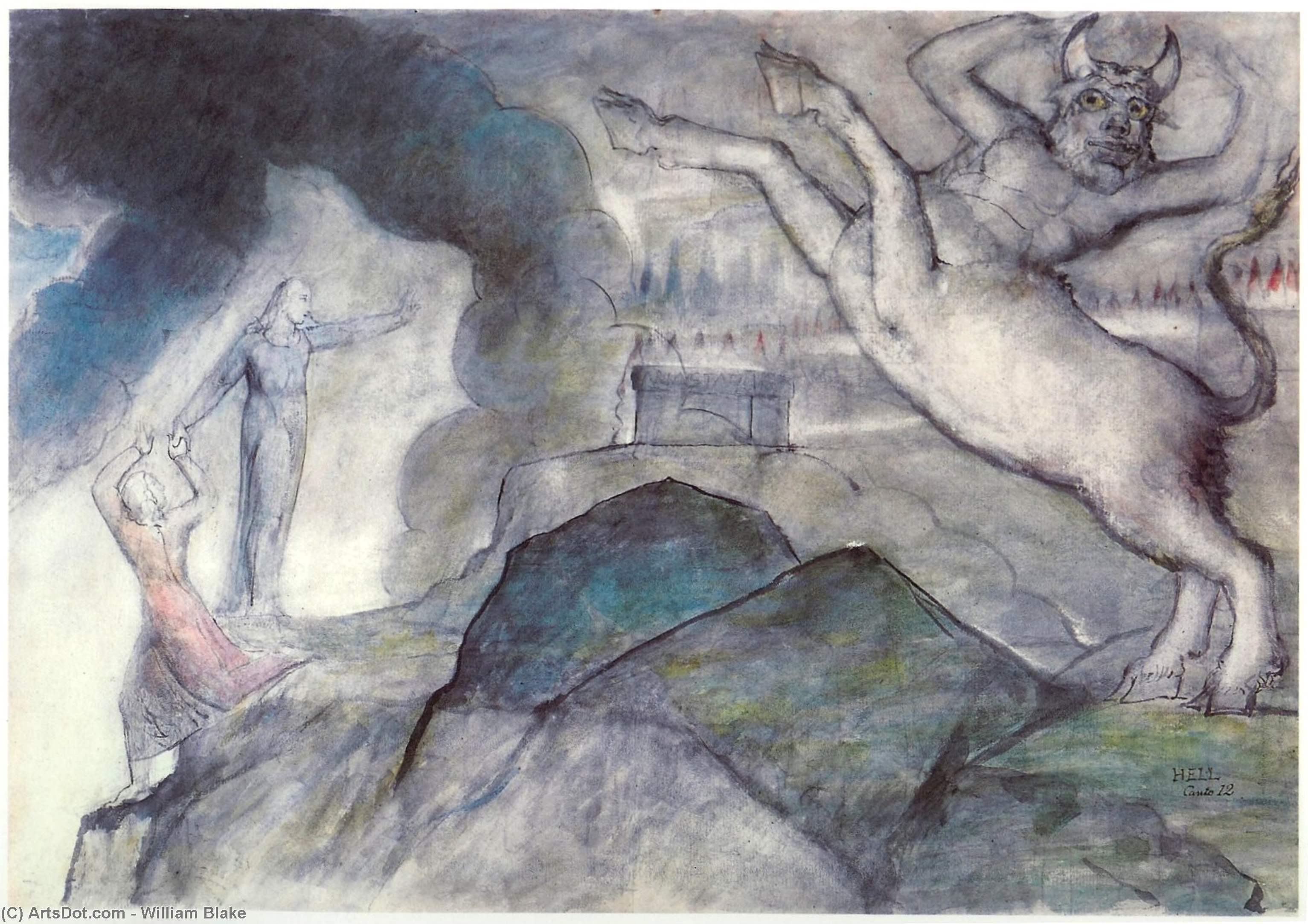
- Subject Matter: The composition centers around a dramatic confrontation between figures representing humanity and mythic terror. At its core is the Minotaur—a monstrous bull-headed creature—dominating the upper register of the print. Alongside him stands a woman, positioned on a rocky outcrop, gazing upwards with an expression of profound sorrow.
- Style & Technique: Blake’s masterful engraving technique imbues “Minotaur” with remarkable detail and tonal subtlety. He employed mezzotint—a process known for its ability to produce rich blacks and gradations—allowing him to capture the textures of stone, flesh, and fur with astonishing accuracy. The print's muted palette contributes significantly to its unsettling atmosphere.
The Historical Context: Blake’s artistic output coincided with a period of intense intellectual ferment in Britain. Romanticism championed emotion over reason, valuing intuition and visionary experience as pathways to understanding the divine. Influenced by Dante Alighieri’s “Inferno” and preoccupied with biblical narratives—particularly those concerning sacrifice and redemption—Blake sought to express profound spiritual truths through symbolic imagery. This print is deeply rooted in classical mythology, specifically referencing the Cretan myth of Pasiphae and Minos, where Pasiphae, Queen of Crete, mated with a bull, resulting in the birth of the Minotaur—a creature destined to appease Zeus’s wrath.
- Symbolism: Blake deliberately utilizes symbolism to convey complex ideas. The woman embodies innocence and vulnerability, juxtaposed against the monstrous Minotaur who represents primal instinct and destructive force. The cliff edge symbolizes precariousness and mortality, highlighting the human condition’s confrontation with inescapable fate. Furthermore, the book held by the man signifies knowledge—a futile attempt to illuminate the darkness of existence.
- Emotional Impact: “Minotaur” evokes a palpable sense of dread and melancholy. Blake's masterful rendering captures not only the physical horror of the Minotaur but also the psychological torment experienced by those confronted with its terrifying presence. The print compels viewers to grapple with questions about morality, sacrifice, and the inescapable realities of suffering.
Blake’s “Minotaur” remains a powerfully evocative artwork—a cornerstone of Romantic Symbolism that continues to fascinate scholars and inspire artists alike. Its meticulous engraving technique, combined with its profound symbolic content, ensures its place as an unforgettable exploration of human psychology and the enduring power of myth.



 プレビュー
プレビュー
 プリントを購入
 シェアする
シェアする シェアする
シェアする
 詳細を見る
詳細を見る

 ダウンロード
 似ている作品
 X線調査
X線調査 スライドショー
 詳細を見る
詳細を見る






































 ガラスオプションは、110cm未満のサイズでのみご利用いただけます。