当社のアーティストが、お客様のご希望のサイズと額縁に合わせて、キャンバスに手描きで制作する油彩画です。 ( プリント版に切り替え デジタル画像販売へ切り替え)





























作品のオリジナル比率に合わせた、当店の規定サイズからお選びください。

特定のフレームやスペースに合わせて、ご希望のサイズをご入力いただけます。選択されたサイズが元の画像の比率と異なる場合、アートワークをトリミングするか、手描きで要素を追加して絵画を拡張いたします。デジタルモックアップ を制作し、制作開始前にご確認(承認)をいただきます。
画面上のプレビューは、実際のトリミングや拡張を正確に反映しているものではありません。最終的な構図は、モックアップによってのみ正確にご確認いただけます。
カスタムサイズもご利用いただけますが、元の比率を維持するためには、あらかじめ用意されたリストからサイズを選択することをお勧めいたします。

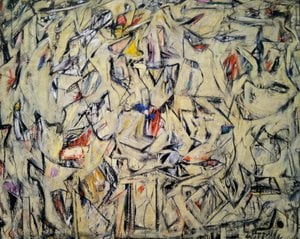
Untitled
複製画のサイズ
In the realm of twentieth-century modernism, few works possess the raw, turbulent energy found in Willem de Kooning’s Untitled. This striking piece serves as a profound psychological record of an era defined by postwar anxiety and a restless search for new meaning. At first glance, the viewer is met with a composition that defies easy categorization, pulling the eye into a swirling vortex of form and shadow. The subject matter—a depiction of the female form—emerges not through delicate lines, but through a series of fragmented gestures and muscular contours that suggest both presence and dissolution. It is a work that does not merely sit upon the canvas; it vibrates with an unsettling dynamism, capturing the very essence of Abstract Expressionism.
The technique employed here is a masterclass in what is often termed "action painting." De Kooning utilizes thick, impasto strokes and heavy applications of pigment to build a surface that feels almost sculptural. The use of charcoal-like textures and deep shading creates a sense of physical struggle, as if the artist were wrestling with the medium itself to pull meaning from chaos. This tactile quality is essential for anyone seeking to appreciate the piece; it invites a visual exploration of the layers, where every scrape and smudge tells the story of a deliberate, energetic movement. For the discerning collector or interior designer, this texture provides a sophisticated depth that can anchor a room, offering a focal point that changes character depending on the light and perspective.
To understand the emotional weight of this work, one must look to the historical landscape of the mid-1960s. The piece reflects a period of intense transformation, where the boundaries between figuration and pure abstraction were being aggressively redrawn. De Kooning, a titan of the New York School, moved away from the more recognizable subjects of his earlier career to embrace a language of fragmentation. This stylistic shift mirrors the fractured realities of a world navigating the complexities of the modern age. The painting embodies a sense of existential inquiry, using the human form as a vessel for exploring themes of identity, vulnerability, and strength.
Beyond its historical significance, the artwork offers an unparalleled emotional impact. There is a certain "terrible beauty" in its chaos—a way in which the tension between the heavy, dark strokes and the emerging light creates a rhythmic, almost musical quality. It evokes a sense of movement that is both chaotic and controlled, making it an ideal selection for spaces designed to inspire contemplation or bold intellectual engagement. Whether displayed in a contemporary gallery setting or as a centerpiece in a curated residential collection, this reproduction brings with it the enduring power of De Kooning’s vision: a testament to the beauty found within the struggle of creation.


1904 - 1997 , オランダ
Unveil the visceral power of Abstract Expressionism. Our expert exploration delves into the transformative legacies of Pollock, Rothko, and De Kooning, offering discerning collectors a profound understanding of the New York School’s enduring mastery and historical impact.

Explore the profound emotional depth of Abstract Expressionism. From Pollock's dynamic drips to de Kooning's gestural mastery, our expert guide offers art collectors a sophisticated analysis of this transformative movement and its enduring legacy in modern fine art.


 プレビュー
プレビュー
 シェアする
シェアする シェアする
シェアする
 詳細を見る
詳細を見る ガイド
ガイド

 ダウンロード
 似ている作品
 X線調査
X線調査 スライドショー
 統計情報
統計情報

 詳細を見る
詳細を見る









 ガラスオプションは、110cm未満のサイズでのみご利用いただけます。