このページに掲載されている作品は著作権法によって保護されており、当社の許可なく同一の複製物を制作または販売することは法律で禁じられています。この保護は、以下のような国際条約に基づき執行されます。 ベルヌ条約 および、以下の条項に定められたものを含む各国の法律により、 米国著作権法 第17編。
この手法は、著作権で保護された作品の複製や複写を伴わないため、著作権法に完全に準拠しています。これは単なる模倣ではなく、創造的な再解釈です。元の作品からインスピレーションを受けつつも、それとは異なる、全く新しい絵画を生み出すものです。
スピーディーな制作と多彩な仕上げオプションが魅力の、ミュージアムクオリティなジークレー・キャンバスプリント。 ( 手描きの複製画を注文する デジタル画像販売へ切り替え)





























作品のオリジナル比率に合わせた、当店の規定サイズからお選びください。

額縁や壁のスペースに合わせて、ご希望の幅と高さを入力してください。プリントはカットすることは可能ですが、元の画像より大きくすることはできないため、異なる比率のサイズを選択された場合は、画像の一部が欠けることになります。印刷を開始する前に、内容を確認していただくためのデジタルモックアップをお送りいたします。このページに表示されている画像は、実際のカット後の状態を示すものではありません。実際の仕上がりはモックアップにてご確認ください。
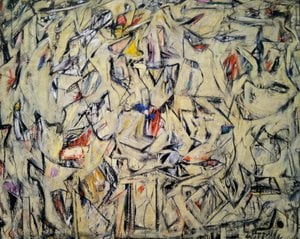
Untitled
複製画サイズ一覧
In the landscape of twentieth-century art, few works possess the raw, turbulent energy found in Willem de Kooning’s 1950 masterpiece, Untitled. As a cornerstone of the Abstract Expressionist movement, this canvas serves as more than just a visual arrangement; it is a profound psychological record of an era defined by postwar anxiety and a restless search for new meaning. De Kooning, a pioneer of the New York School, eschewed the comforts of traditional composition to embrace a style often described as action painting. In this work, the viewer is not merely observing a static image but witnessing a frozen moment of intense physical and emotional struggle, where every stroke carries the weight of the artist's direct engagement with the medium.
The technique employed in this piece is a masterclass in gestural freedom. De Kooning utilized oil paints on canvas to create a densely populated surface where thick, sweeping lines collide and intertwine with an almost violent spontaneity. There is a palpable sense of layering and reworking; evidence of scraping and heavy application suggests that the artist labored over the surface, building up textures that invite a tactile response. These lines are not precise or clinical; they bleed into one another, creating a network of amorphous shapes that seem to vibrate with movement. This restless dynamism defies easy categorization, pulling the eye across the canvas in a continuous loop of discovery and disorientation.
While the energy of the work is explosive, de Kooning achieves a surprising sense of focus through an extraordinarily disciplined color palette. By limiting himself primarily to shades of cream and off-white, punctuated only by deep, dark brown accents, he strips away the distraction of complex color relationships. This deliberate restraint forces the viewer to confront the sheer materiality of the paint itself—the thickness of the impasto, the direction of the drips, and the interplay of light across the uneven surface. This monochromatic approach intensifies the painting's impact, turning the focus toward form and the raw essence of the artist's movement.
Beneath the layers of abstraction, there lies a haunting suggestion of the human condition. While the work is undeniably non-representational, the presence of fragmented facial features or limb-like shapes hints at de Kooning’s enduring fascination with figuration and portraiture. These distorted, ghostly remnants of humanity can be interpreted as symbols of psychological fragmentation, reflecting the internal turmoil and social shifts of the mid-century period. For the collector or interior designer, this piece offers a sophisticated balance: it provides the bold, commanding presence required for a statement wall, while its nuanced textures and muted tones allow it to integrate seamlessly into modern, minimalist, or even classical environments.
Owning a high-quality reproduction of this work means bringing a piece of art history into one's personal space. It is an invitation to contemplate the beauty found within chaos and to appreciate the profound emotional depth that can emerge when an artist dares to break all the rules. Untitled remains a timeless testament to the power of the human spirit to find expression in the most turbulent of forms.
「Untitled」を手がけたアーティストはヴィレム・デ・クーニングです。この作品はヴィレム・デ・クーニングの名でカタログに登録されています。
ヴィレム・デ・クーニング作「Untitled」の技法はOil On Canvasです。複製画は、この技法の質感や風合いを再現することを目指しています。
ヴィレム・デ・クーニング作「Untitled」の色彩構成は、StatementなコントラストとStrong Color Unityな調和を併せ持っています。


1904 - 1997 , オランダ

Immerse yourself in the dramatic world of Francisco de Zurbarán. Explore 25 iconic Spanish Baroque masterpieces defined by intense tenebrism and spiritual realism. Find inspiration for museum-quality art reproductions and decor. Discover all masterpieces on WahooArt.com.

Journey through the raw emotion of Abstract Expressionism. From Pollock's drips to Rothko's color fields, explore 10 iconic masterpieces and their stories. Find museum-quality art reproductions for your space at WahooArt.com. Discover all masterpieces on WahooArt.com.
Unveil the visceral power of Abstract Expressionism. Our expert exploration delves into the transformative legacies of Pollock, Rothko, and De Kooning, offering discerning collectors a profound understanding of the New York School’s enduring mastery and historical impact.

 設置イメージを確認
 送る
送る シェア
シェア
 詳細情報
詳細情報 ガイドを表示

 画像をダウンロード
 似ている作品
 X線調査
X線調査 スライドショー
 Q&A
Q&A 統計情報
統計情報

 続きを読む
続きを読む









 ガラスオプションは、110cm未満のサイズでのみご利用いただけます。