当社のアーティストが、お客様のご希望のサイズと額縁に合わせて、キャンバスに手描きで制作する油彩画です。 ( プリント版に切り替え デジタル画像販売へ切り替え)





























作品のオリジナル比率に合わせた、当店の規定サイズからお選びください。

特定のフレームやスペースに合わせて、ご希望のサイズをご入力いただけます。選択されたサイズが元の画像の比率と異なる場合、アートワークをトリミングするか、手描きで要素を追加して絵画を拡張いたします。デジタルモックアップ を制作し、制作開始前にご確認(承認)をいただきます。
画面上のプレビューは、実際のトリミングや拡張を正確に反映しているものではありません。最終的な構図は、モックアップによってのみ正確にご確認いただけます。
カスタムサイズもご利用いただけますが、元の比率を維持するためには、あらかじめ用意されたリストからサイズを選択することをお勧めいたします。

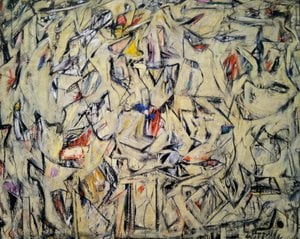
Untitled (21)
複製画のサイズ
“Untitled (21),” painted in 1955 by Willem de Kooning, stands as a cornerstone of Abstract Expressionism, embodying the movement's core tenets: spontaneity, emotional intensity, and a rejection of representational conventions. This monumental canvas—measuring approximately 200.7 cm x 175.3 cm—immediately commands attention with its vibrant palette dominated by fiery reds and oranges, punctuated by subtle greens that contribute to an overall sense of dynamism.
“Untitled (21)” emerged against a backdrop of postwar anxieties and intellectual ferment. Following World War II, American artists sought to grapple with trauma and disillusionment through art that prioritized emotion over rational thought. De Kooning’s work aligns perfectly with this ethos, reflecting the psychological complexities inherent in navigating a world scarred by conflict.
As Nicholas Mirzoeff eloquently observes in “How to See the World,” the woman's gaze—implied but not explicitly rendered—suggests an inward focus, mirroring the broader preoccupation with subjectivity during the era. This subtle detail speaks volumes about De Kooning’s artistic ambition: to convey profound emotional resonance without resorting to conventional visual representations.
The color choices – red and orange – are deliberately assertive, conveying passion and vitality. Simultaneously, the green hues introduce a counterpoint of tranquility and growth, hinting at themes of nurturing and resilience. The woman’s embrace of the child symbolizes protection and unconditional love—powerful concepts that resonate across cultures and generations.
"Untitled (21)" continues to captivate viewers with its visceral energy and uncompromising honesty. It stands as a testament to Willem de Kooning’s mastery of abstraction, demonstrating how artistic innovation can transcend mere visual aesthetics to communicate profound emotional truths. Its enduring appeal lies in its ability to provoke contemplation and inspire awe—qualities that define the very essence of great art.


1904 - 1997 , オランダ

Explore the profound emotional depth of Abstract Expressionism. From Pollock's dynamic drips to de Kooning's gestural mastery, our expert guide offers art collectors a sophisticated analysis of this transformative movement and its enduring legacy in modern fine art.

Explore the profound elegance of De Stijl. Discover how Piet Mondrian and the masters of Neoplasticism utilized geometric harmony and primary colors to redefine modern abstraction. An authoritative guide for the discerning collector seeking timeless, structured beauty.


 プレビュー
プレビュー
 シェアする
シェアする シェアする
シェアする
 詳細を見る
詳細を見る ガイド
ガイド

 ダウンロード
 似ている作品
 X線調査
X線調査 スライドショー
 統計情報
統計情報
 詳細を見る
詳細を見る









 ガラスオプションは、110cm未満のサイズでのみご利用いただけます。